

(DailyChive.com) – America’s military is breaking free from its greatest vulnerability: the supply chains controlled by its chief adversary, China, and this seismic shift is poised to rewrite the rules of national security for a generation.
Story Highlights
- The Pentagon will eliminate foreign, especially Chinese, dependency for critical military supplies and technology.
- Massive new defense spending and executive orders are accelerating domestic sourcing and production.
- This pivot impacts not just defense, but also technology and agriculture sectors, reshaping America’s industrial landscape.
- Experts agree on the necessity but warn of steep costs and supply chain upheaval during the transition.
Military Unshackled: The End of Foreign Dependence
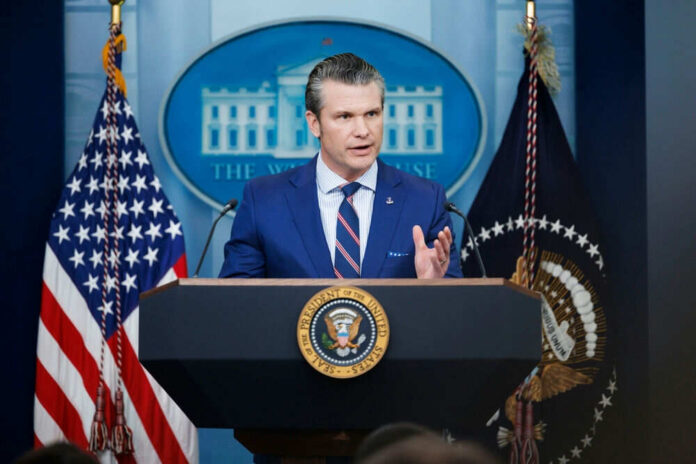
Defense Secretary Pete Hegseth stared into the camera on Fox News and declared a policy pivot that rattled both Wall Street and Beijing: “We will not be dependent on China. We won’t be dependent on anybody else. The American military will be able to independently operate and operate decisively.” For decades, the United States armed forces have relied on a global web of suppliers, most notably China, for everything from lithium-ion batteries to rare earth elements. That era is officially over.
Hegseth’s announcement is not an empty gesture. It follows a July 2025 report warning that China controls over 80% of the world’s lithium-ion battery supply, a chokehold over the very heart of modern military hardware. Soon after, he issued a directive ordering the Department of Defense Chief Information Officer to secure technology supply chains from Chinese influence, targeting everything from cloud computing services to the semiconductors inside missile guidance systems.
How the Pivot Unfolded: From Executive Order to Spending Surge
The pivot was set in motion in June 2025 when President Trump signed an executive order to accelerate domestic drone production. The following month, Congress passed a historic $150 billion defense spending bill, unleashing a tidal wave of investment into American manufacturing and procurement. This is not a slow, incremental shift. The Pentagon’s new mandate is to tear out every foreign root in its supply chain, from munitions to hypersonic weapons, and even farm equipment, with breathtaking speed.
Microsoft, one of the Pentagon’s top tech contractors, confirmed almost immediately that it was eliminating all China-based engineering support for Department of Defense cloud operations. Compliance reviews swept through the defense industry. Contractors scrambled to find domestic sources for everything from microchips to agricultural sensors, as the USDA and DOJ integrated the nation’s heartland into the security calculus. The message was unmistakable: security trumps cost, every time.
Winners, Losers, and the New Rules of Defense
Defense contractors and tech giants now face a landscape where resilience outweighs efficiency. The Heritage Foundation and the Foundation for Defense of Democracies, both respected for their hawkish scrutiny, have long warned that adversaries could cripple the U.S. economy by withholding critical materials. Now, their warnings are baked into law, procurement, and the very DNA of military planning.
Industry experts testify that the scale and speed of the shift are unprecedented. Congressional Armed Services Committees, the White House, and Pentagon brass are aligned in a rare display of bipartisan urgency. The short-term pain is real: higher costs, logistical headaches, and a scramble to rebuild domestic capacity that atrophied over decades of offshoring. But the long-term payoff is strategic independence, no longer will the U.S. military be just one diplomatic spat away from material shortages or technological sabotage.
The Domino Effect: Beyond the Barracks and Into the Heartland
The shockwaves of this policy will ripple far beyond the Pentagon. U.S. farmers and ranchers, often overlooked in discussions of national security, are now central players. The integration of agriculture into defense planning is a nod to the reality that food security and supply chain integrity are as vital as missiles and drones. American manufacturers, long battered by global competition, see a once-in-a-generation opportunity for revival, innovation, and growth.
Trade tensions with China and other foreign suppliers are likely to escalate. Allies may be forced to adapt to America’s new rules, potentially reshaping global alliances and industrial partnerships. For everyday Americans, this transformation could mean new jobs in mining, manufacturing, and high-tech industries, along with higher prices for goods once made cheaply overseas. But the gamble is clear: independence is worth the price.
Copyright 2025, DailyChive.com