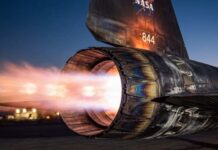

The Air Force locked in a 25 percent boost to B-21 bomber production capacity with funded factory expansion to speed delivery to the fleet.
Story Highlights
- The Department of the Air Force approved a 25 percent increase in annual B-21 production capacity.
- Congress already approved $4.5 billion to fund the acceleration and facility growth.
- Northrop Grumman is adding major space in Utah and at Plant 42 in California.
- The Air Force aims for at least 100 B-21s, linking faster output to earlier combat power.
What Changed: A Funded Capacity Jump
The Department of the Air Force said it reached an agreement with Northrop Grumman to expand B-21 Raider production capacity by 25 percent. Officials said the move will compress delivery timelines while holding to cost and performance goals. They also said the plan is not just a proposal. It is backed by $4.5 billion that Congress already authorized and appropriated in fiscal year 2025 legislation, targeted at speeding this next-generation stealth bomber into service.
Air Force leaders tied the capacity jump to real combat needs. They stated that building more aircraft faster will bring operational capability to crews sooner. The service has long set an objective of at least 100 aircraft. That goal reflects the need to replace aging bombers and to meet demands across the Pacific and Europe. The Air Force fact sheet lists an average unit procurement cost benchmark of $692 million in base-year 2022 dollars, and the department now says the path to fielding is faster.
Where The Industrial Muscle Is Growing
Northrop Grumman is expanding physical capacity at several sites to make the higher rate possible. In Layton, Utah, the company opened its East Gate 3 campus expansion. The complex adds about 845,000 square feet and is planned to support up to 1,500 employees by 2032. The company described the facility as part of the production backbone for the B-21 program, built to increase throughput of key components and integration work over time.
The expansion is not limited to Utah. Reporting on Air Force Plant 42 in Palmdale, California, describes more than 1 million square feet of new production space tied to the B-21 ramp. That construction supports the February 2026 agreement to lift annual capacity by 25 percent. Plant 42 hosts final assembly and major manufacturing for several classified programs, and the added space signals a sustained push to raise output on the Raider line.
Why It Matters For Security—and For Taxpayers
Defense officials cast the B-21 as a core part of the nation’s long-range strike and nuclear missions. Faster production promises to close gaps as the Air Force retires older airframes and adapts to new threats. The service’s message is clear: stronger factories equal earlier combat power. At the same time, past bomber programs show how industrial ambition can face hard limits on cost and schedule. The B-2 fleet ended at 21 aircraft, far below early plans.
📍B-21 Raider: Annual production to rise 25% with new assembly line at Palmdale https://t.co/d0TaUXY091
— GEOPOLITIKI (@geopolitiki) October 9, 2026
Today’s announcement offers momentum, not a victory lap. The Air Force did not publish a yearly aircraft count or a date when the 25 percent increase will be fully realized. Program leaders instead pointed to funded facilities, tooling, and workforce as proof that capacity is rising now. The public will see the real payoff when delivered jets enter units sooner and testing confirms the aircraft meets mission needs at scale over time.
Sources:
19fortyfive.com, whiteman.af.mil, armyrecognition.com, ground.news
© dailychive.com 2026. All rights reserved.