

(DailyChive.com) – A top European defense executive just belittled Ukraine’s war-winning drone ingenuity—and the blowback exposed how quickly “elite” institutions dismiss the scrappy innovation that actually changes battlefields.
Story Snapshot
- Rheinmetall CEO Armin Papperger drew outrage after describing Ukrainian drones as “Lego bricks” assembled by “housewives with 3D printers.”
- Ukrainian officials and commentators pushed back by pointing to battlefield results from cheap, mass-produced drones that have damaged high-value Russian equipment.
- Rheinmetall issued an apology and clarification on X, saying it respects Ukrainian manufacturers and praising Ukraine’s effectiveness despite limited resources.
- The episode spotlights a wider clash between traditional, high-cost defense procurement and low-cost, fast-iterating innovation under wartime pressure.
What Rheinmetall’s CEO Said—and Why It Landed Like an Insult
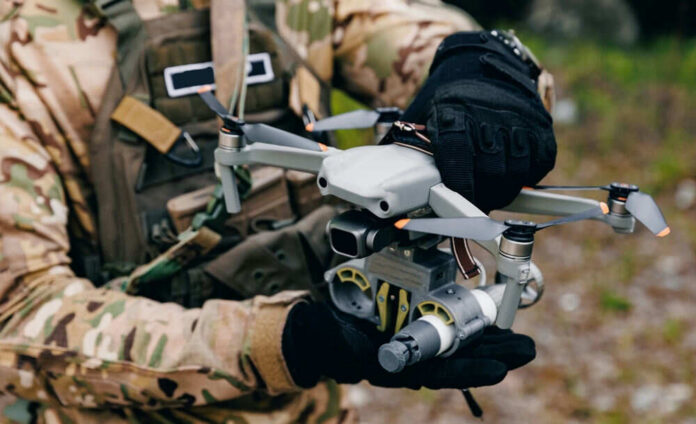
Armin Papperger, the chief executive of German defense giant Rheinmetall, sparked backlash after comments reported from an interview with The Atlantic in which he dismissed Ukrainian drone production as improvised and unsophisticated. Coverage described Papperger comparing Ukrainian drones to “Lego bricks” and suggesting parts were made by “housewives with 3D printers” in kitchens. The remarks hit a nerve because Ukraine’s drone programs have become central to its defense since Russia’s 2022 invasion.
Because Rheinmetall is not an outsider to the war effort, the controversy carried extra weight. Rheinmetall has supplied weaponry to Ukraine and has been publicly linked to Western efforts to strengthen Ukrainian capabilities, including air-defense support. That made the comments look less like detached criticism and more like a public slight toward an ally fighting for survival. The situation escalated quickly as Ukrainian voices framed the remarks as a misunderstanding of modern warfare and of how innovation actually happens under fire.
Ukraine’s Drone Reality: Cheap, Fast, and Designed for Results
Reporting on the dispute underscored a central fact: Ukraine’s drone ecosystem grew rapidly because necessity forced it to. Ukrainian forces and local manufacturers expanded production of small, commercially derived drones adapted for combat, with some systems reported to cost under 1,000 euros while targeting equipment worth millions. That cost-exchange ratio is exactly why many militaries are rethinking drones, loitering munitions, and rapid iteration, even when the hardware looks “simple” compared to legacy platforms.
Ukrainian responses also leaned on numbers—some dramatic—intended to show that effectiveness matters more than polish. One cited line said Ukraine’s “Lego drones” built in kitchens had destroyed more than 11,000 Russian tanks. The available sources present that as a punchy counterclaim, not as an independently verified tally. Still, the political point was clear: Ukrainian defenders argue that battlefield outcomes, not corporate prestige, should be the measure of innovation in a grinding war.
Rheinmetall’s Apology and the Damage-Control Problem
Rheinmetall moved to contain the fallout by issuing an apology and clarification through its X account. The company said it has “the utmost respect” for Ukrainian weapons manufacturers and described Ukrainians’ innovative strength and fighting spirit as an inspiration. The statement also thanked Ukraine for the opportunity to help using available resources, signaling the firm wanted the public to separate Papperger’s phrasing from Rheinmetall’s broader business and political alignment with supporting Ukraine.
The apology mattered because the original comments created a contradiction: a major supplier to Ukraine appeared to publicly belittle Ukraine’s domestic defense sector. In a war, perception and trust affect procurement, coordination, and morale. Sources also noted criticism from at least one German military expert who characterized Papperger’s posture as arrogant. Even if the CEO meant to contrast informal production with high-end industry, the backlash showed how little patience Ukraine has for condescension from comfortable capitals.
The Bigger Lesson: Old-Guard Procurement vs. Rapid-Wartime Innovation
The dispute points to a larger tension across Western defense debates: big-ticket, slow-cycle systems versus cheap, fast-cycle tools that can be replaced and improved weekly. Ukraine’s approach—distributed production, off-the-shelf parts, battlefield feedback—challenges the assumption that sophistication only comes from massive budgets and decades-long programs. Traditional contractors argue for reliability, scale, and integration, while Ukraine’s experience argues that adaptability and numbers can be decisive when the enemy is learning and mass-producing too.
⚡️Rheinmetall backtracks, praises Kyiv's innovation after CEO derides Ukrainian 'Lego' drones.
German defense company Rheinmetall issued a statement on March 29 expressing respect for Ukraine’s defense efforts after facing backlash over comments that appeared to downplay…
— The Kyiv Independent (@KyivIndependent) March 30, 2026
For U.S. conservatives watching from 2026, the story lands in a familiar place: skepticism toward credentialed elites who talk down to ordinary people building practical solutions. The conflict also carries a warning for taxpayers in an era of high costs and war fatigue—results should drive spending, not status. The sources here focus on the rhetoric and apology, not on any U.S. policy shift, but they highlight how quickly narratives can fracture when allies feel disrespected.
Sources:
Rheinmetall CEO mocks Ukrainian drones – the counterattack comes immediately
Rheinmetall apologises for its CEO calling Ukrainian drone makers “housewives with 3D printers”
Rheinmetall apologizes for CEO’s comments about Ukrainian ‘housewives with 3D printers’
Copyright 2026, DailyChive.com