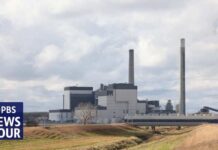

China is on track to overtake the United States as the world’s largest nuclear power nation by 2036 — and it’s doing it by simply building faster than anyone else.
Story Snapshot
- Global nuclear power capacity is projected to jump 44% by 2036, rising from 372 GW to 535 GW, according to a new BloombergNEF report.
- China is expected to nearly double its nuclear capacity from 59 GW to 102 GW, pushing past the US to become the world’s top nuclear power.
- India is also pouring billions into new reactors to boost its energy security and reduce dependence on fossil fuels.
- The International Atomic Energy Agency has raised its nuclear growth projections five years in a row, signaling a broad global shift back toward nuclear energy.
The World Is Going Nuclear Again
A major new report from BloombergNEF, released July 8, 2026, says global nuclear power capacity will climb from 372 gigawatts (GW) today to 535 GW by 2036. That’s a 44% increase in just ten years. The main drivers are simple: electricity demand is rising fast, and countries like China and India are racing to meet it with nuclear power rather than waiting on solar or wind to fill the gap.
This shift is bigger than just one report. The International Atomic Energy Agency (IAEA) has raised its nuclear growth projections five years in a row. In its latest outlook, the IAEA projects nuclear capacity could reach as high as 992 GW by 2050 in its best-case scenario. The World Nuclear Association puts that number even higher — up to 1,446 GW by 2050 if countries hit their targets. The direction is clear: nuclear is back on the table worldwide.
China Builds While the West Debates
China had 59 GW of reactors under construction at the end of 2025 alone. BloombergNEF projects that will push China’s total capacity to 102 GW by 2036 — nearly double what it has today. That growth puts China ahead of the United States, which has long held the top spot in nuclear power. China didn’t get here by accident. It made nuclear energy a national priority and kept building while Western countries slowed down or stopped.
India is following a similar path. The BloombergNEF report says India plans to pour billions into new reactors to strengthen its energy security. Both countries see nuclear as a reliable, high-output power source that doesn’t depend on weather or fuel imports. For fast-growing economies that need steady power around the clock, that’s a major advantage over solar and wind.
What This Means for America
The United States still has the largest nuclear fleet in the world right now — but that lead is shrinking. The US has struggled to build new reactors quickly. Costs run high, approvals take years, and several projects have stalled or been canceled. Meanwhile, China is commissioning new reactors at a pace the US hasn’t matched in decades. Losing the top spot in nuclear capacity isn’t just a symbolic blow — it reflects a real gap in energy strategy and execution.
A BloombergNEF report predicts that world nuclear capacity will increase by 44% (from 372 GW to 535 GW) over the next 10 years. Much of the growth will be in China and India. Article link in reply. pic.twitter.com/AATA2E9gGz
— James Hopf (@HopfJames) July 8, 2026
There are reasons to stay cautious about the 44% growth forecast. Nuclear projects are known for delays and cost overruns. The BloombergNEF report doesn’t break down individual reactor timelines or account for plants that may be retired before 2036. The Global Energy Monitor tracked the world’s operating nuclear fleet at roughly 401 GW across about 421 reactors as of 2026 — a useful baseline, but retirements could offset some of the new capacity gains. Still, with the IAEA, BloombergNEF, and the World Nuclear Association all pointing in the same direction, the trend is hard to dismiss. Nuclear power is no longer a relic of the past. It’s becoming a cornerstone of the global energy future — and the countries building fastest will hold the most power, in every sense of the word.
Sources:
oilprice.com, energyconnects.com, facebook.com, iaea.org, nei.org
© dailychive.com 2026. All rights reserved.