
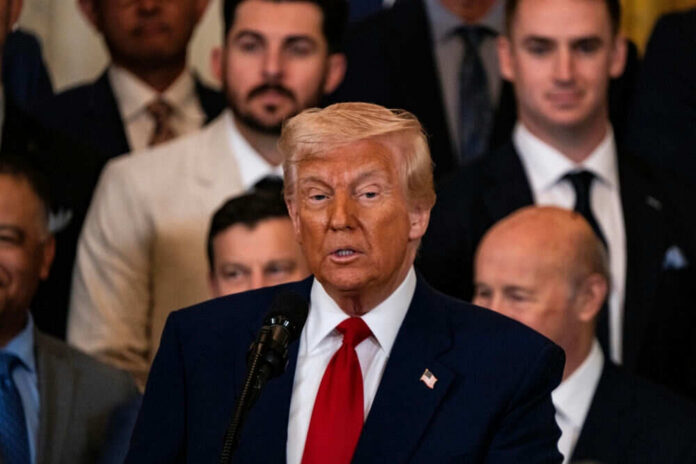
(DailyChive.com) – Trump just put Iran on a ticking clock: take a 45-day ceasefire framework now, or brace for what his team is openly describing as devastating strikes on critical infrastructure.
At a Glance
- Mediators are pushing a two-phase, 45-day ceasefire plan as Trump’s extended deadline approaches.
- The administration has signaled US-Israeli strike plans are ready if Iran refuses the proposal.
- Iran’s leverage centers on the Strait of Hormuz, a chokepoint with global energy and trade consequences.
- Pakistan and other regional players are working parallel channels, but reports describe negotiations as near a “dead end.”
Trump’s Deadline Diplomacy Meets a Narrow Off-Ramp
President Donald Trump’s deadline-driven approach is shaping the endgame of the current US-Iran clash, with mediators reportedly floating a two-phased, 45-day ceasefire designed to pause fighting and open a path to something more durable. Trump extended his original cutoff by roughly 20 hours into Tuesday, creating a final window for Iran to accept terms. Reporting also indicates US and Israeli operational plans remain staged, with diplomacy functioning as the last off-ramp before escalation.
Iran has not publicly accepted the reported framework, and key details remain murky, including which mediators are carrying which specific terms and what verification would look like on the ground. That uncertainty matters because ceasefires in the region often fail when enforcement is vague or when combatants treat pauses as opportunities to reposition. In practical terms, the diplomatic sprint is colliding with military timetables, leaving little room for miscalculation or mixed messages.
Why the Strait of Hormuz Is the Real Pressure Point
The Strait of Hormuz sits at the center of the standoff because it ties battlefield decisions to household economics. Reporting indicates Iran’s retaliation has included shutting the strait, a move that threatens global shipping lanes and energy flows. Trump has linked any ceasefire outcome to reopening the corridor, and US intelligence assessments cited in reporting have suggested Iran is unlikely to give up that leverage quickly. This is where foreign policy meets inflation, fuel prices, and supply-chain costs at home.
For conservatives frustrated by years of energy vulnerability and global instability, the strait question highlights a recurring pattern: America’s economy can be squeezed by distant chokepoints when adversaries believe Washington lacks resolve. At the same time, any effort to force the issue carries risk to US forces and allies in the region, especially if Iran chooses asymmetric retaliation. The strategic dilemma is simple: keeping trade moving without sliding into a wider war that Congress and the public will have to finance.
Mediators, Mixed Signals, and the Limits of “Last Chance” Talks
Regional governments have tried to keep channels open, but reports describe the mediation track as strained. One account says the broader effort hit a dead end, even as Pakistan has been positioned as an active go-between with constant White House contact and its own “Islamabad Accord” concept. Qatar, historically central to past ceasefire efforts, has been described as reluctant to reprise that role. These cross-currents suggest a crowded mediation field without a single, dominant broker.
Conflicting public narratives are also complicating the diplomacy. Trump has publicly claimed Iran is “begging” for a deal, while Iranian messaging has pushed back and conditioned de-escalation on the other side halting first. That gap does not prove either side is acting in bad faith, but it does signal a political problem: leaders often need different “wins” for domestic audiences, especially during wartime. With deadlines, reputations, and deterrence on the line, pride can become policy.
The Military Reality: Strikes, Spillover, and Unfinished Business
Reports from early April describe continued combat activity, including a US strike on a bridge in Karaj and the downing of a US F-15E in Iran, with one crew member rescued and searches ongoing for the other. Those events underscore that the conflict is not theoretical or distant; it has immediate costs and escalatory potential. They also raise the stakes for Washington: any negotiation happens while Americans remain in danger and military options remain active.
The short-term risks described in reporting include large-scale attacks on Iranian infrastructure, potentially involving energy and water systems, if diplomacy collapses. Long-term risks include a spiral where both sides feel compelled to respond, turning a deadline into a protracted campaign with unpredictable regional blowback. For voters already convinced the federal government lurches from crisis to crisis, this is another test of whether Washington can combine strength with restraint, without drifting into an open-ended commitment.
What’s still unclear is whether the reported 45-day concept has enough enforcement and sequencing to survive first contact with reality—especially with the Strait of Hormuz as a precondition and with multiple mediators pulling in different directions. If a pause happens, the next fight becomes verification, compliance, and who bears the cost of enforcement. If it fails, the administration’s credibility and the region’s stability could swing on decisions made inside a very tight deadline window.
Sources:
Regional effort to broker ceasefire between US and Iran reportedly hits dead end
Iran, Donald Trump, ceasefire, Strait of Hormuz
The Latest: Trump insists Iran is begging to make a deal after Tehran dismisses ceasefire plan
Copyright 2026, DailyChive.com