
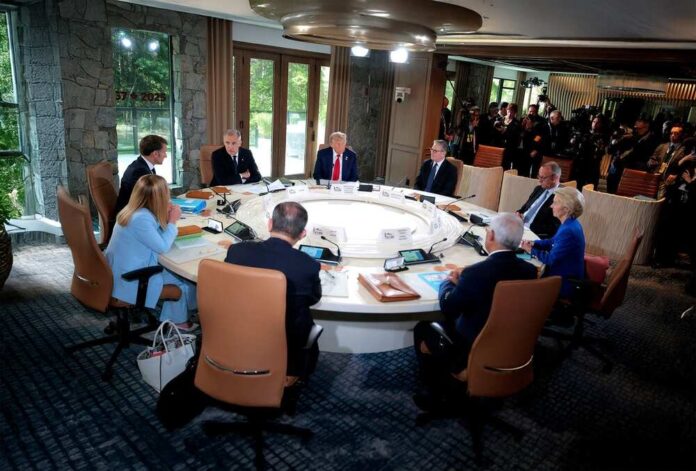
(DailyChive.com) – President Trump’s “Board of Peace” challenges the U.N.’s effectiveness, reigniting debates on global governance.
Story Snapshot
- The “Board of Peace” is proposed as an alternative to the U.N. for global issues.
- Rep. Ronny Jackson criticizes U.N.’s inaction and promotes U.S. sovereignty.
- Jackson’s related legislative actions include relocating the U.N. headquarters.
- This initiative aligns with Trump’s “America First” policy.
Trump’s “Board of Peace” Initiative
President Trump has introduced the “Board of Peace,” a new strategic initiative aiming to address global issues that the United Nations has allegedly failed to tackle. This move, highlighted by Texas Representative Ronny Jackson, marks a significant shift in U.S. foreign policy under Trump’s administration. The board is framed as a bold alternative to the U.N., emphasizing a focus on U.S. sovereignty and direct action in international peacekeeping efforts.
Jackson’s media appearances, including a notable discussion on “Wake Up America,” underline the systemic inefficiencies he attributes to the U.N. He argues that the board will effectively challenge the status quo, providing a platform for the U.S. to lead global peace efforts without the bureaucratic hurdles that often stymie the U.N.’s processes.
Legislative Actions and Criticisms
Rep. Ronny Jackson has been at the forefront of legislative actions that question the U.N.’s role and effectiveness. His recent proposal to relocate the U.N. headquarters from New York City is a testament to the escalating tensions and dissatisfaction with the current international governance structures. Jackson has also sponsored bills aimed at restructuring U.S. foreign aid to emphasize bilateral agreements over multilateral engagements, reflecting a broader Republican skepticism towards the U.N.
These actions are part of a larger narrative of U.S. conservatives advocating for reduced dependency on international organizations perceived as ineffective or misaligned with American interests. The introduction of the “Board of Peace” is seen as a continuation of Trump’s “America First” policy, prioritizing national interests over global consensus.
Potential Impacts and Future Developments
The establishment of the “Board of Peace” raises questions about the future of global governance. In the short term, it may amplify U.S.-U.N. rhetoric and lead to potential funding cuts to U.N. agencies. Long-term implications could include a realignment of international peace efforts, with the U.S. potentially sidelining the U.N. if the board gains traction and proves effective.
While proponents argue that a U.S.-led board could bring efficiency and direct action, critics warn that undermining the U.N. could disrupt global cooperation and diminish multilateral efforts essential for addressing complex international challenges. The success and influence of the “Board of Peace” will depend largely on its operational structure and the support it garners from both domestic and international partners.
Sources:
Ronald Jackson (UNDP Crisis Bureau head)
Ronald Jackson’s author page on UNDP
Ronny Jackson’s Congressional Record
Press Release from Ronny Jackson’s Office
Copyright 2026, DailyChive.com