
As Beijing talks “peace” while keeping warships and jets around Taiwan, Taipei is turning into a bridge—not a brake—on lowering the risk of war.
Story Snapshot
- China keeps military pressure on Taiwan even during talk of dialogue, raising real risks.
- Taiwan runs its own government and foreign policy, and seeks a larger voice in global bodies.
- United States law backs robust unofficial ties with Taiwan and its global participation.
- Beijing cites United Nations rules to block Taiwan’s seat; others say those rules do not decide sovereignty.
China’s Pressure Campaign Meets Taiwan’s Push for Engagement
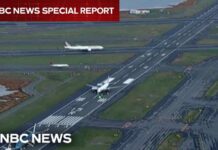
China kept seven warships and seven military aircraft around Taiwan in a single day this spring, even as leaders talked about peace with Taiwan’s opposition party. Taiwan’s government says these drills are now a “new normal,” designed to wear down defenses and shrink its air and sea space. The moves raise the chance of a mistake that could pull in the United States and Asia’s major economies. This is pressure dressed up as dialogue, and it keeps the region on edge.
Taiwan argues it is a self-governing, sovereign state with its own national defense and foreign affairs. The government’s official portal states this position clearly and ties it to constitutional goals of friendly relations with other nations. Taipei is not calling for a fight. It seeks more space to join global health, trade, and aviation efforts. That push is not only about pride. It is about direct access to tools that keep people safe and economies stable.
What United States Law Actually Supports
The 1979 Taiwan Relations Act set the legal base for strong unofficial ties after Washington switched recognition to Beijing. A Congressional Research Service brief explains that the law supports continued relations, trade, and Taiwan’s participation in international groups where states are not a requirement. In practice, that has meant support for Taiwan’s voice in technical bodies. The logic is simple: the world is safer when 23 million people are not cut out of crisis planning.
Many Americans across party lines worry that elites talk big about stability while letting problems fester. This is one of those cases. Clear rules and lines reduce risk. When Washington helps Taiwan join more functional forums, it lowers the odds of misread signals and accidents. That approach also does not force countries to pick sides on sovereignty. It invites cooperation on health, transport, and trade where all benefit—without a dramatic diplomatic break.
The Fight Over United Nations Resolution 2758
Beijing says United Nations General Assembly Resolution 2758 proves there is “one China,” that Taiwan is part of it, and that the People’s Republic of China alone represents China in the United Nations system. A United States Congressional Research Service summary confirms the resolution recognized the People’s Republic of China representatives as “the only legitimate representatives of China” and expelled “the representatives of Chiang Kai‑shek”. That is the legal gate Beijing uses to block Taiwan’s seat.
Legal scholars and Taiwan’s partners counter that the text decided who holds China’s United Nations seat, not Taiwan’s sovereignty. They argue the resolution does not mention Taiwan and cannot settle its status. This split matters. If the resolution is about representation only, then practical participation by Taiwan in technical agencies should not be blocked. If it decides sovereignty, Beijing can cite it to stop any seat or status for Taiwan. The text’s silence fuels today’s gridlock.
Why Treating Taipei as an Asset Lowers Risk
Taiwan’s steady role in trade and technology links Asia to United States consumers and jobs. When China fires rockets near Taiwan’s waters, shipping and insurance costs jump, and supply chains wobble. Giving Taiwan a seat at technical tables helps crisis hotlines, data sharing, and safety rules work better. That is good for citizens who pay more when ships stack up offshore and factories halt for lack of parts. Stability at sea means lower prices at home.
The Pentagon's plan to place two liaisons between itself and #Taiwan's Defense Ministry could improve communication between Washington and Taipei.
The two individuals will come from the Office of the Under Secretary of Defense for Policy and the Institute for Defense Analyses… pic.twitter.com/dNHCw0tbUE
— John Rossomando ☦ (@John_Rossomando) October 20, 2026
For conservatives, this is about deterrence, secure supply chains, and not letting a rival set the rules. For liberals, it is about self-determination, human rights, and preventing war. For both, it is about a government that should reduce risk and waste. Functional inclusion of Taiwan—without forcing recognition votes—meets those aims. It backs peace through strength, respects facts on the ground, and avoids grandstanding that elites use while problems get worse.
Sources:
congress.gov, defensa.gob.es, uscc.gov, english.www.gov.cn, pf.org.tw
© dailychive.com 2026. All rights reserved.