

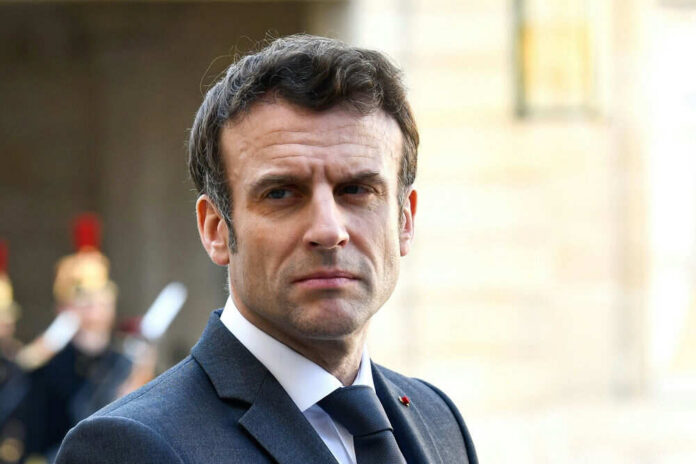
(DailyChive.com) – French President Emmanuel Macron is pushing for a massive EU debt scheme to compete with America and China, exploiting President Trump’s tough negotiating stance as a pretext for European socialism on steroids.
Story Snapshot
- Macron demands €1.2 trillion annually in joint EU debt through eurobonds for AI, defense, and green technology investments
- French leader uses Trump’s negotiation tactics as justification, calling the administration “openly anti-European”
- Germany and fiscally conservative northern EU states oppose the permanent debt union scheme
- The proposal would entrench federal-style EU control while burdening taxpayers across member nations
Macron’s Trillion-Euro Debt Demand
Emmanuel Macron released interviews across major European publications on February 10, 2026, demanding the European Union establish permanent joint debt through eurobonds. The French president specified €1.2 trillion in annual public-private investments targeting defense, green technology, artificial intelligence, and quantum computing. Macron warned that without this massive spending increase, Europe would be “swept aside” by the United States and China in technological competition. This represents a significant escalation from temporary COVID-era borrowing, seeking to permanently transform EU fiscal policy into a centralized debt-sharing arrangement.
Trump’s Negotiations Twisted Into Crisis Narrative
Macron seized upon President Trump’s January 2026 negotiations regarding Greenland and potential EU tariffs, characterizing them as a “wake-up call” against supposed American aggression. The French leader labeled what he called the “Greenland moment” as justification for European strategic autonomy funded through collective borrowing. Macron’s rhetoric painted Trump’s administration as threatening, despite the president’s subsequent tariff adjustments at Davos. This manipulation of standard diplomatic negotiations into an existential crisis conveniently supports Macron’s long-standing agenda for EU fiscal integration, which predates the current administration by years.
Northern States Resist Debt Union Expansion
Germany and fiscally conservative northern European nations oppose Macron’s eurobond scheme, maintaining their objections to permanent joint debt arrangements. The 2020 NextGenerationEU recovery fund totaling €750 billion was explicitly temporary, designed for pandemic response rather than ongoing expenditure. Northern member states view permanent debt-sharing as fiscally irresponsible and a violation of national sovereignty over taxation and spending. These countries historically reject what they consider southern European fiscal profligacy subsidized through shared borrowing. The February 12 EU summit at Alden Biesen Castle will address competitiveness, but Macron’s debt proposal faces substantial resistance from leaders prioritizing fiscal discipline.
Centralized Control Threatens National Sovereignty
Macron’s €1.2 trillion annual spending scheme would fundamentally transform the European Union into a debt-sharing federation, undermining member state fiscal independence. The proposal includes controversial “Made in Europe” content requirements that industry leaders, particularly automakers, warn will impose crushing regulatory burdens on businesses. This centralization concentrates power in Brussels bureaucrats while forcing taxpayers across diverse economies to backstop spending decisions made by unelected officials. The plan exploits legitimate concerns about technological competition to advance political integration that voters in fiscally responsible nations consistently reject. Europeans opposing this agenda recognize it as socialism disguised as competitiveness policy, expanding government control while burdening productive citizens with unsustainable debt obligations.
Strategic Autonomy or Fiscal Recklessness
Proponents argue joint EU borrowing leverages Europe’s collective economic capacity to fund critical technology investments in AI, quantum computing, and defense capabilities. Macron contends the 450-million-person EU market remains “under-leveraged” compared to American and Chinese public-private partnerships driving innovation. However, this framing ignores fundamental differences between America’s entrepreneurial economy and Europe’s regulatory approach. Conservative fiscal policy recognizes that government debt-fueled spending rarely produces innovation comparable to private investment and competitive markets. The proposal risks locking Europe into permanent deficit spending while concentrating decision-making power among political elites disconnected from taxpayer accountability. True competitiveness emerges from reducing regulatory burdens and taxation, not expanding bureaucratic control through centralized borrowing.
Sources:
Macron warns Europe risks being ‘swept aside’ by US and China – RFI
Macron pushes for EU common debt capacity to fund Europe’s future – Euronews
Macron Calls on Europe to Invest in Its Strategic Sectors – Asharq Al-Awsat
Macron urges EU to seize ‘Greenland moment’ and break reliance on US and China – Irish Times
Copyright 2026, DailyChive.com