
(DailyChive.com) – China’s industrial drone swarm capabilities expose America’s fatal vulnerability in the Iran war, proving Trump supporters right to demand no more endless foreign entanglements that drain our resources.
Story Highlights
- China can produce tens of thousands of low-cost attack drones, overwhelming U.S. defenses strained by Iranian tactics in the current war.
- Interceptor missiles cost up to 100 times more than the drones they target, creating an unsustainable equation for American forces.
- Pentagon races to field hundreds of thousands of cheap drones by 2027, but supply chain dependence on China leaves us exposed now.
- Iran war highlights the real threat: adversaries exploit our high-cost systems while we foot the bill for endless conflicts.
China’s Drone Swarm Dominance
China unveiled its Atlas drone swarm system on March 25, 2026, showcasing precision strike capabilities from a single operator. The Swarm-2 vehicle launches 48 fixed-wing drones every three seconds, with nearly 100 drones forming dense formations autonomously. These drones handle reconnaissance, electronic warfare, and attacks through layered payloads and real-time collision avoidance. In January 2026, the PLA controlled 200 drones in salvos, building jamming resistance and saturation power unmatched by U.S. systems today.
Iran War Exposes U.S. Air Defense Weaknesses
Iran’s Shahed-136 drones, proven in Ukraine, now stress U.S. defenses during Trump’s second-term conflict with Tehran. Interceptor missiles like those in Patriot systems cost up to 100 times more than each drone, forcing unsustainable spending as swarms overwhelm stockpiles. The ongoing war in 2026 demonstrates this asymmetry directly, with American forces burning through expensive munitions against cheap attackers. MAGA base frustration grows as high energy costs from the war compound fiscal burdens from past overspending.
Pentagon’s Urgent—but Late—Response
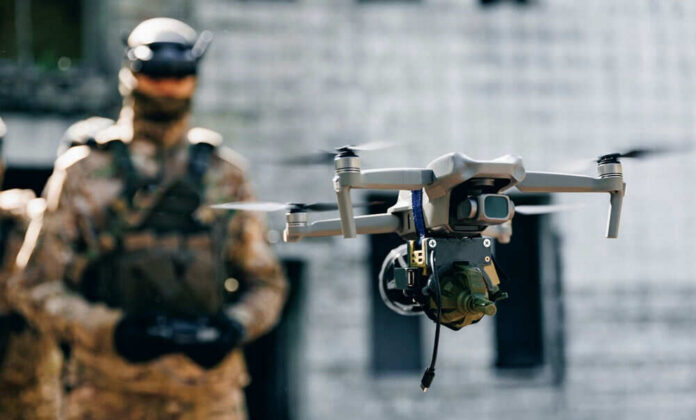
The Pentagon launched the Drone Dominance Program with over $1 billion to acquire hundreds of thousands of low-cost, one-way attack drones by 2027. The Blue UAS List approves 29 systems like Shield AI’s V-Bat and AeroEnvironment’s Red Dragon, avoiding Chinese supply chains. Tests continue at Fort Benning through April 2026, while U.S. Central Command fields LUCAS squadrons based on reverse-engineered Iranian designs. This shift acknowledges the production gap, but current vulnerabilities persist amid Iran fighting.
Strategic Risks to American Priorities
China’s industrial capacity to build tens of thousands of drones mirrors Cold War quantity over quality, targeting Taiwan and Indo-Pacific flashpoints. U.S. reliance on Chinese drone markets creates dangerous dependencies the Blue UAS List only begins to fix. As Trump battles Iran without quick victory, analysts warn air defenses remain dangerously exposed to saturation attacks. Conservatives question endless wars that erode readiness against real threats like Beijing, prioritizing America First over foreign adventures.
China Could Build Tens of Thousands of Attack Drones. The U.S. Military Has No Way to Match It and the Iran War Proves Ithttps://t.co/qiwgtLSO3S
— Harry J. Kazianis (@GrecianFormula) March 27, 2026
Implications for National Security
Taiwan pursues suicide drones as a deterrent, while PLA naval drills counter swarms in Taiwan scenarios. Directed-energy weapons and AI interceptors race to deployment, but multi-year gaps leave U.S. personnel vulnerable. The Iran war proves low-cost tactics work, forcing procurement overhaul. For families facing inflation and energy hikes, this underscores the cost of regime-change pursuits—resources diverted from securing borders and economy at home.
Sources:
Big Chinese Drones, European Fighters: The 2026 Combat Aircraft Outlook
China’s Drone Swarm System Shows Precision Strike Capabilities
Pentagon Drones Chinese Dominated Market List 2026
Drone Swarm Threats and Countermeasures 2026
China Military Drills Against Drone Swarms
Copyright 2026, DailyChive.com