
(DailyChive.com) – President Trump’s firm rejection of Iran’s latest proposal exposes Tehran’s ploy to dodge nuclear accountability while holding global energy hostage through the closed Strait of Hormuz.
Story Snapshot
- Iran submitted a proposal on April 30, 2026, via Pakistan, offering to reopen the Strait of Hormuz in exchange for ending the U.S. naval blockade and war, but deferring nuclear talks.
- President Trump and Secretary Rubio immediately dismissed it, insisting Iran’s 450kg of highly enriched uranium must be addressed first to prevent a nuclear weapon.
- The Strait of Hormuz remains closed for nearly nine weeks, disrupting 20% of global oil flow and spiking energy prices amid a fragile ceasefire since April 8.
- Iran’s Navy commander threatens to unveil a “new weapon” soon, escalating tensions as mediators like Russia anticipate a revised Iranian offer.
- Both sides dig in: U.S. prioritizes national security and American interests; Iran leverages economic chaos without nuclear concessions.
Diplomatic Deadlock Emerges
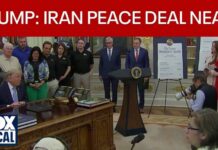
Iran handed a new peace proposal to U.S. mediators through Pakistan on April 30, 2026. The document proposes reopening the Strait of Hormuz, a vital chokepoint for 20% of world oil, in return for lifting the U.S. naval blockade and formally ending the war that began with U.S.-Israel strikes on February 28. This offer explicitly postpones discussions on Iran’s nuclear program, including its stockpile of 450kg of near-weapons-grade uranium. President Trump rejected the terms outright during a May 1 White House event, emphasizing that America will not allow Iran to acquire nuclear weapons. Secretary of State Marco Rubio echoed this, calling Iranian negotiators skilled at delaying tactics while linking the Hormuz closure to their nuclear ambitions. This stance upholds U.S. redlines on security threats, frustrating those weary of endless foreign entanglements that drain resources from American families.
Timeline of Escalation and Standoff
The conflict ignited on February 28, 2026, when U.S. and Israeli forces launched surprise strikes against Iran, prompting Tehran’s closure of the Strait of Hormuz as economic retaliation. A ceasefire took hold on April 8, halting active fighting after nearly six weeks of war. One round of direct U.S.-Iran talks failed shortly after, followed by Trump canceling planned negotiations in late April, pulling envoys Jared Kushner and Steve Witkoff. Iran’s April 30 proposal arrived amid this freeze, but U.S. leaders dismissed it on May 1. Iran’s Foreign Minister Abbas Araqchi met Russian President Putin that day, as mediators expect a revised Iranian offer soon. Navy Commander Shahram Irani warned of revealing a new weapon “very soon” that would shock enemies. This pattern reveals a regime adept at asymmetric warfare, testing American resolve while everyday citizens bear higher energy costs from disrupted markets.
Stakeholder Motivations and Power Plays
President Trump dictates U.S. policy with a hardline focus on dismantling Iran’s nuclear threat, maintaining the blockade to force concessions and protect allies like Israel. Iran, led by Supreme Leader proxies and Araqchi, seeks war’s end and blockade relief to preserve its uranium stockpile and Hormuz leverage, described by U.S. officials as an “economic nuclear weapon.” Pakistan acts as primary mediator for regional stability, while Russia influences via strategic ties, potentially aiding uranium transfers. Israel aligns with U.S. goals to neutralize threats. Power dynamics favor U.S. military superiority against Iran’s economic chokehold, yet stalled talks boost hardliners on both sides. Americans across the political spectrum grow skeptical of elite-driven diplomacy that prioritizes global games over domestic priorities like affordable energy and border security.
Prolonged closure risks ceasefire collapse, spiking oil prices and volatility for U.S. consumers and allies in Europe and Asia. Long-term, unresolved nuclear issues could reignite war or force a deal resembling the failed JCPOA. Iranian civilians suffer under blockade, while global shipping faces disruptions. Politically, this entrenches divisions, strains Russia-Iran ties, and elevates mediators like Pakistan. Defense sectors benefit from tensions, but ordinary families face inflation echoes from past fiscal mismanagement. Experts note no resolution without Iran yielding uranium, underscoring Trump’s maximum pressure as essential to safeguarding American interests against deep state-style appeasement.
Iran Offers New Proposal Amid Stalled US Peace Talks | Breaking News | Express247#Iran #USTalks #BreakingNews #MiddleEast #GlobalNews #StraitOfHormuz #IranUS #WorldPolitics #Express247 pic.twitter.com/4qvENGvHJb
— Express 24/7 (@Express247PK) May 1, 2026
Economic and Security Implications
The Hormuz shutdown disrupts ports and trade, hitting global importers hardest and echoing past tanker crises with a nuclear twist. U.S. insistence on nuclear first aligns with conservative principles of strength over compromise, preventing a nuclear-armed adversary that endangers freedom worldwide. Both left and right lament government failures to deliver prosperity, as elites pursue endless conflicts instead of tackling inflation, immigration, and energy independence. Iran’s threats signal desperation, but Trump’s unyielding position protects the American Dream from foreign threats that erode hard-won security.
Sources:
https://www.rte.ie/news/middle-east/2026/0501/1571205-middle-east/
https://www.rferl.org/a/putin-iran-strategic-relationship-araqchi-russia/33743629.html
Copyright 2026, DailyChive.com