
President Trump and top tech chiefs signed a voluntary AI safety accord at the White House that leans on self-policing over new laws.
Story Snapshot
- Trump and leading AI executives signed a voluntary safety accord focused on reviews and self-regulation.
- House Speaker Mike Johnson called it a joint statement of principles with robust internal controls.
- The accord emphasizes internal and external reviews rather than heavy new regulation.
- The event gathered leaders from major AI firms, signaling broad industry participation.
What Was Signed And Who Was In The Room
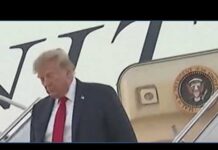
President Trump said he and leading artificial intelligence executives signed a voluntary accord after a White House lunch on September 29, 2026. The accord centers on safety practices for advanced systems and relies on company commitments. The Associated Press reported the agreement includes internal and external reviews of the technology. Reporters identified attendees from Meta, Google, Anthropic, NVIDIA, and other major players, reflecting wide industry participation around the table.
Trump told reporters the companies must self-police and that he sees strong self-policing already. He stressed support for innovation alongside safety checks rather than heavy new laws. House Speaker Mike Johnson described the document as a joint commitment and a statement of principles, with robust internal controls at the companies that signed on. Together, those statements place the burden on firms to test, audit, and report on risks before and after model releases.
What The Accord Emphasizes On Safety
According to published reports, the accord highlights internal reviews by company safety teams and external reviews by outside evaluators. These reviews are aimed at catching dangerous behavior, misuse risks, and technical faults before models scale to millions of users. The plan points to layered checks rather than rigid rules written by Congress right now. That design matches how fast the technology moves and how companies already gate model releases with staged testing and audits.
Public comments from executives framed the move as an industry-wide safety baseline. They referenced well-known best practices like security testing, red teaming, and post-release monitoring. Trump’s remarks linked this approach with oversight from existing law enforcement and national security agencies, rather than building a new regulator from scratch. That balance seeks to keep the United States competitive while putting sharper eyes on the highest-risk systems.
How This Fits Prior U.S. AI Safety Moves
The United States has leaned on voluntary commitments before. In 2023, the White House secured pledges from seven leading firms to adopt safety steps such as outside testing, watermarking, and clearer public reporting of capabilities and limits. The new accord follows that playbook. It asks companies to keep raising their own bars while allowing the federal government to monitor and coordinate. Supporters say this can move faster than writing complex laws while the technology shifts week to week.
🇺🇸 Speaker Mike Johnson, after leaving the White House AI meeting: “We can keep America’s edge over our competitors, and we can do that in a safe way.”
That may be the clearest formulation yet of what Washington is trying to build after today’s meeting: preserve the U.S. lead in…
— The Tectonic (@thetect0nic) September 29, 2026
This approach comes with trade-offs that matter to everyday people. Many on the right want fewer rules that slow growth and jobs, but they also want strong guardrails against abuse and foreign threats. Many on the left want tighter oversight to protect workers, civil rights, and public safety. A voluntary accord tries to bridge these views: it pushes companies to act now, invites outside testing, and keeps options open for tougher steps later if risks grow or firms fall short.
Why It Matters For Power, Trust, And Everyday Life
Americans worry that elites make deals that help insiders first. This accord puts responsibility on the same companies racing to win the AI arms race. If the promised internal and external reviews uncover and fix hazards before they spread, the public benefits. If they do not, the pressure for formal rules will rise fast. For now, the White House bet is clear: move with speed, keep America’s edge, and ask industry to prove it can put safety first.
Sources:
cnbc.com, twincities.com, cbsnews.com, wesh.com, presidency.ucsb.edu, pbs.org
© dailychive.com 2026. All rights reserved.