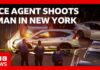

A federal immigration operation in Austin ended with a man shot, a public outcry, and an investigation led by the same department that pulled the trigger.
Story Snapshot
- Homeland Security said the man had a final removal order and is in federal custody in stable condition.
- Homeland Security Investigations is leading the probe with Federal Bureau of Investigation (FBI) assistance.
- The man’s lawyers say he was delivering food, did not know agents were behind him, and the force was unwarranted.
- Protests and elected officials are pressing for transparency and independent oversight.
What Officials Confirmed After the Austin Shooting
Homeland Security said an officer-involved shooting took place in Austin on September 20, during a law-enforcement operation. The agency said the man, identified by attorneys as Wilber Rafael Garcés Perez, had entered the country unlawfully during the prior administration and had a final removal order. Officials said he was in stable condition and in federal custody pending removal after the shooting. Reporters across outlets described it as a law-enforcement incident and not an accident or private dispute.
Homeland Security Investigations is leading the inquiry with help from the Federal Bureau of Investigation, which signals an official use-of-force review. Local and state partners also engaged after the incident, including Austin police and the Texas Rangers, according to local reporting on the joint response. Those agencies could produce scene reports, interviews, and forensic records that are key to understanding what led to gunfire.
What Remains Unclear About Why Force Was Used
Officials have not released body camera video, dash camera footage, radio logs, or a detailed threat narrative. Public statements so far focus on the man’s status and custody, not on any specific act that triggered the shot. Reporters note the lack of a first-hand agent account on the record. That gap leaves open key questions about whether officers faced a weapon, a vehicle threat, or other imminent danger at the moment they fired.
Lawyers for Garcés Perez told reporters he was working a DoorDash delivery and did not realize an unmarked vehicle was tied to immigration enforcement. They said an agent sideswiped him, he tried to pull over, and he was shot from behind. They also said there was no foot chase. These claims challenge the official framing of the stop and argue the force was not justified. These are attorney statements, not yet backed by released video or forensic files.
Custody, Medical Claims, and Public Trust
Attorneys said agents took Garcés Perez from the hospital to detention with a bullet still in his back and without pain medication, and that doctors did not remove the bullet because it was near his spine. They also said he had no criminal record and had applied for asylum after entering in 2024. The legal status claims conflict with Homeland Security’s description of a final removal order. These details heighten concern about care, due process, and accuracy in government statements.
Protests in Austin demanded an independent investigation and the release of video and radio traffic. Speakers argued that having Homeland Security Investigations lead the probe looks like the department investigating itself, which deepens mistrust. Calls for outside review aim to ensure any findings rest on evidence the public can see and test. That pressure will likely grow until footage, forensics, and a full use-of-force report are released.
Why This Case Taps a Larger American Anxiety
Americans across the spectrum want safe communities, fair rules, and honest government. This case hits those nerves. People who back tougher enforcement ask whether officers faced a real threat that justified firing. People who worry about civil rights ask whether a traffic stop became a shooting without cause. Both sides want clear evidence. Federal use-of-force policy requires an “objectively reasonable” belief of imminent danger, judged by facts, not status or politics.
What To Watch For Next
Key records can close the gaps. Body and dash video, radio traffic, computer-aided dispatch logs, and the official use-of-force report would show timing, commands, movement, and any threats. Forensic analysis of bullet paths and vehicle damage would test both versions of events. Medical records would confirm wound location and care. Clear releases, not summaries, are the fastest path to public trust. Until then, claims on all sides will outrun facts, and confidence will suffer.
Sources:
npr.org, abcnews.com, deseret.com, cbsnews.com, nytimes.com, fox7austin.com
© dailychive.com 2026. All rights reserved.