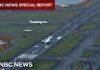

A router linked to air-traffic communications tried to connect more than 1,000 times every few seconds, helping trigger a nationwide ground stop that exposed cracks in how America runs its skies.
Story Highlights
- Officials tied the outage to contractor maintenance during a copper-to-fiber network transition.
- A router flooded the network with over 1,000 connection attempts every four to five seconds, disrupting communications and radar feeds.
- L3Harris is assisting the investigation; the removed hardware is under examination at company sites.
- Older Federal Aviation Administration systems and slow modernization made the failure hit nationwide.
What Officials Say Triggered the Ground Stop
Transportation Secretary Sean Duffy said the air travel meltdown followed maintenance at a remote site where copper lines are being replaced with fiber. During that work, a router hammered the system with more than 1,000 connection attempts every four to five seconds. Controllers then lost steady communications and saw radar gaps. The Federal Aviation Administration ordered a nationwide halt on departures for hours while systems stabilized and airlines regrouped.
The Federal Aviation Administration and L3Harris removed and isolated the suspect router for testing. Reporting says equipment in Texas and Arkansas is under review. Investigators are checking whether installer mistakes or a faulty device caused the problem. Duffy said the government has not yet determined the exact fault. L3Harris stated it is supporting the Federal Aviation Administration’s probe to understand the conditions that led to the stop of air travel.
How a Local Fault Became a National Breakdown
Federal officials and industry reports point to a fragile backbone that still leans on aging copper lines and complex legacy systems. That setup can turn a single device failure into a broad service loss. After a 2023 outage, government auditors found many critical systems were “unsustainable” or “potentially unsustainable.” Progress since then has been uneven, leaving gaps in redundancy and change control that raise the stakes when maintenance goes wrong.
The immediate cause appears technical and specific: a router overwhelmed the network, which led to unstable radios and radar feeds. But the larger story is structural. Old infrastructure, tight coupling, and limited backup paths let an equipment issue ripple across the national airspace system. That mix frustrates flyers and crews on both sides of the aisle who see federal agencies and contractors trading blame while core systems lag behind what safety and commerce demand.
Accountability, Conflicts, and Next Steps
Duffy tied the failure to work by L3Harris, the Federal Aviation Administration’s telecommunications contractor at the site. He said investigators are weighing whether there was “incompetence,” or a faulty router, and stressed that responsibility is not yet final. L3Harris has not admitted fault and remains part of the technical review. Officials say the router and related equipment are in controlled testing to confirm what failed and why it propagated so widely.
The feds own a $1 billion stake in the military contractor being blamed for the air traffic meltdown https://t.co/3pRiICoaVn The Trump administration has been blaming a contractor for Friday's air traffic control outage. That accusation should raise new questions about the… pic.twitter.com/tacbeyQWtp
— TexasBlue (@MakeTexasBlue22) November 16, 2026
Lawmakers and auditors have warned for years about slow upgrades, weak oversight, and tangled contractor roles. Government Accountability Office reports urge faster modernization and stronger program control. The path forward is clear but hard: fix the backbone, enforce strict change procedures, and design real failovers. Flyers do not care which logo is on the router; they want a system that does not collapse when one box misbehaves.
Sources:
reason.com, cnn.com, apnews.com, aviationweek.com, newsobserver.com, cnbc.com, usatoday.com, gao.gov
© dailychive.com 2026. All rights reserved.