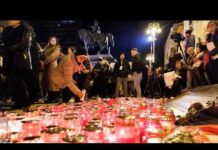

Riot police in Paris fired tear gas and charged crowds after projectiles hit officers, turning a large protest into a street clash.
Story Snapshot
- Police used tear gas near Place de la République after objects were thrown at officers.
- Authorities said a hard core of rioters attacked police with bottles and fireworks.
- French police describe these weapons as “graduated” defensive tools.
- Reports confirm tear gas and clashes across multiple Paris demonstrations this fall.
Police Move to Disperse Crowds After Clashes Erupt
Reuters reported that police in Paris fired tear gas and charged protesters on October 17 after groups hurled bottles, paving stones, and mortar-style fireworks at officers near Place de la République. Video showed riot units pushing demonstrators back from Rue du Faubourg du Temple as canisters smoked over the roadway. The Paris police prefecture stated that officers moved to restore public order as a hard core of several hundred rioters targeted police with projectiles, including at least one firebomb.
Agence France-Presse reporting carried by the Times of Israel also described tear gas use and street clashes during mass demonstrations in the capital, reinforcing the timeline and tactics reported by Reuters. A broader Reuters review detailed how protests across France escalated in waves this fall, with scenes of barricades, fires, and running battles in several cities, including Paris. These accounts align on a key fact: officers leaned on crowd-control tools to break up groups that turned violent near the end of marches.
How French Police Justify Tear Gas in Crowds
The French National Police told the Associated Press that “intermediate-force weapons,” which include tear gas and certain grenades, are defensive tools that allow a proportionate, step-by-step response to threats. The institution frames tear gas as a way to create distance and reduce direct blows between officers and protesters, which can lower injury risk to both sides when projectiles fly or fireworks burst at close range. This is the standing rationale often cited during urban unrest.
That doctrine fits what Paris officials described during the latest events: a response ramping up from cordons and loudspeaker orders to gas and charges once officers faced attacks. However, these reports do not measure how many canisters were used or map where gas spread across blocks. The stories also do not separate exposures between violent actors, peaceful protesters, and bystanders. Those gaps matter for judging proportionality under French crowd-control rules.
Injuries, Scale, and the Pattern Seen in Recent French Protests
French leaders have highlighted injuries to officers during this protest wave. Reuters reported that Prime Minister Sébastien Lecornu said more than 900 police officers were hurt over the period, underscoring the risk officers faced during repeated confrontations. France 24 and other outlets tracked several large demonstrations and noted that many gatherings were peaceful until late-day clashes. This pattern—calm marches turning rough—has marked French street politics for years.
Riot police charged protesters and deployed tear gas to clear a Paris square at the end of a demonstration that remained peaceful for most of the day https://t.co/UnFciQhKay pic.twitter.com/NzwCKToQEN
— Reuters (@Reuters) November 22, 2026
At the same time, rights groups and journalists have flagged injuries among protesters at earlier demonstrations and raised questions about crowd-control harm. Newsday summarized debates over the safety of certain police weapons and tactics when used in dense urban settings. The current reporting confirms tear gas and charges in Paris, but it does not give a case-by-case legal ruling on each deployment. Readers should distinguish established facts about clashes from broader, unresolved arguments about best practices.
Why This Matters for Americans Watching from Afar
Large cities everywhere face the same test: keep order without crushing speech. When protests turn violent, police must act fast. But fast action can sweep in people who did not throw a single object. The French example shows the tightrope. Leaders cite injured officers and broken streets to defend stronger measures. Critics point to gas clouds and hurt civilians. Both are real pressures. The hard work is building crowd plans that punish violence while protecting peaceful voices.
Sources:
indiatoday.in, reuters.com, timesofisrael.com, france24.com, cbc.ca
© dailychive.com 2026. All rights reserved.