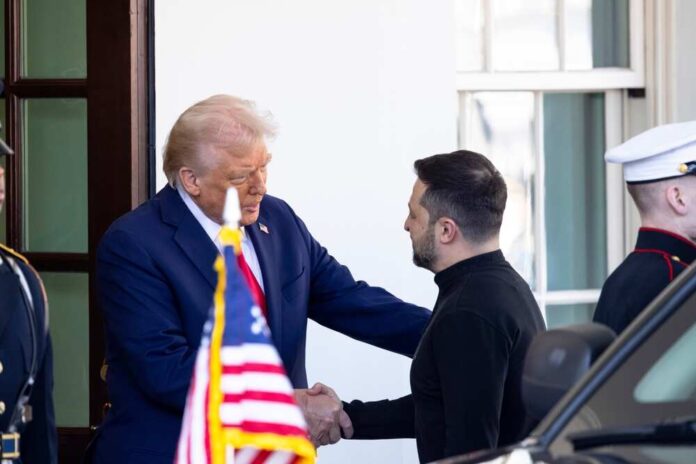
(DailyChive.com) – In a rare convergence of international power, the White House becomes the epicenter of diplomacy as Vice President JD Vance joins President Trump and Ukrainian President Zelenskyy to attempt a breakthrough in the Ukraine conflict.
Story Highlights
- Vice President JD Vance to join high-stakes meeting with Trump and Zelenskyy.
- Meeting aims to advance peace negotiations in Ukraine post Trump-Putin summit.
- European and NATO leaders gather at the White House for multilateral talks.
- Shift in U.S. policy from ceasefire to a comprehensive peace agreement.
The Diplomatic Convergence
Vice President JD Vance is set to make a significant appearance in international diplomacy as he participates in a critical meeting at the White House. The diplomatic gathering, spearheaded by President Trump, includes Ukrainian President Volodymyr Zelenskyy and several European and NATO leaders. The primary goal is to advance negotiations towards ending Russia’s ongoing war in Ukraine, following Trump’s inconclusive summit with Russian President Vladimir Putin. This meeting represents a crucial juncture in international relations, with the potential to reshape the geopolitical landscape.
The meeting occurs against the backdrop of recent diplomatic failures. On August 15, 2025, President Trump met with Putin in Alaska, yet no ceasefire was reached. Zelenskyy’s arrival in Washington on August 17 sets the stage for a series of high-level discussions. With European leaders and NATO representatives arriving at the White House, the multilateral talks are positioned to explore new avenues for peace, reflecting a shift in U.S. policy from seeking a mere ceasefire to pursuing a broader peace agreement.
The Stakes of Peace
President Trump’s approach in this high-stakes meeting aims to solidify his diplomatic legacy and potentially gain domestic political benefits. For Vice President Vance, the meeting offers a platform to establish his foreign policy credentials, aligning with the administration’s agenda. As for President Zelenskyy, the stakes couldn’t be higher. He represents Ukraine’s interests, striving to secure sovereignty, end the war, and maintain Western support. The involvement of European leaders underscores the broader implications for European security and stability.
Russian President Vladimir Putin remains a pivotal figure in any potential peace agreement. While the White House talks seek to advance negotiations, the power dynamics are complex. The U.S. leads the mediation efforts, with Ukraine relying on Western support but needing concrete guarantees for its sovereignty. European leaders must balance support for Ukraine with domestic pressures, while Russia seeks sanctions relief, territorial concessions, and international legitimacy.
Challenges and Opportunities
The meeting’s outcome is uncertain, with no ceasefire or peace agreement reached thus far. However, the potential for a new diplomatic framework or roadmap for peace in Ukraine presents both challenges and opportunities. A successful agreement could reshape European security architecture, reinforce U.S. leadership in global diplomacy, and ensure Ukraine’s territorial integrity. Yet, the risks of excluding Ukraine from NATO as a concession to Russia remain a contentious issue among policy experts and diplomats.
The implications of the meeting extend beyond immediate geopolitical concerns. Ukrainian civilians and military personnel, Russian and Ukrainian diaspora communities, and European countries affected by refugee flows and security risks are all impacted. The potential easing of sanctions on Russia, economic reconstruction needs for Ukraine, and political ramifications for Trump, Vance, and European leaders add layers of complexity to the negotiations.
Copyright 2025, DailyChive.com