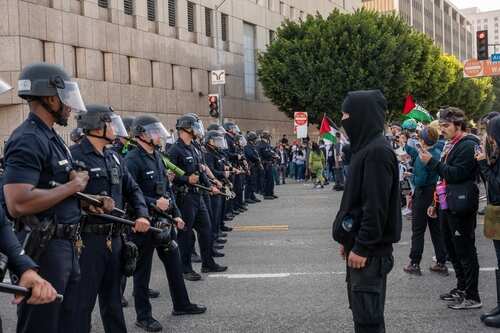
(DailyChive.com) – President Trump has agreed to consider reducing the massive federal agent presence in Minnesota following the fatal shooting of an ICU nurse by federal agents, marking a potential shift in one of the administration’s most aggressive immigration enforcement operations.
Story Snapshot
- Trump tells Governor Walz he will “look into reducing” approximately 3,000 federal agents deployed to Minnesota as part of Operation Metro Surge
- Agreement follows January 24 fatal shooting of ICU nurse Alex Pretti by federal agents, initially labeled a “domestic terrorist” by DHS before rhetoric softened
- State and federal officials move toward collaboration on targeting violent offenders only, with Tom Homan dispatched to coordinate directly with Minnesota
- Legal battles continue as federal judge weighs state lawsuit alleging 10th Amendment violations and unconstitutional federal overreach
Trump and Walz Find Common Ground After Deadly Confrontation
President Trump agreed during a January 26 phone call with Minnesota Governor Tim Walz to explore reducing the number of federal agents deployed to Minneapolis under Operation Metro Surge. The conversation represented a significant shift from weeks of confrontation over the massive enforcement operation involving approximately 3,000 to 4,000 ICE officers. Trump posted on Truth Social that the discussion was productive and that he was deploying Tom Homan, former acting ICE director and current White House border official, to coordinate directly with state officials on handling violent criminals. This represents a measured approach to immigration enforcement that prioritizes actual public safety threats over blanket operations.
Fatal Shooting of Nurse Prompts Operational Reassessment
The federal-state dialogue occurred just two days after federal agents shot and killed Alex Pretti, a 37-year-old ICU nurse, on January 24. The Department of Homeland Security initially characterized Pretti as a “domestic terrorist” intent on “massacring” officers, inflammatory language that the White House later moderated when spokesperson Karoline Leavitt called the situation “fluid” and said investigations would determine the facts. This marked the second fatal shooting involving federal agents during Operation Metro Surge, following the January 7 death of Renee Nicole Good. These tragedies underscore legitimate concerns about deploying thousands of federal agents into urban areas without clear coordination with local authorities or proper operational oversight.
State Challenges Federal Authority Over Immigration Enforcement
Minnesota has mounted legal and political resistance to Operation Metro Surge on constitutional grounds, with state officials arguing the massive deployment violates the 10th Amendment by commandeering state resources and coercing cooperation through intimidation. The Minnesota Department of Corrections publicly refuted ICE claims that the state categorically refuses to honor detainers, stating it notifies federal authorities when non-citizens are released. A federal judge prioritized the state’s lawsuit on January 26, the same day as the Trump-Walz call, with attorneys arguing the surge represents unconstitutional federal violence hijacking proper legal processes. These federalism concerns merit serious consideration even as immigration enforcement remains a legitimate federal function.
Shift Toward Targeted Enforcement of Violent Criminals
The emerging framework focuses on cooperation targeting violent offenders rather than sweeping operations that create chaos in communities. Governor Walz stated after the call that Trump agreed to explore reductions while both officials emphasized the need to address criminals who pose genuine threats. Trump outlined three key demands: local jurisdictions must transfer arrested undocumented criminals to federal custody, enforce federal law regarding these individuals, and cooperate with immigration authorities. This targeted approach aligns with common-sense priorities that differentiate between violent criminals who should face consequences and broad enforcement operations that disrupt communities and lead to tragedies like the Pretti shooting. Business groups and even some Republicans had joined Democrats in calling for de-escalation.
Governor Walz also reported that Trump agreed to work with DHS on allowing independent state investigations into the fatal shootings, addressing accountability concerns that resonate with conservatives who oppose government overreach regardless of which level of government commits it. No immediate reduction in the federal agent presence has been confirmed, and approximately 3,000 agents remain deployed as Homan prepares to contact Minnesota officials. The situation demonstrates that effective immigration enforcement requires cooperation and clear operational parameters rather than massive shows of force that generate more problems than they solve while potentially violating constitutional limits on federal power over state sovereignty.
Sources:
Trump signals de-escalation of ICE ops in Minneapolis
Walz says Trump considering reducing federal agents in Minnesota
Federal judge will consider the legality of Trump’s immigration surge in Minnesota
Copyright 2026, DailyChive.com