(DailyChive.com) – A Cabinet secretary’s offhand idea about “re-parenting” Black children is now colliding with a bigger American fear: that Washington can’t resist experimenting on families it doesn’t understand.
Story Snapshot
- Rep. Terri Sewell confronted HHS Secretary Robert F. Kennedy Jr. during an April 16, 2026 House Ways and Means Committee hearing over his past podcast comments about Black children on psychiatric drugs.
- Kennedy previously discussed sending children to screen-free “wellness farms” for “re-parenting” rather than relying on medications like Adderall; he denied using that language during the hearing.
- HHS later said “reparenting” was used as a psychotherapy term and argued the remarks were taken out of context, but clips circulating online fueled controversy.
- No policy change has been announced, but the episode raises questions about how far federal health authorities should go in shaping family and child mental-health decisions.
What happened in Congress—and why it blew up
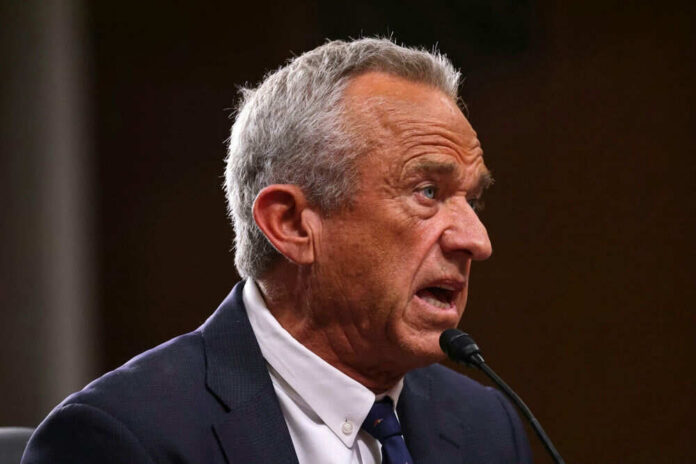
House Democrats put Kennedy on the defensive during an April 16, 2026 Ways and Means hearing focused on HHS oversight and funding. Rep. Terri Sewell of Alabama pressed him about comments he made on a 2024 podcast, where he discussed “wellness farms” and said Black children on medications such as Adderall should be “re-parented” in a screen-free environment. Kennedy denied saying it that way, calling the accusation false, and the exchange escalated into a shouting match.
Sewell’s line of attack wasn’t only about wording; it was about authority and history. She argued that suggesting Black families are “not capable” carried a particular sting given America’s record of family separation and discriminatory child-welfare practices. She also highlighted that Kennedy is not a physician and does not have medical board certification, while still running a department that influences pediatric health policy nationwide. The confrontation quickly became a proxy fight over trust in public health leadership.
Kennedy’s “wellness farm” concept and the limits of what’s verified
The underlying controversy traces to Kennedy’s 2024 remarks while he was a presidential candidate, when he criticized what he views as overmedication of children and floated rural “rehabilitation” or “wellness farm” settings modeled in part on community experiences he has referenced from earlier in life. The available reporting describes the concept as screen-free and structured, positioned as an alternative to psychiatric drugs. No full transcript is provided in the research, so exact phrasing beyond reported excerpts remains limited.
What is verified from multiple accounts is the basic arc: Kennedy discussed the idea publicly in 2024, and in 2026 he resisted the framing when confronted under oath-like congressional scrutiny. HHS later defended the idea by describing “reparenting” as a term used in psychotherapy for emotional regulation and argued the podcast remarks were being stripped of context. The dispute, in other words, is not simply whether he favors alternatives to medication, but what he implied about families and race.
Why conservatives and liberals are both hearing warning bells
Conservatives who distrust centralized power see a familiar pattern: federal experts, backed by budgets and bureaucracy, floating social-engineering solutions that can slide from “optional help” to institutional pressure. The idea of government-linked facilities for children—especially when paired with sweeping language about “every” child in a group—touches a nerve about parental rights and the proper limits of Washington. Even without a formal proposal on the table, the rhetoric invites questions about how such programs would be funded and regulated.
Liberals, meanwhile, hear echoes of unequal treatment and institutional bias, particularly when race is singled out in a discussion about children’s behavior and medication. Sewell’s criticism leaned heavily on the historical memory of state power used against minority families, and that argument resonates strongly with Democratic voters. Both sides, for different reasons, end up at a shared anxiety: the federal government often acts first, explains later, and rarely admits error—especially when politics rewards doubling down.
What to watch next inside HHS and on Capitol Hill
At the moment, there is no announced HHS policy implementing “wellness farms,” and the controversy remains centered on past comments, a denial, and competing explanations from HHS and congressional critics. Still, oversight fights can shape budgets and priorities even without new legislation. Lawmakers can demand internal documents, question grant criteria, and push agency guidance in ways that gradually move practice. With Republicans controlling Congress and the White House, the key question is whether GOP leadership treats the episode as a messaging distraction or a cue to tighten guardrails.
The practical stakes are bigger than a viral clip. Debates over ADHD diagnosis, prescription practices, and behavioral health already sit at the intersection of parental choice, school systems, and medical authority. If HHS signals a turn toward federally promoted “alternatives” to standard treatment, critics will demand evidence standards and clear assurances that parents—not bureaucrats—remain in charge. If HHS stays hands-off, the hearing will still linger as a credibility test for leadership in a department that touches nearly every American family.
Sources:
Shouting match erupts between RFK Jr. and Dem lawmaker over comments about Black children
Sewell confronts RFK Jr. over past comments that some Black kids should be re-parented
Copyright 2026, DailyChive.com