

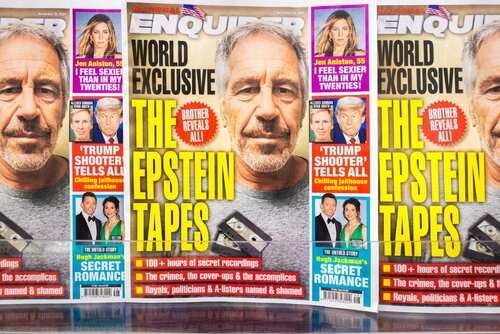
(DailyChive.com) – As another British royal finally loses his titles over the Epstein scandal, Americans are left wondering why so many elites on our side of the Atlantic still seem untouchable.
Story Snapshot
- Prince Andrew has been stripped of his remaining royal titles and honours after years of Epstein-related scrutiny.
- New emails and a posthumous memoir reignited questions about elites protecting their own while ordinary people face full accountability.
- The British monarchy is distancing itself from scandal as U.S. institutions still appear slow to fully confront the wider Epstein network.
- For constitutional conservatives, the story underscores the danger of unaccountable elites above the rules that govern everyone else.
A Royal Fall from Grace Exposes How Elites Protect Their Own
In October 2025, King Charles III moved to strip his younger brother, Prince Andrew, of his remaining royal titles and honours after years of growing outrage over Andrew’s longtime relationship with convicted sex offender Jeffrey Epstein. The former Duke of York, now referred to as Andrew Mountbatten-Windsor, agreed to stop using his titles after Buckingham Palace declared the accusations surrounding him were distracting from the king’s work and damaging the monarchy’s already battered credibility.
The decisive step followed new legal filings and media reports that further undermined Andrew’s public story. Emails obtained from court documents showed that Andrew remained in contact with Epstein into early 2011, contradicting his widely televised claim that he cut ties in December 2010. At the same time, excerpts from a posthumous memoir by Virginia Giuffre, who had previously settled a civil case with Andrew, reignited allegations that he has consistently denied while avoiding full legal scrutiny.
Timeline of Scandal: From Cozy Friendship to Public Humiliation
Prince Andrew’s downfall traces back to his friendship with Epstein in the late 1990s and 2000s, when he was photographed at Epstein’s properties and benefited from access to his lavish social circle. Once Epstein’s conviction became public, pressure mounted, forcing Andrew out of his official trade envoy role and putting Buckingham Palace on the defensive. That pressure surged again in 2019 when his disastrous BBC Newsnight interview raised more questions than it answered about his conduct and his version of events.
After the interview, Andrew stepped back from public duties, lost key patronages, and watched corporate sponsors walk away, yet he retained significant trappings of status. A 2022 civil settlement with Giuffre, reported to be in the millions, allowed him to avoid a court battle without admitting liability. Then, in 2025, newly surfaced emails suggesting ongoing contact with Epstein, plus memoir revelations and reports that he once hosted Epstein, Ghislaine Maxwell, and Harvey Weinstein at a royal residence, erased any remaining political cover for keeping his titles intact.
Accountability for Royals, But What About the Wider Epstein Network?
The move to strip Andrew’s titles is historically rare; a prince losing his style and honours has not happened on this scale in more than a century. The monarchy’s priority is clearly institutional self-preservation, not transparency, yet even that reluctant step sends a signal. When public outrage grows strong enough, even a king’s own brother can lose lifelong privileges. For conservative Americans, that raises an uncomfortable comparison with how slowly U.S. institutions have moved against other powerful Epstein associates.
Across the Atlantic, much of the Epstein network still sits behind a wall of redactions, sealed documents, and half-measures. Survivors and advocates have welcomed the humiliation Andrew now faces but argue that symbolic punishments are not enough without full cooperation with investigators and meaningful legal consequences. That concern resonates deeply with readers who are tired of two-tier justice: one standard for ordinary citizens, another for those clustered around globalist money, influence, and protected social circles.
What This Means for Constitutional Conservatives Watching from America
For Trump-era conservatives who value equal justice, limited government, and the rule of law, the Andrew saga highlights how entrenched elites behave when cornered. Institutions act only when public pressure becomes impossible to ignore, and even then they prioritize reputation management over full disclosure. It is a reminder that unchecked power, whether housed in a royal palace, a federal agency, or a billionaire’s network, tends to shield insiders while eroding public trust in every system that is supposed to protect families and children.
Another Royal Is Under Fire for Ties to Epstein https://t.co/FutlSKgIlj via @thedailybeast
— Kev (@blu_kryptonian) December 11, 2025
American conservatives who have watched years of selective prosecutions, politicized investigations, and media double standards see a familiar pattern. There is no Second Amendment, no written U.S. Constitution, and no elected accountability in Buckingham Palace, yet even the crown could not indefinitely protect a prince tied to Epstein. That contrast only sharpens the demand here at home for transparency, due process, and a justice system that refuses to let political connections or elite status override the basic principle that no one is above the law.
Copyright 2025, DailyChive.com