
(DailyChive.com) – A targeted attack on a Michigan synagogue shows how overseas conflicts can ricochet into American communities—endangering families and faith-based institutions at home.
Story Snapshot
- Ayman Mohamed Ghazali, a 41-year-old Lebanese-born U.S. citizen, attacked Temple Israel in West Bloomfield Township, Michigan, on March 12, 2026.
- Authorities say Ghazali rammed a vehicle into the synagogue, exchanged gunfire with security, and died at the scene as fire ignited inside the vehicle.
- Officials reported Ghazali had recently lost close relatives in an Israeli airstrike in Lebanon, a key fact investigators are weighing as they assess motive.
- The synagogue includes an early childhood center; officials said 140 children and staff were protected during the incident.
- The FBI is leading the investigation and has described the incident as targeted violence against the Jewish community.
What Happened at Temple Israel in West Bloomfield
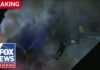
Investigators say the attack unfolded around 1:35 p.m. on March 12, 2026, when Ayman Mohamed Ghazali drove a vehicle through Temple Israel’s doors and into a hallway. Law enforcement reports indicate security personnel returned fire, killing Ghazali. Officials also said the vehicle carried explosive or incendiary materials that ignited, creating a fire and heavy smoke conditions for responders. One security officer was knocked unconscious, and multiple officers were treated for smoke inhalation.
Authorities emphasized that the facility houses an early childhood program, and officials reported that 140 children and staff members were kept safe during the incident. That detail matters because it underscores how houses of worship have become “soft targets” where families gather for religious life, education, and community. When an attacker chooses a religious site that includes children, the public safety stakes rise immediately, and the case becomes about protecting First Amendment religious freedom in real-world conditions.
Family Loss Abroad and the Unanswered Motive Question
Reporting indicates Ghazali lost four family members—two brothers and two young relatives—in an Israeli strike in Lebanon roughly 10 days before the synagogue attack. That timeline is central to why investigators are cautious about publicly declaring motive without the benefit of interrogation, since the suspect died at the scene. Some accounts differ slightly on the precise strike date, but multiple reports agree the deaths were recent and significant. The FBI has still framed the incident as targeted violence against the Jewish community.
Additional investigative details point to planning. Authorities reported Ghazali purchased roughly $2,250 in fireworks on March 10, 2026, and law enforcement sources later described “mortar-type” explosives in the vehicle. Those specifics reinforce that the incident was not a spur-of-the-moment outburst but an operation that included procurement and assembly steps. For Americans who are tired of political leaders downplaying security risks, the practical lesson is straightforward: threat assessments cannot ignore the possibility of ideologically driven violence aimed at religious Americans.
Citizenship, Vetting, and the Limits of Paperwork Security
Investigators and reporting describe Ghazali as a legal immigrant who arrived in the United States in 2011 on an immigrant visa tied to marriage and later became a U.S. citizen in 2016. That matters because it complicates simplistic narratives that only illegal immigration drives domestic security risk. The facts here point to a different vulnerability: long-term ties, overseas conflict spillover, and possible radicalization can persist even with lawful status. The public policy question becomes whether background checks and monitoring tools are adequate without violating constitutional rights.
Michigan’s Pattern of Attacks on Houses of Worship
Officials also placed the incident in a troubling Michigan context: this was reported as the second major attack on a house of worship in the state within a year. In September 2025, a former Marine fatally shot four people at a church north of Detroit and set it ablaze, with authorities citing anti-religious beliefs as a motive. The repeat nature of these incidents pressures state and local leaders to prioritize real security investments—trained security, hardened entry points, and coordinated law enforcement planning—over rhetoric.
Governor Gretchen Whitmer publicly condemned the attack as antisemitism and urged Americans to “lower the rhetoric,” while Jewish community leaders noted they were not shocked given the climate of threats. Those statements reflect a broader reality: religious communities are trying to worship in peace while political tensions—both domestic and international—raise the temperature. The constitutional bottom line is that free exercise of religion requires public order, and protecting it is a core government duty that must be carried out without politicizing the victims or minimizing targeted violence.
Sources:
Man in Michigan synagogue attack lost family members in Israeli airstrike in Lebanon, official says
Temple Israel synagogue attack
Synagogue shooting Michigan: What we know
Press statement on the antisemitic attack on a synagogue in Michigan
Copyright 2026, DailyChive.com