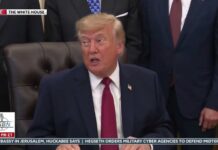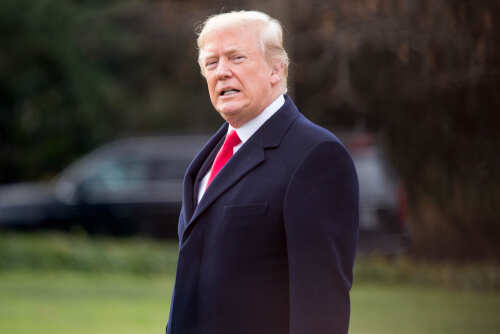
(DailyChive.com) – President Trump remains defiant on America’s exit from the World Health Organization even as critics demand reversal during a hantavirus outbreak, declaring the nation self-sufficient in public health management.
Story Snapshot
- Trump signed Executive Order 14155 on inauguration day in January 2025, formally withdrawing the U.S. from WHO after years of criticism over COVID-19 mismanagement
- During a hantavirus outbreak in early 2025, Trump refused calls to reconsider, stating “We’re in very good shape” and emphasizing American self-reliance
- The withdrawal strips WHO of roughly $500 million annually—up to 20% of its budget—while redirecting funds to domestic health agencies like the CDC
- As of May 2026, the complete disengagement stands firm with no pandemic coordination gaps reported, validating the administration’s “America First” health strategy
Trump Executes Day-One WHO Exit
President Trump fulfilled a signature campaign promise on January 20, 2025, signing Executive Order 14155 within hours of taking the oath of office. The order initiated the formal withdrawal process from the World Health Organization, a move first proposed during his first term in 2020 but reversed by President Biden. The Department of Health and Human Services immediately terminated funding streams totaling approximately $500 million per year, recalled personnel stationed at WHO headquarters in Geneva, and suspended all formal engagement with the organization’s governing bodies and treaty negotiations.
The executive action bypassed lengthy congressional approval processes, leveraging presidential authority under existing international agreements. Trump cited WHO’s handling of COVID-19, particularly what he characterized as pro-China bias during the pandemic’s origins in Wuhan, as justification for the exit. HHS officials described the withdrawal as restoring accountability to American public health leadership, framing the United States as capable of serving as “the world’s leading authority” without multilateral coordination. The move fulfilled promises to voters frustrated with globalist institutions perceived as serving foreign interests over American priorities.
Hantavirus Response Tests Independence Claim
Within weeks of the WHO withdrawal, a hantavirus outbreak emerged domestically, prompting questions about the timing and wisdom of severing international health ties. The rodent-borne pathogen, endemic to the U.S. Southwest since the 1993 Four Corners outbreak, typically causes sporadic cases with fatality rates approaching 50% when untreated. Critics and public health advocates urged Trump to reverse course, arguing the outbreak demonstrated the need for global coordination. Trump dismissed these concerns during public statements in February and March 2025, asserting “we’re in very good shape” and reaffirming no plans to reconsider the withdrawal decision.
The administration’s response relied entirely on domestic infrastructure, primarily the Centers for Disease Control and Prevention, to manage containment and treatment protocols. Federal health officials emphasized that hantavirus, unlike respiratory pandemics, requires no transnational coordination since transmission occurs through contact with infected rodent droppings, urine, or saliva rather than human-to-human spread. The CDC deployed resources to affected regions, issued public advisories, and coordinated with state health departments without incident. By mid-2026, officials reported the outbreak contained with no evidence of systemic failures, effectively validating Trump’s assertion of American self-sufficiency in managing non-pandemic health threats.
Financial and Strategic Realignment Follows
The WHO withdrawal triggered immediate financial consequences for the international body, stripping it of approximately 16% of its operational budget. U.S. contributions historically funded vaccine distribution programs, disease surveillance networks, and emergency response initiatives across developing nations. Trump administration officials argued these funds would be better spent bolstering domestic capabilities, including mRNA vaccine technology development, biosecurity infrastructure, and direct bilateral health partnerships with allied nations. The reallocation reflects broader “America First” principles prioritizing taxpayer resources for domestic benefit over multilateral commitments.
Long-term implications extend beyond budgets to shifting global health governance structures. The U.S. exit weakens WHO’s authority and creates space for bilateral arrangements where American interests take precedence over consensus-driven international protocols. Critics warn of coordination gaps during future pandemics, pointing to Ebola and other transnational threats requiring multilateral response frameworks. Supporters counter that WHO’s failures during COVID-19—including delayed warnings and deference to Chinese narratives—prove the organization unreformable. The withdrawal sets precedent for exits from other UN-affiliated bodies, signaling a broader rejection of post-World War II institutional frameworks that many Americans, both conservative and progressive, increasingly view as serving elite interests rather than ordinary citizens.
Deep State Frustration Fuels Policy Shift
The WHO withdrawal resonates with widespread distrust of unelected international bureaucrats and domestic officials perceived as prioritizing careerism over public service. Across the political spectrum, Americans express frustration with government institutions failing to address economic insecurity, healthcare costs, and quality-of-life decline while funneling billions to organizations like WHO. Trump’s framing of self-reliance versus dependence on Geneva-based technocrats taps into populist sentiment that transcends traditional left-right divisions. Both conservatives angered by globalist overreach and progressives disillusioned with corporate-influenced international bodies find common ground in demanding accountability from systems they believe serve entrenched power rather than the American Dream of upward mobility through hard work.
Sources:
Fact Sheet: U.S. Withdrawal from the World Health Organization
President Announces US Withdrawal from WHO
Copyright 2026, DailyChive.com