(DailyChive.com) – A potential diplomatic engagement with Venezuela threatens to redefine U.S. foreign policy dynamics.
Story Highlights
- Trump signals openness to discussions with Venezuela’s Maduro.
- U.S. military presence intensifies in the Caribbean region.
- This shift challenges long-held U.S. policies against Maduro.
- Uncertain outcomes loom over potential diplomatic talks.
Trump’s Diplomatic Shift on Venezuela
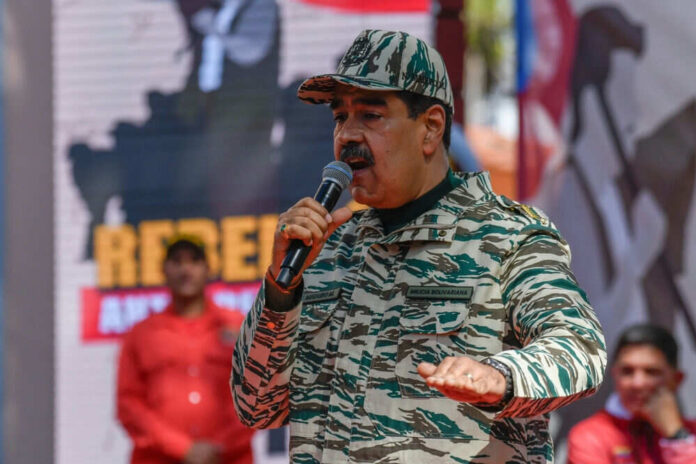
President Donald Trump recently announced a willingness to engage in discussions with Venezuelan President Nicolás Maduro. This development marks a significant divergence from the U.S.’s historical stance, which has been to isolate Maduro’s regime through economic sanctions and support for opposition leader Juan Guaidó. The announcement has sparked curiosity and concern regarding the future of U.S.-Venezuela relations, especially given the recent escalation of U.S. military activity in the Caribbean.
Despite the potential for dialogue, the U.S. military continues to conduct large-scale exercises near Venezuela. The deployment of the Gerald R. Ford carrier group and Operation Southern Spear highlight the U.S.’s continued focus on counter-narcotics operations. However, these maneuvers are perceived by many as a strategic pressure tactic on Maduro’s government. The juxtaposition of military readiness with diplomatic overtures raises questions about the true intentions of the Trump administration.
Historical Context and Strategic Interests
The strained relations between the U.S. and Venezuela have roots in the presidencies of Hugo Chávez and Nicolás Maduro. Both leaders have been accused by the U.S. of authoritarianism and human rights violations. Since 2019, the U.S. has recognized Juan Guaidó as Venezuela’s legitimate president, further complicating diplomatic engagements. The current shift towards potential dialogue comes amidst Venezuela’s ongoing economic and humanitarian crisis, exacerbated by U.S. sanctions and internal mismanagement.
Trump’s openness to discussions with Maduro could signal an acknowledgment of the limitations of the “maximum pressure” strategy. Some analysts suggest that this move may be aimed at leveraging diplomatic breakthroughs or achieving political gains domestically. On the other hand, critics argue that engaging with Maduro could inadvertently legitimize his regime without ensuring meaningful reforms.
Implications and Uncertain Outcomes
The potential for U.S.-Venezuela talks introduces a layer of uncertainty in the region’s geopolitical landscape. In the short term, this could lead to either a de-escalation or an intensification of tensions, depending on the reactions from both governments. Long-term implications might include a shift in U.S. policy towards more pragmatic engagement or a reversion to hardline tactics should talks fail to yield desired outcomes.
Venezuelans, already facing dire economic conditions, could experience heightened anxiety over the possibility of conflict. Regional neighbors are also watching closely, concerned about the potential spillover effects of U.S. military actions. Economically, the continued instability may impact energy markets, given Venezuela’s significant role as an oil producer.
Copyright 2025, DailyChive.com