
Iran and Israel have hit pause on a dangerous missile showdown after President Trump warned both that if they kept firing, Israel could find itself “on its own” against Tehran’s terror regime.
Story Snapshot
- Trump told Iran and Israel to “immediately stop shooting,” and both sides quickly announced they were halting strikes, at least for now.[1][2][3]
- Iran says its pause is conditional and threatens to resume attacks if Israel restarts major operations, especially around southern Lebanon.[1][2]
- Israel says it will stop strikes “for now,” but Prime Minister Benjamin Netanyahu vows to hit back with full force if Iran or its terror proxies fire again.[2]
- The fragile ceasefire shows how Trump’s pressure is containing a wider war, even as Iran tests limits and tries to shift blame for any future escalation.[1][2][4]
Trump’s Warning Forces a Pause in a Fragile Missile Standoff
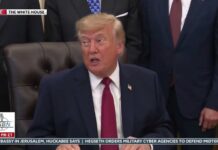
On the 101st day of the Iran war, President Donald Trump publicly called on both Iran and Israel to “immediately stop ‘shooting,’” as missile strikes risked blowing up a wider regional war.[1][2][3] After that warning, both Tehran and Jerusalem told the world they were halting major military operations, at least for now.[1][2] Reporters described the ceasefire as fragile and uneasy, but the firing stopped, showing that direct American pressure still carries real weight in the Middle East.[1][2][4]
CBS News reported that Iran and Israel announced they had halted military operations after a “dramatic exchange of fire” that shook an already shaky truce between Tehran and Washington.[1] The Independent described how both sides agreed to pause attacks following Trump’s plea, even as they made clear they were not standing down for good.[2] This was not a peace deal or a reset; it was a hard brake on a crisis that could have drawn American troops into another full-scale Middle East war.[1][2][3]
Iran’s Conditional Pause Keeps the Threat Alive
Iran’s leaders did not simply say the fight was over; they said their missile attacks on Israel were paused as long as Israel did not keep striking targets linked to Tehran’s allies, especially in southern Lebanon.[1][2] CBS reports that Iran announced it was halting military operations contingent on Israel stopping attacks on that front, and Iranian statements stressed that any Israeli move they see as a violation would justify renewed strikes.[1][2] That kind of vague, conditional pause lets Iran claim restraint while keeping its finger on the trigger.
The Independent likewise reported that Tehran has paused strikes “for now” after Trump’s appeal but openly warned that the ceasefire could collapse if Israel resumed what Iran calls “aggression.”[2] Iranian officials want to paint themselves as victims who are only reacting, even though they launched missiles that forced this showdown in the first place.[1][2] By tying their pause to events in Lebanon and other fronts, they are trying to limit Israel’s freedom to defend itself while avoiding direct blame if the war restarts.[1][2]
Netanyahu Balances Trump’s Pressure and Israel’s Security Needs
Israel’s government also framed the halt in fighting as a pause, not a surrender of its security. The Times reported that Israel said attacks would stop “for now” but insisted the fight was “not over.” Prime Minister Benjamin Netanyahu, in remarks highlighted by broadcasters, made clear that if what he called the “terror regime” resumed attacks, Israel would respond with full force to protect its people.[3] That message was aimed at Iran, but also at Trump’s base: Israel would respect Washington’s request, but it would not allow itself to be a sitting duck.
At the same time, multiple outlets say Trump delivered a blunt warning to Netanyahu: if Israel chose to escalate in defiance of Washington’s push for de-escalation, it might find itself “alone” against Iran. That is a sharp contrast to the old globalist approach that often tied American support to vague United Nations deals and endless talks. Here, Trump is backing Israel’s right to defend itself while also drawing a clear line meant to keep the conflict from spiraling into a larger war that risks American lives and spikes energy prices at home.[1][2]
What This Standoff Reveals About Power, Peace, and American Interests
The Twelve-Day War ceasefire of June 2025, mediated by the United States and Qatar, was supposed to lock in a longer calm between Iran and Israel.[4] Today’s missile pause shows how thin that promise really was. Iran continues to use rockets and proxy forces to test the limits of every agreement, and each flare-up threatens shipping lanes, gas prices, and regional stability.[1][3][4] That is exactly the kind of foreign chaos that, in the past, pulled America into open-ended commitments and drained our economy and military focus.[3][4]
Israel and Iran appear to pause strikes after trading fire for the first time since April ceasefire https://t.co/UtiaxdxUOe
— KCRG-TV9 (@KCRG) June 9, 2026
Analysts describe this pattern as “coercive diplomacy,” where each side claims to be the restrained adult while keeping the option to hit back ready at all times.[1][2][3] Iran and Israel both say they will pause attacks, but each openly vows to resume strikes if the ceasefire is breached.[2] For American conservatives, the key point is clear: strong, direct leadership from Washington can stop the shooting, but lasting peace will not come from wishful thinking or soft talk with regimes that chant “Death to America” while arming terrorists.
Sources:
[1] Web – Iran and Israel pause strikes after desperate Trump plea – but vow to …
[2] Web – Live Updates: Iran and Israel say attacks halted after Trump tells …
[3] Web – Iran-US war latest: Tehran pauses strikes on Israel for now after …
[4] YouTube – Trump tells Israel and Iran to ‘stop shooting’ after new strikes
© dailychive.com 2026. All rights reserved.