
(DailyChive.com) – A U.S. strike jet went down inside Iran—and instead of bargaining, Washington sent in a sprawling rescue force and brought an American airman home.
Story Snapshot
- An F-15E Strike Eagle was shot down over southwestern Iran on April 3, 2026, during the U.S.-Israel offensive, leaving a rear-seat Weapons Systems Officer isolated and injured.
- Iranian forces reportedly launched a manhunt and encouraged locals with rewards, raising the risk of capture and propaganda leverage.
- U.S. Combat Search and Rescue assets—special operations teams, helicopters, drones, and fighters—ran a 36–48 hour operation to extract the officer.
- President Trump announced the successful recovery early April 5, underscoring the military’s “no one left behind” doctrine amid escalating Hormuz pressure.
What happened: a downed F-15E and a race against capture
U.S. reporting says an F-15E from the 494th Fighter Squadron was downed April 3 over rugged terrain in southwestern Iran, with details varying by account on the exact province. The pilot ejected and was recovered quickly, but the Weapons Systems Officer landed separated and injured, forcing an evasion posture. The officer relied on survival training, limited beacon use, and concealment while Iranian forces searched the area.
The immediate strategic problem was not only physical terrain but time. Iran had strong incentives to display a captured American—especially during an active U.S.-Israel offensive and growing tensions tied to the Strait of Hormuz. Reports describe Iranian media amplifying the hunt and encouraging locals to help, which can turn remote ground into a human sensor network. That pressure helps explain why U.S. commanders reportedly surged aircraft, drones, and ground teams rapidly despite the risks.
How the rescue worked: modern CSAR at full scale
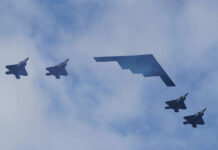
Accounts describe a Combat Search and Rescue operation that blended old-school courage with high-end coordination: helicopters running low and slow, fighter cover overhead, drones scanning for movement, and command centers tracking a changing picture in near real time. The rescue force reportedly included special operations personnel and Air Force pararescuemen, supported by platforms such as HH-60 variants, C-130s, and MQ-9 Reapers. Some details remain vague, likely due to operational security.
Reports also point to a grim reality of contested rescues: the recovery itself can become a battle. Iranian ground fire reportedly damaged helicopters during the effort, and U.S. aircraft struck pursuing convoys as teams worked to keep the isolated officer from being overrun. Two evacuation planes reportedly broke down, requiring replacement aircraft, and at least some equipment was later destroyed to prevent capture—an unglamorous but routine step when sensitive platforms operate near enemy hands.
What’s confirmed—and what remains disputed
The central fact pattern is consistent across multiple accounts: a U.S. jet was downed; one crew member became isolated; and a large, multi-day rescue ended with the officer extracted alive on April 5. Beyond that, key specifics are less solid. Sources differ on whether the officer was a major or colonel, and there are variances in the reported location and whether the operation was closer to 36 or 48 hours. Iranian claims about additional shoot-downs and casualties were not independently verified in the available reporting.
Why it matters: deterrence, morale, and the politics of competence
President Trump’s “WE GOT HIM!” announcement framed the rescue as proof that the U.S. does not abandon its people. For many conservatives, that message lands as a core measure of national seriousness: the government’s first duty is protecting Americans, especially those it sends into danger. At the same time, the mission underscores how expensive and resource-intensive modern warfare can be, because rescuing one person may divert aircraft, cyber capabilities, and ISR coverage from the broader campaign.
For skeptics across the political spectrum who believe Washington too often fails at basic responsibilities, the operation offers a stark contrast: when priorities are clear and accountability is immediate, the system can perform. The bigger question is whether that same urgency will be applied to domestic problems—border security, fiscal discipline, and energy costs—that shape everyday life. For now, the rescue is a rare moment of clarity in a foggier conflict, and a reminder that deterrence depends on credibility, not slogans.
Sources:
U.S. Forces Rescue Downed F-15E Officer in 36-Hour Iran Mission
Inside the daring mission to rescue a U.S. airman downed in Iran
Copyright 2026, DailyChive.com