(DailyChive.com) – The Trump administration just sent a clear message: U.S. green cards are not a shield for foreign nationals tied to America’s enemies.
Quick Take
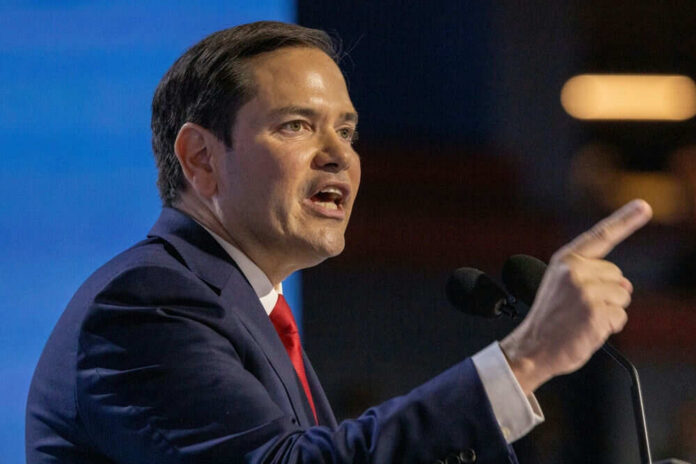
- Secretary of State Marco Rubio announced the termination of lawful permanent resident status for Iranian nationals linked to the Iranian regime, including relatives of the late IRGC commander Qassem Soleimani.
- U.S. Immigration and Customs Enforcement detained Hamideh Soleimani Afshar and her daughter in Los Angeles after their green cards were revoked, according to the State Department.
- Rubio said the administration will not allow the U.S. to become a home for foreign nationals who support “anti-American terrorist regimes,” framing the move as a national security decision.
- The action fits a broader pattern of visa and residency restrictions aimed at Iranian regime-linked figures, including earlier revocations involving Iranian diplomats and other well-connected families.
What the State Department says happened—and who was targeted
Secretary of State Marco Rubio said he terminated lawful permanent resident status for Iranian nationals with ties to the Iranian regime, including Hamideh Soleimani Afshar, identified as a niece of former IRGC chief Qassem Soleimani, and her daughter. The State Department said the two were taken into custody by ICE after the revocation. Rubio also indicated Afshar’s husband was barred from entering the United States, adding an entry restriction alongside the residency action.
The timeline described in the available reporting places the arrests late Friday, followed by a formal State Department statement on Saturday, April 11, 2026. Rubio also used social media to criticize the pair’s public support for the Iranian government and rhetoric directed at the United States. While the government has not publicly detailed every piece of underlying evidence, the official framing is straightforward: residency privileges were rescinded on national security-related grounds connected to regime affiliation and support.
How this fits the Trump administration’s broader Iran posture
The revocations land in a period of heightened U.S.-Iran tension, with reporting pointing to anti-government protests in Iran and the start of a war, even if earlier State Department actions pre-dated those developments. The administration’s central argument is that immigration benefits should not extend to individuals aligned with hostile foreign powers, especially ones tied to the IRGC, which the United States designated a foreign terrorist organization in 2019.
Rubio’s move also follows other recent residency and visa decisions involving high-profile Iranian families. Reporting cited Rubio’s earlier revocation of visas for Fatemeh Ardeshir-Larijani, described as the daughter of former Iranian national security adviser Ali Larijani, and her husband Seyed Kalantar Motamedi. In that case, the couple reportedly were no longer in the United States. In early December 2025, the State Department also revoked visas tied to Iranian diplomats and U.N. mission staff, showing the policy extends beyond a single family.
The national security logic—and the civil-liberties tension it creates
From a conservative governance perspective, the case highlights a core expectation of sovereignty: the federal government decides who may live in the country, and national security concerns can outweigh an individual’s interest in remaining. Rubio’s public explanation emphasized that the United States should not become a safe, comfortable base for people who promote or assist an anti-American regime. That logic will resonate with voters who see weak immigration enforcement as a long-running failure of Washington.
At the same time, the story underscores why immigration enforcement decisions can become politically combustible. Lawful permanent residents typically build lives, work, and communities in the U.S., and removing that status triggers due-process questions and demands for transparency. The current research set does not include independent legal analysis or detailed documentation of the alleged activities beyond official statements, so readers should separate what is confirmed—revocations, detentions, and public government reasoning—from what has not been fully shown publicly.
What happens next: deportation proceedings and a warning to regime-linked networks
The State Department and media reporting indicate detention and deportation proceedings are now underway for Afshar and her daughter. Reporting also suggests at least four Iranian nationals were affected overall, though the precise total has not been fully spelled out. That uncertainty matters, because it points to a broader enforcement sweep rather than a one-off headline. If additional names are involved, congressional oversight and court filings could eventually clarify the scope and the evidentiary basis.
RESIDENCY REVOKED: Secretary of State Marco Rubio says he "terminated" the lawful permanent resident status of family members linked to a spokeswoman for the Islamic terrorists who stormed the U.S. Embassy during the 1979 hostage crisis.
Rubio says the individuals are now in ICE… pic.twitter.com/EIWXxuBYio
— Fox News (@FoxNews) April 11, 2026
Politically, the move is likely to deepen an already familiar divide. Supporters of the administration will see a long-overdue correction to what they view as elite-era loopholes that let well-connected foreigners live comfortably in the U.S. while backing hostile governments. Critics will argue the administration is using immigration tools too aggressively. The one point both sides increasingly share is less flattering: when Washington acts, it often takes a sharp crisis to force basic accountability.
Sources:
Secretary Rubio Revokes Green Cards of Foreign Nationals with Ties to Iranian Terror Regime
Rubio revokes visas, green cards of Iranian nationals
Copyright 2026, DailyChive.com