

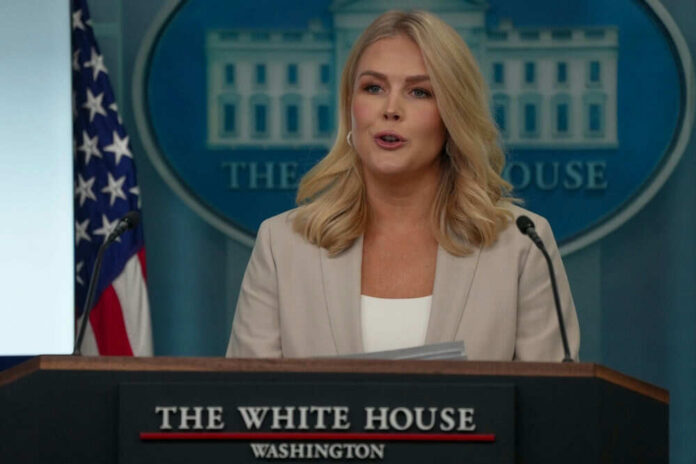
(DailyChive.com) – Permanent layoffs, not just furloughs, are suddenly on the table for federal workers, and the White House is wielding this threat like a sledgehammer in the most explosive government shutdown standoff in decades.
Story Snapshot
- The White House’s budget office directed agencies to prepare for mass layoffs if Congress misses the September 30 funding deadline.
- This warning raises the stakes, as permanent job losses are rare in shutdown history, furloughs are the usual tool.
- Some see the memo as a political maneuver to force Congressional action, while others fear it signals a new era in budget brinkmanship.
- The conflict is deepening federal workers’ anxiety and fueling a bitter, high-stakes standoff in Washington.
The White House Memo: Raising the Shutdown Temperature
The Office of Management and Budget issued a blunt directive to federal agencies: get ready to send out reduction-in-force notices, permanent layoff warnings, if lawmakers don’t pass a funding bill by September 30. This is not the typical script. In past shutdowns, federal employees faced furloughs, temporary unpaid leave, with an expectation of returning once the political dust settled. This time, the White House is naming the unthinkable: actual job losses, not just a short-term disruption. The memo, circulated just days before the deadline, marks a sharp escalation in a battle where the stakes have rarely felt so personal or permanent.
The memo’s language is explicit. It warns that employees working in programs reliant on discretionary funding, or those “not aligned with the President’s priorities,” could be laid off completely if Congress fails to act. Agency leaders have been told to prepare not just for a pause, but for the possibility that some positions may never return. The White House is framing this as the direct result of Congressional inaction, specifically pointing the finger at Democrats in the ongoing budget standoff. The message: the clock is ticking, and so is your job security.
Shutdowns: From Furloughs to Layoffs, A Radical Shift
Historically, government shutdowns have been painful but predictable. When lawmakers deadlock, non-essential federal workers are sent home without pay, temporarily. Once the budget impasse ends, they come back, and their paychecks are restored. Permanent layoffs (reduction-in-force, or RIF notices) are vanishingly rare. In fact, experts and officials describe this new move as unprecedented in recent memory. The last major shutdowns, in 2013 and 2018–2019, resulted in hardship, but furloughed workers eventually returned. The specter of permanent job loss changes everything: it injects a new level of fear and urgency into a process that has become all too routine.
The White House’s decision to broadcast the risk of RIFs is being interpreted through two lenses. Some agency leaders and outside observers call it a scare tactic, a way to force Congress’s hand by raising the personal stakes for lawmakers’ constituents. Others take it at face value, warning that if this line is crossed, it could permanently alter the relationship between the federal workforce and the political class. The message to federal employees: your job may no longer be insulated from the crossfire of partisan warfare.
Political Chess and the People Caught in the Middle
The power struggle is clear. The executive branch controls agencies and can direct layoff planning, but only Congress holds the purse strings. The White House, frustrated by what it describes as Congressional Democrats’ obstruction, especially over issues like healthcare premiums and discretionary spending, has chosen to play hardball. Senate Minority Leader Chuck Schumer has blasted the memo as “an attempt at intimidation,” predicting any layoffs would be walked back once tempers cool. Former OMB officials warn of “enormous self-harm” if mass layoffs proceed, saying the real damage would be to the nation’s expertise and morale.
For federal workers, the threat is deeply personal. Many have endured previous shutdowns, but the prospect of losing their livelihoods entirely is a new and unwelcome twist. Contractors, local economies, and the millions who rely on federal services are watching nervously. The memo’s impact is already being felt, with agency heads scrambling to reassure staff even as they quietly update contingency plans. Some leaders have downplayed the likelihood of layoffs; others confirm that the threat is real. The uncertainty alone is corrosive, sapping trust in both government and leadership.
The Fallout: New Precedent, New Anxiety
If Congress fails to act, the immediate result will be chaos: government services suspended, paychecks stopped, public confidence shaken. But the longer-term consequences could be even more profound. For the first time, permanent layoffs may become part of Washington’s negotiating arsenal, a precedent that could haunt future standoffs. Experts warn of legal challenges and administrative headaches if RIFs are enacted, and predict a lasting blow to workforce morale. The fallout will not be confined to Washington; communities across the country that depend on federal dollars will feel the shockwaves.
The political gamble is enormous. If the White House’s threat is seen as mere theatrics, it risks undermining its own credibility. If it follows through, it risks inflicting real pain, not just on adversaries, but on the machinery of government itself. The only certainty is that the stakes have never been higher, and the outcome will set the tone for shutdowns and negotiations for years to come.
Copyright 2025, DailyChive.com