

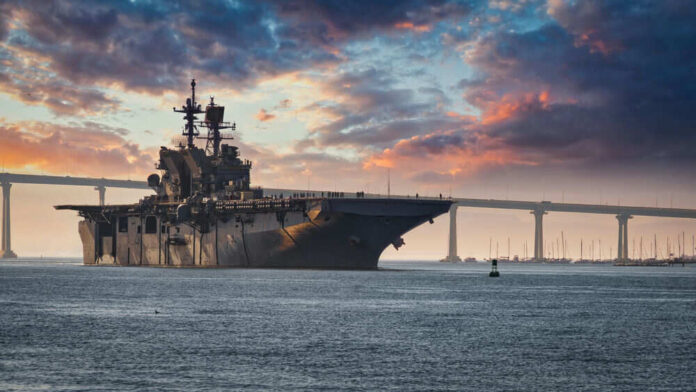
(DailyChive.com) – President Trump’s push for a massive “Trump-Class Battleship” risks squandering billions on outdated gun-heavy relics while proven Ticonderoga-class cruisers deliver unmatched missile defense against China and Russia threats.
Story Highlights
- Ticonderoga-class cruisers integrate Aegis radar and 122 VLS cells for simultaneous air defense, Tomahawk strikes, ASW, and ballistic missile defense, outperforming hypothetical battleships.
- With only 13 active ships facing a $6 billion maintenance backlog, Navy retirements create critical gaps in Indo-Pacific operations amid peer competition.
- Upgrades like SM-6 and ESSM quad-packing keep these 10,000-ton workhorses agile at 32+ knots, prioritizing real capabilities over flashy big-gun fantasies.
- Conservative fiscal sense demands upgrading legacy platforms over wasteful new builds, securing American superiority without Biden-era overspending.
Ticonderoga-Class: Proven Aegis Powerhouse
U.S. Navy commissioned the first Ticonderoga-class cruiser, USS Ticonderoga (CG-47), in 1983, introducing Aegis SPY-1 radar and Mk-41 vertical launch systems on later ships. These 27 vessels, built from 1980 to 1994 by Ingalls and Bath Iron Works, displaced 9,600-9,800 tons and reached 32+ knots with four LM2500 turbines. They evolved from 1970s designs to counter Soviet threats, replacing twin-arm launchers with 122 VLS cells capable of Tomahawks, SM-6 missiles, and ASROC. This multi-role versatility anchors carrier strike groups today.
Versatility Against Modern Threats
Ticonderoga-class ships handle anti-air warfare from wave-top to zenith, ballistic missile defense with SM-3 intercepts proven since 2002 aboard USS Lake Erie, and land-attack missions via Gulf War Tomahawks. Modernization added ESSM quad-packing, NIFC-CA networking, and SQQ-89 sonar, despite $250 million per-ship costs. Unlike slow, gun-focused battleships decommissioned in the 1990s, these cruisers provide 360-degree tracking and agility essential for Distributed Maritime Operations against hypersonic threats from China and Russia.
Aging Fleet Faces Retirement Pressures
Thirteen Ticonderoga-class cruisers remain active as of recent counts, primarily CG-52 and later with full VLS, crewed by about 330 personnel each. Retirements accelerated in the 2020s due to a $6 billion maintenance backlog, including USS Chosin (CG-65). The Navy shifts to Arleigh Burke Flight III destroyers and Constellation frigates for similar roles, certifying Burkes to fill cruiser gaps. Congress blocks some decommissions via NDAA, balancing budgets against capability losses in high-end escort duties.
Stakeholders like Lockheed Martin push Aegis upgrades, while shipbuilders pivot to new classes. SecNav Carlos Del Toro and CNO influence fleet sizing amid Indo-Pacific tensions.
Fiscal Lessons for Trump Navy Priorities
Each Ticonderoga cruiser cost around $1 billion initially, with upgrades straining budgets better allocated to missile tech over battleship revivals. Pro-retention experts at USNI praise their handling and versatility; critics note expired hull lives favor unmanned or next-gen DDG(X) cruisers by 2030s. Allies like Japan and Israel rely on their BMD exports. Under President Trump, prioritizing cost-effective Aegis sustainment over hypothetical Trump-Class builds upholds conservative values of limited spending and strong defense without globalist waste.
Sources:
https://www.seaforces.org/usnships/cg/Ticonderoga-class.htm
https://www.naval-technology.com/projects/ticonderoga-class/
https://www.military.com/equipment/ticonderoga-class-cruiser-cg
https://www.marineinsight.com/know-more/biggest-u-s-cruiser/
https://www.navy.mil/Resources/Fact-Files/Display-FactFiles/Article/2169861/cruisers-cg/
https://www.usni.org/magazines/proceedings/1987/january/handling-ticonderoga
Copyright 2026, DailyChive.com