
(DailyChive.com) – The “Americans stranded in Iran war” narrative is spreading fast—but the verifiable facts point to escalation risks and propaganda fog, not confirmed mass U.S. citizens trapped inside Iran.
Story Snapshot
- No credible reporting confirms Americans currently “stranded” inside Iran in a direct U.S.-Iran ground war; the closest modern parallel remains the 1979–1981 hostage crisis.
- U.S.-Iran tensions have intensified through air, naval, and proxy conflict dynamics, with limited diplomatic channels and persistent sanctions.
- Reports describe major 2025–2026 military actions and claims of severe damage, but key details remain unverified in open sources.
- Americans in the broader region—especially contractors and travelers—face disruption risk as shipping lanes and air routes tighten.
What’s Actually Verified About “Stranded Americans”
Researchers reviewing the claim found no specific, credible, recent incident documenting Americans being “stranded” inside Iran as part of an active U.S.-Iran war. The best-documented “stranded Americans” story tied to Iran remains the 1979–1981 hostage crisis, when Iranian students seized the U.S. Embassy in Tehran on November 4, 1979, holding 52 Americans for 444 days until January 20, 1981. That distinction matters because today’s chatter often blurs history with modern escalation.
Sources framing the current environment describe an escalated air-and-sea posture rather than a repeat of 1979 on the ground. That does not mean Americans face no danger. It means the specific headline claim—Americans trapped in Iran because of a “war”—is not supported by the provided citations, which emphasize uncertainty, incomplete verification, and the absence of a confirmed mass-civilian stranding event.
How U.S.-Iran Hostility Reached This Point
Modern U.S.-Iran hostility did not begin with social media clips; it traces through decades of conflict and mistrust. Background summaries point to the 1953 CIA-backed coup, U.S. alignment with the Shah, the 1979 Islamic Revolution, and then the embassy seizure that reshaped diplomacy. Later flashpoints include the 1980–1988 Iran-Iraq war dynamics, tanker confrontations, and the 1988 downing of Iran Air Flight 655 that killed 290 civilians—events that hardened narratives on both sides.
More recent tensions shifted from conventional clashes toward proxies, missiles, sanctions pressure, and nuclear brinkmanship. Reporting recaps the long-running pattern: U.S. forces and facilities in the region face attacks by Iranian-backed groups, while the U.S. responds with deterrence, strikes, and deployments. The result is a “de facto war” feel—without the clarity, declarations, or public accountability that conservatives typically demand when American lives and treasure are on the line.
2025–2026 Escalation: Big Claims, Limited Verification
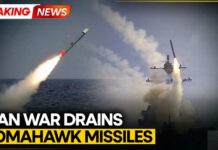
Current-developments reporting referenced in the research describes major actions in 2025–2026, including U.S. strikes on Iranian nuclear sites during a brief Israel-Iran war window and subsequent joint U.S.-Israel operations in early 2026. The same reporting notes claims of severe damage and high-impact targeting, while also acknowledging that the true extent of damage can be unclear in real time. That uncertainty is a red flag for readers trying to separate evidence from narrative.
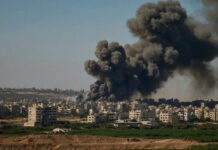
The research also references civilian tragedies that feed escalation cycles, including Iran’s 2020 downing of Ukraine International Airlines Flight 752, killing 176 people, and reported 2026 casualties connected to strikes. These events do not prove the “stranded Americans” claim, but they do explain why the environment can change quickly—closing airports, restricting routes, disrupting shipping, and prompting emergency evacuations elsewhere in the region even when Iran itself is not accessible or openly reporting.
What This Means for Americans, Energy Security, and Constitutional Priorities
The most immediate, defensible takeaway for Americans is risk management: as naval deployments increase and the Strait of Hormuz remains a pressure point, disruptions can ripple into energy markets and shipping insurance, with knock-on effects for prices at home. Conservatives remember what inflation feels like when Washington mismanages crises, and they also recognize a familiar pattern: vague objectives abroad often lead to open-ended commitments without clear congressional buy-in or measurable endpoints.
Based on the research, the better-supported concern is not “Americans stranded in Iran,” but Americans in the region—especially contractors and travelers—caught in tightening security conditions and disrupted transportation networks. When information is thin and claims outrun verification, citizens should demand clarity: what is confirmed, what is claimed, and what remains unknown. That insistence on accountability is how free people avoid being stampeded by panic headlines or manipulated narratives.
Americans Stranded in Iran War https://t.co/ABdS2qPiuG
— Cyber Mountain (@Devin82m) March 5, 2026
Until credible outlets document names, locations, and official confirmation of Americans trapped inside Iran, readers should treat sweeping “stranded in Iran war” headlines as unproven. The history is real, the regional danger is real, and the stakes are real—but the specific claim requires evidence, not viral repetition. In the meantime, watch for verified State Department travel guidance, confirmed evacuation notices, and independent corroboration of any alleged mass-stranding event.
Sources:
https://www.independent.co.uk/news/world/middle-east/iran-war-us-trump-history-b2930978.html
https://en.wikipedia.org/wiki/Iran%E2%80%93United_States_relations
Copyright 2026, DailyChive.com