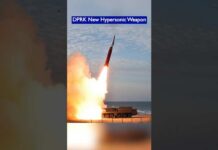


(DailyChive.com) – The real story isn’t that U.S. troops “dominate vast swaths of Iran”—it’s that Iran is adapting under pressure, using missiles, drones, and proxies to threaten Americans and our allies without a single U.S. boot occupying Iranian soil.
Story Snapshot
- No evidence supports claims that U.S. forces control territory inside Iran; U.S. dominance is regional, not an occupation.
- Iran remains conventionally outmatched by U.S. and allied air and naval power, especially in ISR and precision strike.
- Tehran has compensated by expanding ballistic missiles, cruise missiles, drones, and proxy networks across the region.
- Sanctions constrain Iran’s high-end modernization but have not produced a simple decline; asymmetric capabilities have grown.
What “U.S. Dominance” Really Means in 2026
U.S. leverage over Iran is best described as regional power projection, not territorial control. The research indicates the United States maintains a dense posture around Iran—bases, rotational aircraft, naval forces, missile defense, and partner networks—that can strike Iranian forces and infrastructure and constrain Iran’s freedom of action. That is fundamentally different from holding ground inside Iran. Conflating those concepts creates confusion about what deterrence actually looks like.
The timeline in the research highlights why this posture persists. Since the 1979 revolution and the Iran–Iraq War, Iran has operated under sanctions and technological isolation, while the U.S. expanded its Gulf presence from the 1980s onward and then surged after the 1991 Gulf War and the 2003 Iraq invasion. That surrounding posture—paired with Israel and GCC partner capabilities—forms the backbone of U.S. regional superiority without occupation.
Iran’s Conventional Weakness—and the Workaround It Built
The research consistently describes Iran as conventionally inferior to the United States and top regional militaries, especially in airpower, advanced naval capability, ISR, and precision strike. Iran’s air force, in particular, relies heavily on aging legacy aircraft and constrained modernization. While there have been reports of interest in newer Russian platforms such as Su-35s, the research notes delivery and integration are limited and contested, leaving gaps unresolved.
Iran’s workaround has been a long-term investment in asymmetric tools designed to punish and deter. The research points to ballistic and cruise missiles, drones, naval swarm tactics, and proxy militias across Iraq, Syria, Lebanon, Yemen, and beyond. This approach aims to hold U.S. bases, shipping lanes, and allied infrastructure at risk, raising the price of any major military action against the regime while staying below the threshold of full-scale war.
What Recent Conflicts Proved About Missiles, Drones, and Proxies
Recent episodes cited in the research illustrate how Iran generates leverage despite conventional weakness. Operation Praying Mantis in 1988 reinforced Iran’s shift away from surface-fleet duels toward asymmetric maritime tactics. The 2019 strike on Saudi Aramco facilities demonstrated precision and reach via drones and cruise missiles. In 2020, after the U.S. strike that killed Qassem Soleimani, Iran’s ballistic missile retaliation on Ayn al-Asad showed operational capability and psychological impact even without U.S. fatalities.
Developments through late 2024 further underline adaptation rather than straightforward decline. The research describes expansion in Iranian missile ranges, accuracy, and inventories, including solid-fuel systems, alongside hypersonic claims treated skeptically by many analysts. Drone production and export—highlighted by transfers to Russia for use in Ukraine—suggest maturing designs and scaling capacity, with combat experience feeding future iterations. These are the kinds of low-cost systems that can saturate defenses and complicate U.S. decision-making.
Why the “Decline” Narrative Misses the Risk to Americans
The research warns against a simplistic “Iran is collapsing militarily” storyline. Sanctions and economic strain do limit procurement, maintenance, and access to high-end systems, but the overall picture is mixed: Iran’s conventional disadvantages persist, while its asymmetric power has expanded. That combination can still endanger U.S. personnel and interests because stand-off weapons and proxies exploit political constraints and escalation fears, creating a steady churn of risk without a formal war declaration.
U.S. Central Command says Iranian combat power is declining as U.S. forces build dominance over vast swaths of Iran.
Watch OAN on Spectrum and YouTube TV today for more updates. pic.twitter.com/BKO2ghFBLG
— One America News (@OANN) March 16, 2026
Uncertainty remains, and the research is clear about limitations: exact missile and drone inventories and readiness are hard to measure, and propaganda on all sides clouds verification. Even so, the core factual correction stands—there is no evidence of U.S. territorial control inside Iran—and the strategic reality is more sobering. U.S. regional dominance can deter major Iranian moves, but Iran’s missile, drone, and proxy toolkit ensures Tehran can still impose costs and generate crises.
Sources:
https://libguides.usc.edu/writingguide/assignments/caseanalysis
https://journals.sagepub.com/doi/10.1177/16094069231205789
https://pmc.ncbi.nlm.nih.gov/articles/PMC7886435/
https://www.cliffsnotes.com/study-notes/5015868
Copyright 2026, DailyChive.com