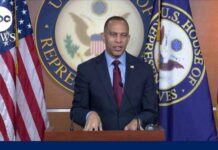
Public refusals to endorse Chuck Schumer have turned a presumed glide path into a real leadership fight.
Story Snapshot
- Chris Van Hollen and Elissa Slotkin declined to back Schumer, pressing for an open contest.
- Abdul El-Sayed said he would support Van Hollen if he runs for leader.
- Schumer still touts fundraising muscle and a vow to carry out the party’s agenda.
- Research cautions against reading spending totals as proof of campaign success.
Endorsement Gaps Emerge Inside the Democratic Caucus
Chris Van Hollen said there should be no “coronation” for the next Senate Democratic leader and warned against giving anyone a “blank check” without a caucus plan. Elissa Slotkin said voters sent a message for a “new generation” of leaders and would not rule out a run herself. These on-the-record stands matter. They show that some senators want a debate on direction, not just a quick vote that locks in the old playbook.
Abdul El-Sayed added pressure by saying he would back Van Hollen if he enters the race and by tying leadership to passing bills that tackle rising costs for families. That frame speaks to a wider public mood. Voters across parties are tired of speeches that do not change prices, paychecks, or care costs. When members echo that demand, it signals that inside pressure may now match outside anger.
Schumer’s Case: Experience, Money, and Message Control
Chuck Schumer has long built his brand on recruiting candidates and raising cash. A Politico profile credits him with leading a net gain of 14 Senate seats in the 2006 and 2008 cycles as the party’s campaign chief. During the 2026 cycle, allied groups deployed large sums in key races, a sign of an active and connected operation that Schumer’s team points to as a strength. After the election, Schumer pledged to turn the win into results that improve daily life.
Yet the money story has limits as proof. Political research finds that big spending totals can be noisy measures of impact. One analysis suggests campaign expenditures by candidates often matter more than outside money, and effects vary by context. That does not erase Schumer’s network. It does show why some senators ask for more than dollar figures. They want a plan that links power to clear votes and measurable gains for people at home.
What Each Side Is Really Arguing About
Van Hollen and Slotkin are not only contesting a title; they are contesting method. They ask for a full caucus debate on priorities before choosing a leader. They test whether Democrats will use committee gavels and floor time to force votes on costs, healthcare, and wages. Schumer, by contrast, leans on institutional memory. He cites past recruitment wins and the machinery that funds ads, hires staff, and coordinates messages across states.
Corporate Democrats pushing Chuck Schumer to remain Senate leader are rewriting his record and claiming credit for victories he did not deliver.
Schumer has led Senate Democrats through years of electoral defeats. Pointing to a handful of candidates he backed who won while…— GraveLight (@GraveLight13) November 7, 2026
Both views tap a shared frustration in the country. People on the right and left think Washington serves the well connected first. They see leaders focus on the next election instead of hard fixes. This fight will show whether Democrats run the Senate with visible action or with closed-door bargaining that voters rarely see. The answer will shape not just who wears the title but whether the party can claim results that feel real beyond the Beltway.
Sources:
redstate.com, us.cnn.com, cnn.com, usatoday.com, politico.com, currentaffairs.org, washingtonexaminer.com
© dailychive.com 2026. All rights reserved.