
(DailyChive.com) – When New York City’s centrist mayor and a scandal-scarred ex-governor join forces to block a trailblazing progressive from becoming the city’s first Muslim mayor, you know the old rules of urban politics have been torched, leaving the city’s future up for grabs.
Story Snapshot
- NYC Mayor Eric Adams publicly endorses former Governor Andrew Cuomo against progressive challenger Zohran Mamdani.
- Adams frames the race as a referendum on antisemitism, party unity, and the limits of progressive activism.
- Mamdani’s campaign, fueled by grassroots energy and controversy, polarizes voters and exposes deep party rifts.
- The outcome could reshape Democratic politics and identity in America’s largest city for a generation.
Mayor Adams and Andrew Cuomo: An Unlikely Alliance
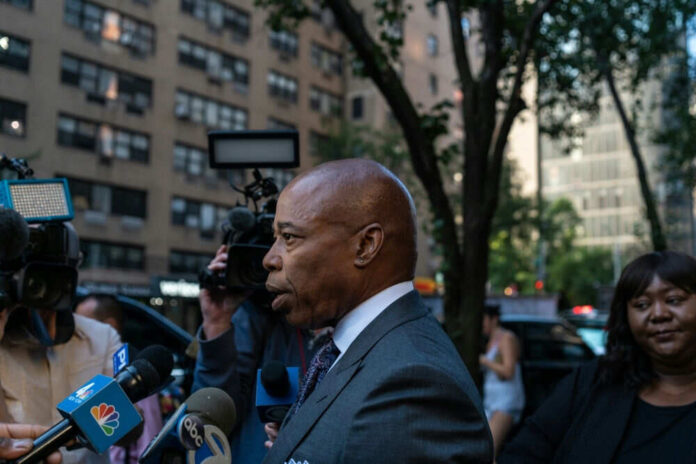
October 22, 2025, Harlem, Eric Adams and Andrew Cuomo stand shoulder-to-shoulder on a crowded stage, their handshake capturing the attention of a city that thrives on political theater. Adams, elected as a centrist Democrat in 2021, once sparred bitterly with Cuomo, whose resignation amid scandal seemed to end his career. Today, Adams brands Cuomo as the city’s best hope to stop Zohran Mamdani, a progressive insurgent, whom he accuses of “divisiveness and extremism.” Party unity, Adams claims, is on the line, but under the surface, old scores and new anxieties about the city’s direction seem to drive this alliance.
Cuomo, seizing his shot at redemption, echoes Adams’ warnings and rails against what he sees as a dangerous turn in his party. “Democrats do not propose antisemitic policies. Democrats have stood with Israel always as an ally,” Cuomo insists, positioning himself as a bulwark against what he labels the excesses of progressive activism. The spectacle is pure New York: bombastic, raw, and laden with subtext about power, betrayal, and the city’s shifting identity.
Zohran Mamdani and the Progressive Surge
Zohran Mamdani, son of immigrants and a rising democratic socialist in the State Assembly, has become the lightning rod for the city’s anxieties, and its aspirations. His campaign surges on promises of housing reform, police accountability, and a bold reimagining of city government. Yet Mamdani’s use of the phrase “Globalize the intifada,” and his fierce criticism of establishment politics, have sparked outrage among Jewish groups and centrists. Critics accuse him of stoking division; his supporters counter that he is the voice of the marginalized, finally demanding a seat at the table for communities long left out of power.
Mamdani’s candidacy is historic: if elected, he would become the city’s first Muslim mayor. The symbolism electrifies his base and terrifies opponents convinced that his vision risks tearing at the fragile fabric of New York’s multicultural coalition. The debates rage not just in City Hall, but in synagogues, mosques, and union halls, as neighbors weigh whether the city is ready for an unapologetic progressive, or whether it needs the steady hand of a known, if flawed, veteran.
Identity, Unity, and the Fight for the Heart of the Party
The Adams-Cuomo partnership exposes a Democratic Party straining under the weight of its internal contradictions. Centrist leaders worry that Mamdani’s rise signals a loss of control, a ceding of ground to activists who reject traditional political bargains. Progressive activists, meanwhile, see the endorsement as proof that the party establishment will go to any length to protect its own, even if it means reviving figures like Cuomo.
The Jewish community, rocked by a spike in antisemitic incidents, listens intently as Adams frames the race as a binary: support Cuomo, or risk empowering a candidate accused of insensitivity toward Jewish concerns. Muslim and immigrant voters, often excluded from the city’s power circles, feel the stakes acutely, Mamdani’s campaign is for them a rallying cry, a shot at real representation. The city’s legendary diversity, always a source of pride and tension, becomes both battleground and prize in a contest that feels less like a coronation than a referendum on the soul of New York.
The Stakes: What This Race Means for New York and Beyond
The immediate impact of Adams’ endorsement is to consolidate centrist support behind Cuomo, potentially sidelining Mamdani’s insurgent campaign. But the longer-term consequences are murkier. If Cuomo prevails, establishment Democrats may feel emboldened to clamp down on progressive challengers nationwide, yet the grassroots forces fueling Mamdani will not quietly retreat. If Mamdani pulls off an upset, the city, and perhaps the country, will have to reckon with a new era of political possibility, fraught with both promise and peril.
As election day nears, the only certainty is that New York’s political landscape has changed. The old playbook, alliances, endorsements, identity appeals, still matters, but the city’s restless electorate demands something new. Will voters choose the comfort of the familiar, or the risk and hope of transformation? The answer will echo far beyond City Hall, shaping the city’s future, and perhaps the nation’s, for years to come.
Copyright 2025, DailyChive.com