

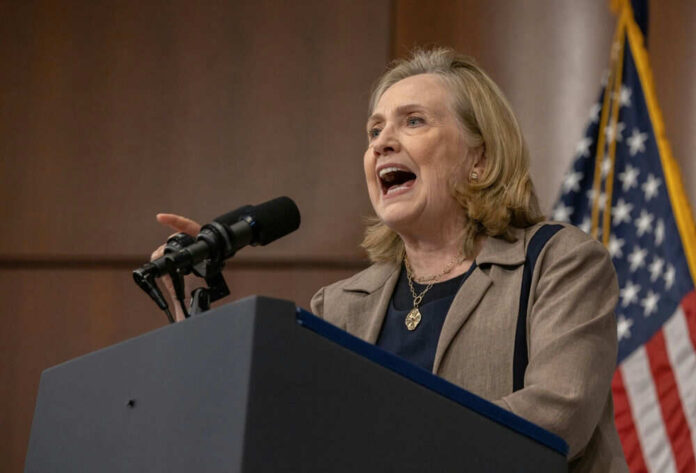
(DailyChive.com) – The juxtaposition of Hillary Clinton’s critique of Trump and Google’s admission of censorship sparks a heated debate on the integrity of free speech in America.
Story Overview
- Hillary Clinton accuses Trump of threatening free speech on MSNBC.
- Google admits to censoring Americans under pressure from the Biden administration.
- The incident highlights potential hypocrisy and selective outrage.
- Intensifying scrutiny of government influence on tech companies.
Clinton’s Remarks and Google’s Admission
On September 24, 2025, Hillary Clinton appeared on MSNBC’s “Morning Joe,” where she boldly criticized former President Donald Trump as a threat to free speech. Her comments come on the heels of Google’s admission to the House Judiciary Committee that it had censored Americans on YouTube under the Biden administration’s direction. This revelation, a day before Clinton’s interview, has fueled a fiery debate over free speech and government influence on tech companies.
Clinton’s claims that Trump employs “the authoritarian playbook” to silence opponents and critique the media are starkly contrasted by Google’s confession. This admission by Google, a tech giant, that it removed legal speech under governmental pressure, raises questions about the sincerity of Democratic concerns regarding free speech. The narrative that emerges is one of selective outrage, with Clinton’s warnings about Trump’s alleged authoritarianism juxtaposed against her party’s influence on tech censorship.
Tech Censorship and Government Pressure
Google’s admission to censoring content at the behest of the Biden administration marks a significant moment in the ongoing debate about the role of tech companies in moderating online discourse. Google, which owns YouTube, faced intense scrutiny after revealing that it complied with government requests to remove content that did not violate its policies. This admission has intensified concerns over potential First Amendment infringements and the extent of government influence on private companies.
As tech companies like Google navigate the complex landscape of content moderation, they face pressure from both the government and the public. Balancing these demands while maintaining their commitments to free expression presents a formidable challenge. The growing scrutiny of tech companies’ roles as gatekeepers of public discourse underscores the need for transparency and accountability in content moderation decisions.
Political Implications and Hypocrisy
The timing of Clinton’s remarks and Google’s admission has sparked accusations of hypocrisy and selective concern for free speech. Critics argue that Clinton and other Democrats are quick to denounce Trump’s alleged threats to free speech while ignoring or excusing similar actions by their own party. This selective outrage fuels political polarization and undermines trust in the integrity of media and tech platforms.
The debate over free speech and tech censorship is further complicated by the intricate power dynamics between government, tech companies, and media organizations. As these entities navigate the pressure to moderate content responsibly, they must also confront public demand for accountability and the protection of constitutional rights. The ongoing investigations by the House Judiciary Committee into government-tech collusion underscore the need for legislative or regulatory responses to safeguard free speech online.
Ongoing Debate and Future Implications
The Clinton-Trump-Google saga is emblematic of the broader challenges facing free speech in the digital age. As Congressional investigations continue and public debate intensifies, the implications for tech companies, media organizations, and political actors are profound. Increased scrutiny of government involvement in tech censorship may lead to potential legislative or regulatory changes aimed at protecting free speech.
The ongoing discourse around free speech, censorship, and government influence will likely continue to shape public opinion and political dynamics. As stakeholders navigate these complex issues, the importance of transparency, accountability, and adherence to constitutional principles remains paramount. The story serves as a reminder of the delicate balance between moderating harmful content and safeguarding the fundamental rights of free expression.
Copyright 2025, DailyChive.com