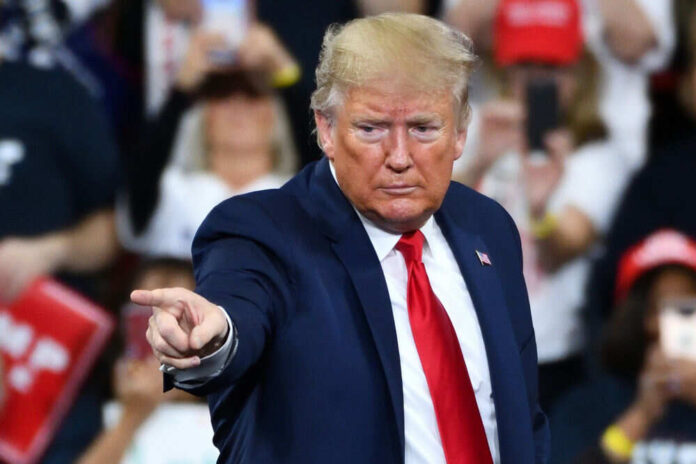
(DailyChive.com) – Donald Trump’s unprecedented military posturing toward Venezuela is escalating into a major geopolitical showdown.
Story Snapshot
- Trump’s military threats toward Venezuela have moved beyond rhetoric to actual deployments.
- The U.S. has a history of interventions in Latin America, but Trump’s approach is uniquely aggressive.
- Regional stability is at risk, with significant military assets and covert operations in play.
- Congressional pushback raises questions about the feasibility and legality of unilateral military action.
Trump’s Military Escalation in Venezuela
Donald Trump has consistently highlighted Venezuela as a focal point of U.S. foreign policy, particularly due to the political instability under President Nicolás Maduro. This narrative hit a pivotal point in 2025 as Trump’s administration made good on earlier threats, deploying military assets to the Caribbean and executing direct actions against alleged drug trafficking operations. The stakes are high, given the region’s historical sensitivity to U.S. intervention and the potential for widespread instability.
The shift from sanctions and diplomatic pressure to military involvement marks a significant departure in U.S. policy. In 2025, military deployments became a reality as advanced fighter jets were stationed in Puerto Rico, and covert CIA operations were authorized. This escalation has not only raised the specter of a regional conflict but also drawn international scrutiny and condemnation from various quarters, including Latin American leaders who view these actions as imperialist overreach.
Historical Context and Strategic Interests
Venezuela’s political and economic turmoil has been a matter of international concern since the early 2010s. The consolidation of power by Nicolás Maduro and the subsequent humanitarian crisis have drawn significant attention. Trump’s approach, however, differs from previous administrations, which relied more on multilateral strategies. His direct military threats and actions highlight a strategic pivot towards a more unilateral and aggressive posture, reflecting a broader U.S. interest in maintaining influence and stability in the Caribbean.
The U.S.’s strategic interests in the region include the protection of its economic and security interests. The narrative of Venezuelan involvement in drug trafficking has been a consistent theme in justifying these actions. Yet, this aggressive stance has prompted questions about the precedent it sets for U.S. foreign policy and the potential long-term implications for U.S.-Latin America relations.
Key Stakeholders and Power Dynamics
Several influential figures and organizations are at the forefront of this geopolitical drama. Donald Trump, as the U.S. President, is the driving force behind this interventionist rhetoric. Marco Rubio, a staunch critic of Maduro, plays a crucial role as Secretary of State, advocating for regime change. On the Venezuelan side, Nicolás Maduro’s government is mobilizing resources to resist U.S. influence, casting these moves as efforts to preserve sovereignty.
The U.S. Department of Defense and CIA are executing the military and covert strategies, while Congress remains a critical arena for debate. The balance of power is delicate; executive decisions are met with legislative scrutiny, reflecting broader power dynamics within U.S. governance. Meanwhile, the Bolivarian Militia in Venezuela represents a mobilized response to U.S. threats, emphasizing nationalist sentiments.
Current Developments and Risks
Recent developments have seen a significant uptick in military activities, including a missile strike on a suspected drug boat and the deployment of advanced military jets. These actions have escalated tensions, with the risk of direct conflict looming large. Venezuelan responses, including aerial provocations, illustrate the fragile nature of the current standoff.
Congressional efforts to restrict unilateral military action underscore the domestic political challenges Trump faces. Despite these tensions, the situation remains short of a full-scale invasion, although the risk of miscalculation or unintended consequences could quickly alter this scenario. The international community remains watchful, with many advocating for diplomatic solutions to avoid exacerbating the humanitarian crisis in Venezuela.
Copyright 2025, DailyChive.com