
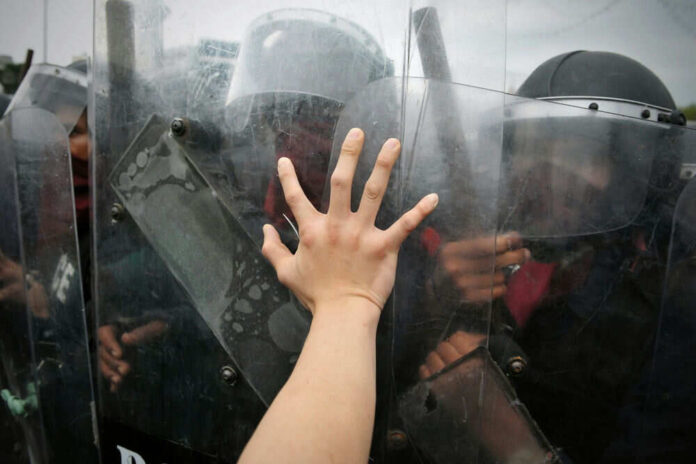
Iranian protesters now directly target Supreme Leader Ali Khamenei with “death to the dictator” chants as the regime’s currency collapse sparks unprecedented merchant uprisings threatening the Islamic Republic’s economic foundation.
Story Highlights
- Iranian rial crashed to record low of 1.42 million per US dollar, triggering massive trader protests
- Shopkeepers openly chanted “death to the dictator” targeting Supreme Leader Khamenei directly
- Security forces deployed motorcycles to disperse merchants on Tehran’s Jomhouri Street
- Emergency government meeting ordered as traders vow continued strikes despite crackdowns
Currency Freefall Triggers Anti-Regime Uprising
Iran’s rial plummeted to an unprecedented 1.42 million per US dollar on December 28, 2025, immediately sparking widespread protests among Tehran’s merchant community. The currency collapse represents a devastating blow to ordinary Iranians already struggling under decades of US sanctions and economic mismanagement. Shopkeepers and traders, whose livelihoods depend on stable exchange rates, witnessed their purchasing power evaporate overnight, triggering immediate calls for resistance against the regime’s failed policies.
Social media videos captured hundreds of protesters rallying throughout Tehran, with demonstrations spreading to the suburb of Malard by Monday evening. The scale and intensity of the protests signal growing desperation among Iran’s business community, traditionally seen as more politically cautious than student or labor activists.
Direct Challenge to Khamenei’s Authority
Unlike previous economic protests, demonstrators explicitly targeted Supreme Leader Ali Khamenei with chants of “death to the dictator,” marking a significant escalation in anti-regime sentiment. Security forces on motorcycles moved swiftly to disperse crowds on Jomhouri Street, but protesters showed remarkable defiance, with one demonstrator sitting in the road to block advancing security personnel. This direct confrontation with authority represents a dangerous development for a regime already facing legitimacy challenges from previous uprisings.
The targeting of Khamenei personally breaks a significant taboo in Iranian protest movements, where criticism typically focuses on lower-level officials rather than the supreme leader directly. This shift suggests deepening public anger and diminishing fear of regime reprisals, potentially signaling broader unrest ahead.
Government Scrambles as Strikes Planned
President Masoud Pezeshkian ordered emergency meetings at Iran’s central bank to address the currency crisis and review trade policies affecting citizens’ livelihoods. However, merchants remained undeterred, announcing a coordinated strike for Tuesday at 10 a.m. despite ongoing security crackdowns. The Interior Ministry predictably blamed “hostile psychological operations” for the currency volatility, deflecting responsibility from years of economic mismanagement and international isolation.
The government’s reactive posture reveals the regime’s limited options for addressing fundamental economic problems rooted in sanctions resistance and regional military adventurism. Pezeshkian’s reformist positioning conflicts with hardliner control over key economic levers, creating internal tensions that protesters may exploit for broader political change.
Copyright 2025, DailyChive.com