

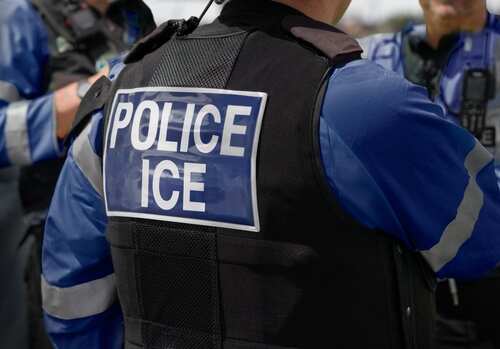
(DailyChive.com) – As Democrats rush to paint an ICE raid in Tucson as an “assault” on a congresswoman, the real story is a clash between border enforcement and a familiar open-borders political script.
Story Snapshot
- Freshman Democrat Rep. Adelita Grijalva claims a “very aggressive” ICE officer pepper-sprayed her during a Tucson restaurant raid.
- DHS says she was simply near someone being sprayed while that person obstructed and assaulted law enforcement.
- The raid was part of a long-running ICE–IRS probe into immigration and tax violations at a popular Tucson restaurant chain.
- Arizona Democrats are using the incident to attack immigration enforcement and shape the national narrative.
Democrat Congressman’s Claim Collides With ICE Account in Tucson Raid
On December 5, 2025, newly sworn-in Rep. Adelita Grijalva, a progressive Democrat from Arizona’s 3rd District, rushed to Taco Giro, a Tucson Mexican restaurant targeted in a coordinated ICE and IRS operation into immigration and tax violations. She says that after identifying herself as a Member of Congress and demanding information from agents, a “very aggressive” officer pushed her aside and pepper-sprayed her, turning a lawful enforcement action into an instant political flashpoint.
Homeland Security officials tell a sharply different story. DHS spokesperson Tricia McLaughlin says Grijalva was not directly targeted but stood in the vicinity of someone who was pepper-sprayed while obstructing and assaulting law enforcement. According to DHS, two officers were seriously injured during the raid, and crowd-control tools were deployed only after resistance escalated. That account frames the spray as a response to aggression, not punishment for a congresswoman’s questions.
How a Long-Running Enforcement Probe Became a Political Stage
The Tucson operation did not materialize overnight. ICE and the IRS executed 16 search warrants across southern Arizona the same morning as the Taco Giro raid, part of a long-running investigation into suspected tax and immigration violations in local businesses. Restaurants like Taco Giro, a popular neighborhood chain, have repeatedly drawn scrutiny for allegedly employing illegal workers or skirting tax laws, a pattern that has historically triggered both legal action and street protests in Arizona’s activist-heavy border communities.
Arizona has been ground zero for immigration battles since at least the SB 1070 era, when state law empowered local officers to check immigration status and sparked national outrage. Over the 2010s and 2020s, ICE worksite raids across the state routinely faced organized resistance from immigrant-rights groups who view nearly any enforcement as racial profiling or “terrorizing” communities. That history helps explain why, within minutes of the Taco Giro raid, protesters assembled, cell phones out, ready to challenge agents and turn the location into a stage for the latest national fight over borders.
Grijalva’s Political Persona and the Left’s Narrative on ICE
Adelita Grijalva arrived at Congress with a clear identity: the daughter of longtime ICE critic Raúl Grijalva, elected on a platform of immigrant rights, police scrutiny, and aggressive oversight of federal agencies. In interviews after the raid, she accused the Trump administration of having “no regard” for due process, the rule of law, or the Constitution, casting herself as a defender of the community against federal overreach. Her allies quickly echoed that framing, insisting the incident proved their long-standing claims about ICE “abuse.”
Arizona Democrats, including Sen. Ruben Gallego and Attorney General Kris Mayes, lined up behind Grijalva’s account, calling the pepper-spray episode “disgraceful” and “outrageous.” They demanded restraint and accountability from ICE, but offered little acknowledgment that officers reported serious injuries or that the raid stemmed from alleged immigration and tax crimes. For many on the left, the alleged mistreatment of a progressive congresswoman became more important than the underlying violations, reinforcing a broader narrative that enforcement itself is the problem.
Law Enforcement, Obstruction, and What’s at Stake for Border Security
DHS’s statement cut to the heart of the dispute: presenting oneself as a Member of Congress does not confer a right to obstruct active law enforcement operations. That principle matters far beyond one Tucson restaurant. If elected officials and street activists can physically insert themselves into raids with impunity, every attempt to enforce immigration and tax laws risks devolving into a media circus. Officers already face volatile crowds; serious injuries during this operation underscore how quickly situations can turn dangerous.
For conservatives, the Tucson clash highlights a familiar pattern. Federal agents pursuing long-running criminal and immigration probes are second-guessed the moment force is used, even when officers are attacked. Progressive politicians who oppose border security on policy grounds quickly reframe enforcement as brutality, then demand investigations that chill future operations. That dynamic threatens the rule of law, rewards obstruction, and undermines the men and women tasked with carrying out the very statutes Congress itself put on the books.
Grijalva says ‘very aggressive’ ICE officer pepper-sprayed her during Tucson raid https://t.co/wZS5AJN7D7
— George Duffy Jr (@seekr34) December 6, 2025
The fallout from Tucson is still unfolding. No formal investigation has yet been launched, though advocacy groups and Democratic lawmakers are pressuring DHS and Congress to probe ICE’s conduct and use-of-force policies. Meanwhile, the broader multi-agency operation continues, and detailed information about specific tax or immigration violations at Taco Giro remains limited. Until facts are fully documented, the incident stands as a revealing test of whether the country will back law enforcement or allow partisan narratives to define border security.
Copyright 2025, DailyChive.com