
(DailyChive.com) – Iran’s missiles didn’t just hit Gulf targets—they exposed how quickly a regional war can blow back into America’s economy through energy shocks and global instability.
Quick Take
- Iranian drone and missile strikes hit high-profile civilian and economic sites across GCC states after a U.S.-Israel war against Iran escalated in late February/early March 2026.
- Targets reportedly included Dubai luxury hotels, Kuwait’s international airport, Saudi Arabia’s largest oil refinery, Qatar’s LNG facilities, and Oman’s Duqm port—triggering fires, shutdowns, and export disruptions.
- Qatar’s LNG disruption matters globally because its facilities are tied to roughly 20% of global LNG supply, raising immediate energy-security concerns.
- Pre-war forecasts projecting resilient GCC growth in 2026 now collide with wartime reality: infrastructure damage and “risk repricing” that can spook investors and raise financing costs.
Iranian Retaliation Hits the Gulf’s “Stability” Brand Where It Hurts
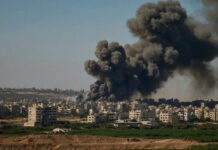
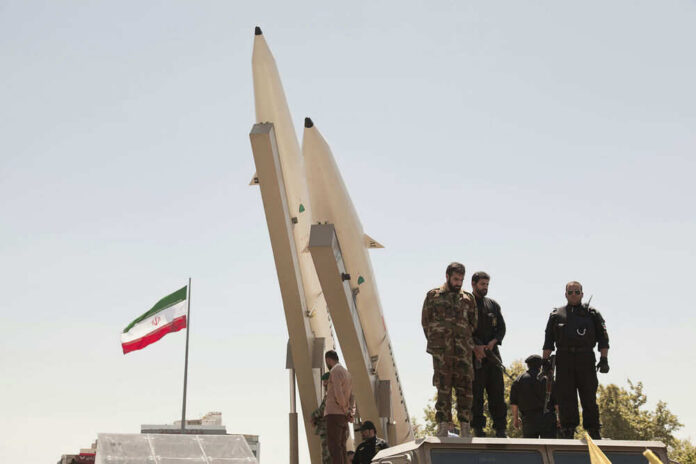
Iran’s reported response to the newly expanded conflict landed directly on the Gulf monarchies’ core promise to the world: stability. A Carnegie Endowment analysis dated March 3, 2026, describes Iranian drone and missile strikes that sparked fires at luxury hotels in Dubai, sent Kuwait’s international airport into panic, knocked Saudi Arabia’s largest oil refinery offline, disrupted Qatar’s LNG facilities, and struck Oman’s Duqm port. The same account describes export halts and shutdowns that reverberate well beyond the region.
President Trump, speaking to CNN, called the attacks the war’s “biggest surprise,” underscoring how quickly escalation can spill across borders when major powers and regional rivals collide. GCC interior ministries reportedly warned against rumor-sharing, a sign governments were trying to manage public anxiety while also signaling that the information environment can become a second battlefield. What remains unclear from available reporting is the full damage assessment across all sites and how quickly operations can safely resume.
Energy Markets Feel the Shock Fast—Especially When LNG Goes Offline
Qatar’s LNG system is a linchpin for global energy, and the Carnegie account says those facilities were disrupted even as the war turned open-ended. Because Qatar’s LNG is tied to around 20% of global supply, any sustained outage can tighten global markets, lift prices, and intensify political pressure on import-dependent allies. Gulf oil and gas disruptions rarely stay “regional,” and Americans have lived through enough energy-driven inflation to recognize how overseas instability can reach household budgets.
Pre-war economic coverage had emphasized a different storyline: Gulf growth driven more by non-oil expansion, domestic demand, and big investment themes like AI. Multiple outlooks cited growth expectations in the 4.4–4.5% range for 2026 with relatively low inflation near 2% across parts of the region, alongside OPEC+ output pauses extending into 2026. Those forecasts did not assume direct missile strikes on critical infrastructure, which is why the current situation represents a structural break from prior baseline assumptions.
Diversification Plans Collide With Wartime Reality and Higher “Risk Pricing”
GCC governments have spent years trying to convince the world they are safe hubs for capital, tourism, logistics, and next-generation industries. The new war directly undermines that marketing pitch. Carnegie’s analysis argues that attacks on economic nodes damage investor confidence and raise the cost of doing business through higher insurance, financing, and perceived security risk. That matters for megaprojects and private investment flows, especially when governments are already balancing spending commitments, subsidy reform pressures, and long-term transitions away from oil dependence.
Other research summarized in the broader coverage also flagged a recurring vulnerability: oil prices can help in the short run but do not solve long-run fiscal and political challenges if instability grows. Analysts quoted in regional reporting have emphasized that 2026 was expected to be pivotal for proving non-oil strength, yet conflict increases uncertainty even when energy revenues rise. The most defensible takeaway from the available sources is not a precise forecast, but a warning: war compresses timelines, forcing security needs to compete directly with development ambitions.
The Strategic Squeeze: U.S. Leverage, Iranian Proximity, and GCC Security Gaps
The Gulf monarchies sit in a difficult position: they are central to global energy supply, geographically close to Iran, and dependent on credible security guarantees to keep investment flowing. Carnegie describes them as caught between Iranian “desperation” and U.S. “recklessness,” while also arguing that only more collective GCC security can protect their fragile economic models. The research also notes recent diplomacy efforts, including Oman’s attempts to push diplomacy on U.S. television and earlier mediation associated with Qatar during a 2025 ceasefire effort.
For American readers who are tired of endless foreign entanglements and the economic pain that follows, the practical question is accountability and clarity. The sources provided outline strikes, shutdowns, and political messaging, but they do not provide a complete public accounting of decision points, thresholds, or an end-state that would restore stability quickly. In the absence of clear timelines, markets will price uncertainty—and that is exactly how foreign conflict becomes domestic pressure through higher costs and renewed inflation risks.
Policy debates going forward will likely focus on how to deter further attacks without stumbling into open-ended escalation that leaves allies exposed and civilians at risk. The research emphasizes that the war’s duration, the full extent of damage, and subsequent energy-price reactions remain uncertain. Until those gaps close, Americans should expect the GCC’s “safe haven” narrative to stay under strain and global energy markets to remain sensitive to every new strike, shutdown, or diplomatic failure reported from the region.
Sources:
https://gulfif.org/the-gulf-in-2026-expert-outlook/
https://carnegieendowment.org/emissary/2026/03/gulf-states-iran-war-security
https://www.pwc.com/m1/en/blog/five-economic-themes-to-watch-2026-gcc.html
https://thebusinessyear.com/article/2026-middle-east-conflict-why-the-gulf-will-endure/
https://www.arabnews.com/node/2629302/business-economy
Copyright 2026, DailyChive.com