

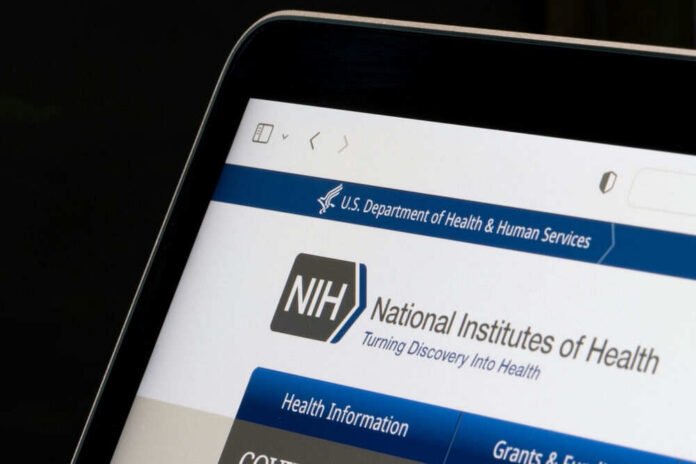
(DailyChive.com) – A growing “abolish the NIH” push is forcing Washington to answer a hard question: can America cut a $47 billion bureaucracy without sacrificing life-saving medical breakthroughs?
Story Snapshot
- The “Should the NIH be abolished?” debate is real, but available research shows no verified, active legislation to shut the agency down.
- NIH began in 1887 as a one-room federal hygiene lab and expanded through major laws like the 1930 Ransdell Act and later public health expansions.
- NIH sits inside HHS and now funds a massive share of U.S. biomedical research, making it a prime target in broader spending and accountability fights.
- Abolition would instantly disrupt tens of thousands of research projects and clinical trials, while saving federal outlays that fiscal conservatives want scrutinized.
Why the “Abolish NIH” Debate Keeps Surfacing in 2026
Policy talk about abolishing the National Institutes of Health has intensified in conservative circles, but the research available here does not confirm a specific bill, floor vote, or formal abolition timetable. What exists is a recurring argument about whether a large federal research agency—funded at roughly $47 billion annually—still fits an era of budget pressure and post-COVID skepticism. The dispute is less a breaking-news event than a referendum on spending, oversight, and trust in federal institutions.
Because there is no single “NIH abolition” legislative vehicle documented in the provided sources, readers should separate rhetoric from actionable policy. The most concrete fact pattern is institutional: NIH remains part of the Department of Health and Human Services, with Congress holding the power of the purse. That matters for conservatives who want constitutional accountability; appropriations, audits, and statutory reforms are real levers, while “abolish it” slogans may function more as pressure tactics than near-term governance.
How NIH Grew from a Hygiene Lab into a Federal Research Giant
NIH’s origin story starts in 1887, when the federal government created the Hygienic Laboratory within the Marine Hospital Service. Early work focused on bacteriology and infectious disease threats affecting seamen and immigrants, then broadened as the lab moved toward Washington, D.C. and expanded its mission. In 1912, the Marine Hospital Service became the Public Health Service, reflecting a wider federal role in health and quarantine functions.
The agency’s modern identity took shape through law and institutional expansion, not a single “mission change” memo. The 1930 Ransdell Act redesignated the organization as the National Institute of Health and supported facilities and fellowships for medical research. Over subsequent decades, NIH absorbed new functions, added institutes, and grew into a multi-institute system. Postwar growth included the Bethesda campus and later landmark expansions like the National Cancer Act era, entrenching NIH as a permanent federal player.
What Abolition Would Actually Do to Research, Jobs, and Patients
The practical consequences of abolition are easier to quantify than the politics. The research summary provided estimates that terminating NIH would halt roughly $47 billion in grants, disrupt more than 50,000 research projects, and affect major clinical trial activity, including work tied to the NIH Clinical Center. Staffing impacts could be severe, with large-scale furloughs implied by the agency’s operational footprint. Local economies tied to NIH and federal research corridors would also take an immediate hit.
Longer-term outcomes are debated, and the evidence in the provided materials is mixed rather than conclusive. A market-oriented argument says private funding could replace some work and potentially reward efficiency. A public-goods argument says basic research is underfunded by private capital, meaning breakthroughs could slow if federal support vanishes. From a conservative limited-government standpoint, the key issue is whether Washington is funding essential science—or underwriting bureaucracy and low-accountability programs that should be restructured.
The Real Choice on the Table: Reform, Oversight, or the Nuclear Option
What the research does show clearly is that “abolition” has no established precedent in NIH’s history; the pattern has been periodic funding fights, shifting priorities, and expansions. That reality points toward reforms that Congress can actually execute: tightening grant oversight, demanding transparency on administrative overhead, and clarifying how institutes set priorities. If the goal is to protect taxpayers while preserving legitimate medical advances, targeted controls are more feasible than detonating a system that dominates U.S. biomedical funding.
This week at @TheSohoForum: Terence Kealey and @jflier debate abolishing @NIH. https://t.co/MposXAOCA3
— reason (@reason) March 5, 2026
For voters frustrated by years of bureaucratic drift and spending blowouts, the NIH debate is a test case. The question is not whether America should do medical research; it is whether a massive federal structure is the only way to do it, and whether constitutional checks—appropriations, hearings, and measurable outcomes—are being used aggressively enough. With limited 2026-specific legislative detail in the sources, the safest conclusion is that pressure will likely center on budgets and reforms, not immediate abolition.
Sources:
National Institutes of Health (NIH)
S.1171, An Act to establish and operate a national institute of health, April 3, 1930
NIH – National Institutes of Health
Copyright 2026, DailyChive.com