
A live TV report in Lebanon turned into a split-second fight for survival when a missile struck just meters from a British journalist—raising fresh questions about how easily war’s chaos can swallow civilians, reporters, and the truth itself.
Story Snapshot
- British journalist Steve Sweeney was hospitalized after a missile landed near him during a live report from Lebanon.
- Sweeney claimed on air that the strike was a deliberate, targeted attack on journalists, but independent confirmation is limited in currently available reporting.
- The incident unfolded amid escalating Israel-Lebanon tensions tied to the wider Israel-Iran conflict that has already produced significant casualties and injuries.
- Separate reporting describes other near-identical “missile lands during live shot” moments, underscoring the growing risk to press and civilians in active strike zones.
Missile Strike Caught Live Leaves Journalist Hospitalized
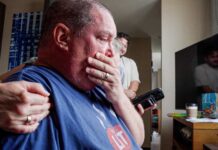
Steve Sweeney, a British journalist reporting live from Lebanon on March 19, 2026, was forced to dive for cover when a missile hit only meters away during his broadcast. Reporting on the incident says Sweeney was hospitalized afterward, highlighting how quickly conditions can shift from “coverage” to casualty in modern warfare. The footage-driven nature of the event has made it widely shareable, but the underlying facts remain stark: the strike landed extremely close, and Sweeney was injured enough to require hospital care.
Sweeney described the blast as a “deliberate, targeted attack on journalists,” saying it involved an Israeli precision strike from a fighter jet. That allegation, as presented in available coverage, is a claim from the person on the ground rather than a conclusion backed by an independent investigation. No public findings are cited that confirm intent or identify the specific target set for the strike. For viewers, the visual is unforgettable; for analysts, the key issue is what can actually be verified beyond the dramatic on-air moment.
What We Know—and What We Can’t Confirm Yet
Two elements are strongly supported by the reporting: the missile impact occurred during a live broadcast and the proximity was close enough to force Sweeney off his position, followed by hospitalization. The most consequential disputed point is intent—whether the journalist himself was a target or whether he was caught near a legitimate military objective. Without a third-party investigation, strike logs, or a statement addressing the allegation directly, the “targeted journalist” narrative remains unproven based on the research available here.
A related account describes a similar episode involving an RT correspondent in Lebanon who also dove off-screen as a missile landed during a live report. That parallel does not prove a pattern of deliberate targeting, but it does reinforce a hard reality: the modern battlefield is saturated with precision weapons, intelligence-driven strikes, and fast-moving engagements where press badges do not create a protective bubble. When reporters embed or operate near active fronts, the margin for error becomes measured in feet, not miles.
Escalation Context: Lebanon Strikes Inside a Wider Regional Fire
The Lebanon incident sits inside a broader Middle East escalation that includes Iranian missile barrages against Israel beginning February 28, 2026. Data cited from Israel’s Health Ministry put the toll at 13 killed and 1,929 injured from those Iranian strikes. That wider exchange matters because it helps explain why border areas and suspected militant positions become high-frequency targets—and why miscalculation risk rises as multiple actors trade blows across borders, often with civilians and journalists caught in between.
Trump-Era Deterrence Meets the Reality of Uncontrolled Spillover
Reporting in the research also describes U.S.-Iran tensions after President Trump announced U.S. strikes on Iran, followed by Iranian retaliation that affected areas around Dubai and Abu Dhabi, including disruptions at major airports. Those knock-on effects underline a point many conservatives have made for years: global conflict does not stay neatly “over there,” especially when adversaries choose asymmetric responses that hit infrastructure, travel, and civilians. The public sees the headlines; families feel the instability through prices, security concerns, and uncertainty.
Why This Matters to Americans Who Want Clarity, Not Narrative Warfare
For U.S. audiences, the Sweeney incident is a reminder that information from war zones arrives wrapped in emotion, framing, and sometimes propaganda—often before verifiable facts can catch up. Responsible analysis separates what’s known (a strike landed close and a journalist was hospitalized) from what’s alleged (deliberate targeting). Americans who value limited government and constitutional liberties should be wary of “crisis narratives” being used later to justify censorship, speech policing, or sweeping controls over what citizens are allowed to see and say online.
At the same time, it is reasonable to demand transparency from governments involved in major military actions—because secrecy fuels distrust and misinformation. If the strike was accidental proximity to a different target, an explanation helps restore credibility. If journalists were intentionally targeted, that would be a grave violation demanding accountability. Based on the research provided, the public does not yet have enough confirmed detail to make that determination, and that uncertainty is exactly why sober verification matters.
Sources:
RT correspondent dives as missile lands mid live report in Lebanon
Indian Journalist Says Israeli Censorship Hides Damage from Iranian Strikes