

(DailyChive.com) – The Supreme Court just slapped down President Trump’s sweeping emergency tariffs—so the White House flipped the switch to a different law and put a global tariff back in place within hours.
Quick Take
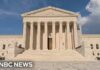
- The Supreme Court ruled 6–3 that Trump’s IEEPA-based “reciprocal” tariffs exceeded the statute, rejecting “unbounded” tariff authority for the executive branch.
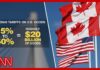
- Trump responded by invoking Section 122 of the Trade Act of 1974 to impose a 10% global tariff effective Feb. 24, with public discussion of moving to 15%.
- Section 122 tariffs are time-limited: they expire after 150 days unless Congress extends them, creating a near-term showdown with lawmakers.
- Businesses and consumers face immediate uncertainty, with analysts warning of higher prices and a likely wave of litigation over whether current conditions fit Section 122’s original purpose.
Supreme Court Draws a Line on Emergency Tariff Power
The Supreme Court’s Feb. 20 decision struck down tariffs imposed under the International Emergency Economic Powers Act, a law historically tied to sanctions and emergency economic restrictions rather than broad, across-the-board import taxes. The majority’s reasoning centered on limits to delegated authority, signaling that sweeping tariff policy cannot be justified by simply declaring trade deficits a national emergency. The ruling matters because it restores a constitutional pressure point: Congress, not the president, holds the taxing power.
The decision also exposed a practical reality of modern trade politics: administrations can lose in court and still keep the policy fight going by switching legal tools. The Court’s stance does not end the “America First” tariff agenda; it forces the agenda into narrower statutory lanes. That distinction is important for voters who want tougher trade enforcement but also want predictable, lawful governance that doesn’t expand executive power beyond what Congress authorized.
Trump’s Rapid Pivot to Section 122 Brings a 10% Global Tariff Back
President Trump’s response was immediate. The administration shifted to Section 122 of the Trade Act of 1974, announcing a 10% global tariff that took effect Feb. 24 and publicly floating a higher rate—up to 15%. Section 122 was designed for “balance-of-payments” problems and is structured as a temporary tool. That design is now central to the political fight: the statute gives the president speed, but it also puts a clock on the policy.
That clock could become the defining issue of the next several months. Under the law, Section 122 tariffs can run for 150 days unless Congress extends them. That means the tariff’s survival is no longer just a White House decision or a court battle; it becomes a test of whether lawmakers will formally support Trump’s trade strategy. For conservatives who watched prior administrations lean on agencies and executive orders, this moment spotlights a constitutional check built into the tariff’s legal foundation.
What’s Known About Scope, Exemptions, and the Broader Tariff Push
Tracking of Trump’s second-term trade actions shows a broader pattern than a single order. The administration increased penalties on certain low-value shipments from China through steep de minimis tariff adjustments, and it moved on multiple fronts using different trade authorities, including Section 232 and Section 301 actions. The tariff tracker also notes targeted threats and sector-specific moves that can reshape supply chains quickly, while exemptions and anti-stacking rules can soften impacts for select categories.
Trump’s posture has included warnings tied to digital services taxes, plus sharp tariff threats aimed at specific countries and goods. Those moves emphasize leverage and reciprocity, themes that resonate with voters who believe past globalist trade norms put U.S. workers and manufacturers at a disadvantage. But the administrative complexity is also real: when tariff rates, exemptions, and authorities change rapidly, importers struggle to plan, and compliance costs climb—often passed along to consumers.
Economic and Legal Crosswinds: Inflation Risk, Lawsuits, and Congress as the Pivot Point
Analysts expect legal challenges to continue, especially over whether today’s economic conditions fit Section 122’s balance-of-payments rationale. One critique highlighted by economists is that the United States does not appear to be in a classic 1970s-style payments crisis, raising questions about how courts will interpret the statute’s intended use. Even if litigation takes a year or more, the near-term consequences arrive immediately through pricing, sourcing shifts, and uncertainty around whether the policy lasts past the 150-day window.
The larger takeaway for conservative readers is mixed but clarifying. The Supreme Court ruling limits “emergency” workarounds that can concentrate power in the executive—something the right has long criticized when used for domestic agendas. At the same time, Trump’s pivot shows he is committed to using existing trade laws aggressively to pursue leverage and reciprocity. The next decisive battlefield is Congress: if lawmakers extend Section 122, they own the policy; if they refuse, the tariff push returns to narrower, slower tools.
Sources:
https://www.cfr.org/articles/trumps-2026-state-of-the-union-foreign-policy-issue-guide
https://www.tradecomplianceresourcehub.com/2026/02/22/trump-2-0-tariff-tracker/
https://www.scotusblog.com/2026/02/supreme-court-strikes-down-tariffs/
https://www.piie.com/blogs/realtime-economics/2026/how-will-trumps-new-15-percent-tariff-fare-court
Copyright 2026, DailyChive.com