
(DailyChive.com) – One impulsive act on a New Hampshire highway turned Rudy Giuliani from bystander to Medal of Freedom honoree, leaving America to debate what real heroism looks like in the glare of politics and television lights.
Story Snapshot
- Rudy Giuliani, age 81, was seriously injured while helping a woman escape a domestic violence situation in Manchester, New Hampshire.
- Moments after leaving the scene, Giuliani’s car was rear-ended, landing him in the hospital with a fractured vertebrae.
- President Trump announced Giuliani would receive the Presidential Medal of Freedom, citing both his past service and this new act of public bravery.
- The incident reignited debate over how, and why, America chooses its civilian heroes.
Giuliani’s Night on I-93: Heroism and Hazard Collide
On the evening of August 30, 2025, Rudy Giuliani and his driver, Theodore Goodman, found themselves at the center of chaos on I-93 southbound in Manchester, New Hampshire. Flagged down by a distressed woman reporting domestic violence, Giuliani didn’t hesitate. He called police, stayed with the woman, and waited as New Hampshire State Police arrived. This was not a staged photo op or campaign event, just an 81-year-old public figure responding to a call for help, as cameras and social media would soon document in detail.
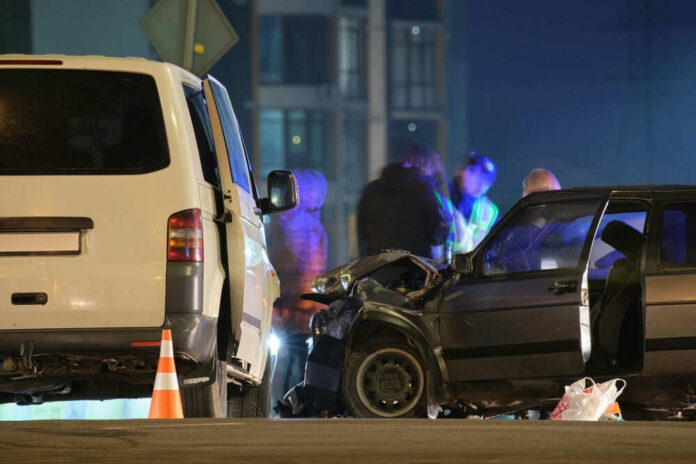
After speaking with officers, Giuliani and Goodman continued their journey. Less than an hour later, fate intervened again: a Honda HR-V driven by 19-year-old Lauren Kemp rear-ended Giuliani’s vehicle almost directly across from the original incident scene. The crash sent Giuliani, Goodman, and Kemp to the hospital with non-life-threatening injuries, though Giuliani suffered a fractured thoracic vertebrae, an injury that could haunt anyone, let alone a man in his ninth decade.
Recognition from the White House: A Medal and a Message
Within forty-eight hours, President Donald Trump took to Truth Social and national airwaves to announce Giuliani would receive the Presidential Medal of Freedom. The citation was clear: not only for Giuliani’s storied service as mayor during New York’s darkest hours, but for “his courage and selflessness demonstrated on the highway in New Hampshire.” Trump called him “the greatest Mayor in the history of New York City,” cementing the moment as both a personal tribute and a calculated message about the values of service, law, and order.
The optics were impossible to ignore. The Medal of Freedom, America’s highest civilian honor, has often been awarded in the aftermath of dramatic events, and at times, its recipients have become lightning rods for political debate. Giuliani’s new honor lands at the intersection of heroism, politics, and spectacle, with the 2026 election cycle looming and public safety dominating the national conversation.
Public Debate: Heroism, Politics, and the Price of Recognition
Law enforcement experts quickly weighed in, noting the importance, and danger, of bystander intervention in domestic violence situations. Many praised Giuliani’s actions, arguing that he lived out the “see something, say something” ethos that public officials have long promoted. Yet, as the story gathered steam, critics questioned both the timing and motivation behind Trump’s announcement, pointing to the Medal of Freedom’s history of controversial selections and suggesting that this latest award might be more about political loyalty than public virtue.
Even as Giuliani’s head of security, Michael Ragusa, emphasized that the car crash was not a targeted attack, and state police confirmed no charges were filed against Kemp, the debate didn’t let up. Media narratives splintered along familiar lines: Was Giuliani a good Samaritan risking his own safety, or was the subsequent recognition just another chapter in the long-running Trump-Giuliani alliance? Supporters heralded Giuliani’s willingness to help a stranger in distress. Skeptics saw a calculated moment, magnified for maximum political advantage.
Lasting Impact: The Medal’s Meaning and the Risks of Public Service
Short-term, Giuliani’s ordeal led to a spike in media attention and a renewed discussion about public service, heroism, and the weight of the Medal of Freedom. All parties involved were released from the hospital, and the crash investigation remains open, but the story’s resonance extends beyond bruises and broken bones. For Giuliani, the incident offers a rare opportunity to recast his public image, as a man willing to put himself in harm’s way, regardless of political consequences.
Long-term, the decision to honor Giuliani will likely influence how Americans perceive both the Medal and the men who grant it. Some will see the White House’s move as a principled stand for public safety and courage. Others will mark it as further evidence of the politicization of national honors. As the 2026 campaigns heat up, the debate over who deserves the nation’s highest civilian award, and why, will be far from settled. One thing, however, remains clear: sometimes the most consequential moments begin with an unplanned stop on a lonely stretch of highway.
Copyright 2025, DailyChive.com