
(DailyChive.com) – A Nobel Prize-winning economist finds himself branded a “deranged bum” by the President after challenging the legality of sweeping tariffs that could reshape America’s economic landscape for decades.
Story Highlights
- Trump attacked economist Paul Krugman on Truth Social after Krugman called most tariffs “clearly illegal” based on a federal court ruling
- Krugman argues the tariff regime amounts to “class warfare” that disproportionately burdens middle and lower-income Americans
- A federal trade court reportedly ruled the tariffs illegal in May, though the decision is stayed pending appeals likely headed to the Supreme Court
- The economist warns tariffs reverse 90 years of trade liberalization and could trigger stagflation while reducing GDP by 0.4% long-term
Nobel Laureate vs. Commander-in-Chief
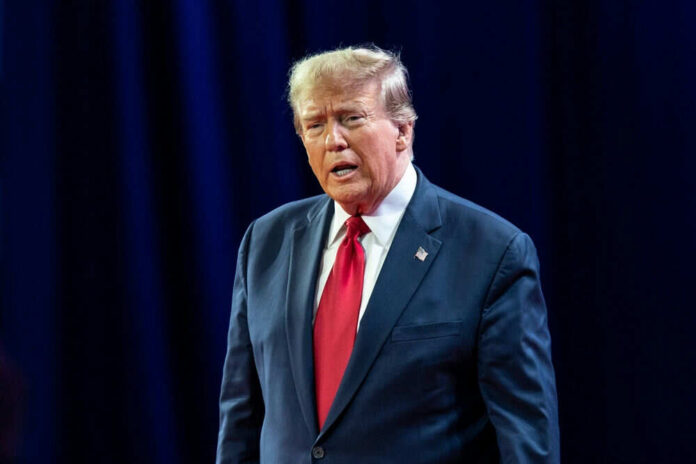
Paul Krugman never minces words, but his recent series of Substack posts dissecting Trump’s tariff strategy struck a particularly raw nerve. The Nobel Prize-winning economist didn’t just critique the economic wisdom of the policy, he declared most of the tariffs “clearly illegal” based on a May 28 ruling from the Court of International Trade. Trump’s response was swift and characteristically blunt, calling Krugman a “deranged bum” who had been “wrong for YEARS” and was scaring investors away from the “BEST MARKET IN HISTOY.”
The personal attack masks a deeper policy battle with profound implications. Krugman’s analysis goes beyond typical economic disagreement, he’s arguing that the administration’s tariff architecture violates decades of Congressional commitments and constitutes a form of domestic class warfare. His calculations suggest working-class families could lose 1.5% of their real income while affluent households benefit from accompanying tax changes.
Legal Landmines and Constitutional Questions
The most explosive element of Krugman’s critique centers on legal vulnerability. According to his analysis, the Court of International Trade ruled the tariffs illegal on May 28, though the decision remains stayed pending appeals. The case appears destined for the Supreme Court, creating uncertainty that Krugman argues is already constraining business investment and raising stagflation risks.
This legal challenge strikes at the heart of executive power over trade policy. For decades, presidents have enjoyed broad authority to adjust tariffs under various emergency and national security provisions. If courts ultimately side with the trade court’s initial ruling, it could fundamentally reshape how future administrations approach trade negotiations and economic statecraft.
The Economics of “Smoot-Hawley 2.0”
Krugman frames the current tariff regime as “Smoot-Hawley 2.0,” referencing the infamous 1930 legislation that deepened the Great Depression. His analysis suggests the tariffs reverse approximately 90 years of reciprocal trade liberalization that formed the backbone of the modern global economy. The Yale Budget Lab estimates he cites project a 0.4% long-run GDP hit, with disproportionate impacts on households that spend larger portions of their income on imported goods.
This is why the Nobel Prize is devalued- Krugman. https://t.co/iLLeSI9qI1
— TAK (@dona_teresita) August 11, 2025
The distributional effects particularly concern Krugman, who argues tariffs function essentially like a regressive sales tax. Import-intensive sectors including retail and electronics face immediate price pressures, while selective exemptions for items like certain oil, gas, and smartphone categories create uneven competitive dynamics across the economy.
Market Highs vs. Economic Fundamentals
Trump’s defense relies heavily on market performance, pointing to record stock indices as validation of his economic policies. Krugman counters that current momentum stems primarily from artificial intelligence and data center investment rather than broad-based economic strength. The economist warns that tariff uncertainty is already deterring long-term business planning, even as short-term market sentiment remains positive.
This disagreement highlights competing economic narratives that will likely define the political debate ahead. Trump views market highs as vindication of his approach, while Krugman focuses on underlying structural changes that could take years to fully manifest. Both perspectives contain elements of truth, but their policy implications point in dramatically different directions for America’s economic future.
Copyright 2025, DailyChive.com