

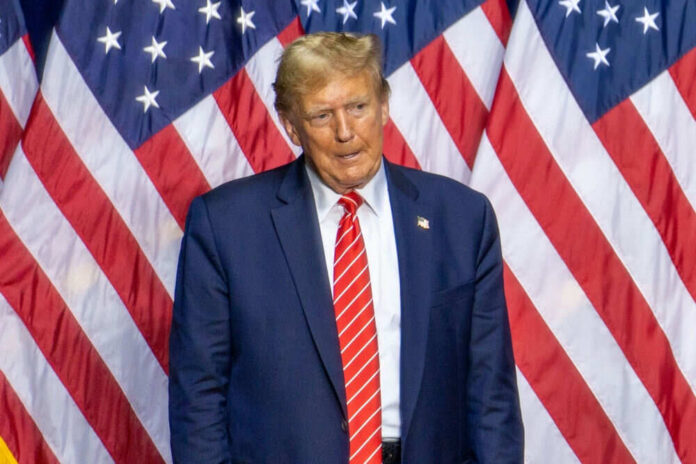
(DailyChive.com) – President Trump used a solemn Medal of Honor ceremony to deliver a blunt message to Iran: the U.S. isn’t looking for endless war—but it is moving to dismantle Tehran’s ability to threaten Americans and allies.
Quick Take
- Trump awarded the Medal of Honor to three Army soldiers—two posthumously—during a White House ceremony on March 2, 2026.
- Before the event, Trump defended ongoing U.S.-Israeli strikes on Iran and outlined objectives aimed at degrading missiles, naval power, nuclear capabilities, and terror funding.
- Officials said the opening phase targeted Iranian command-and-control, intelligence, naval forces, and ballistic missile infrastructure, with more difficult work ahead.
- The conflict backdrop includes reported U.S. casualties in Kuwait and major upheaval inside Iran, underscoring the stakes and uncertainty.
A Medal of Honor ceremony framed by an active conflict
President Donald Trump hosted a White House ceremony at 11 a.m. Eastern on March 2 to award the Medal of Honor to three Army soldiers: Master Sgt. Roderick “Roddie” W. Edmonds (posthumously), Staff Sgt. Michael H. Ollis (posthumously), and retired Command Sgt. Maj. Terry P. Richardson. The event carried the nation’s highest military decoration, but it also unfolded while U.S. operations against Iran were actively underway and dominating headlines.
The White House setting created a striking contrast—families honoring extraordinary valor while the commander-in-chief addressed a new phase of Middle East fighting. The research indicates the ceremony came shortly after a late-February State of the Union period that also highlighted military honors, giving Trump a familiar stage to emphasize service, sacrifice, and national resolve. The key difference this time: the remarks arrived amid live hostilities and fresh battlefield consequences.
What Trump said about Iran: objectives and a time horizon
Trump defended the weekend’s joint U.S.-Israeli strikes on Iran as a response to what he described as a major threat, arguing diplomacy had failed in the preceding weeks. According to the research, he outlined military objectives focused on destroying Iran’s missile capabilities, degrading its navy, targeting the nuclear program, and disrupting terrorism funding. Trump also told The New York Times the operation could last four to five weeks, though the full parameters of that timeline were not detailed.
Pentagon leadership reinforced that the goals were defined and operational rather than open-ended. Defense Secretary Pete Hegseth characterized the effort as finishing a fight the U.S. did not start, while Joint Chiefs Chairman Gen. Dan Caine described “gritty” work ahead. The research further notes that briefings emphasized planning that stretched back months or years, suggesting the current strikes are part of a prepared campaign rather than a spontaneous escalation.
Targets and early results: command nodes, missiles, and maritime power
The research describes initial strikes beginning over the Feb. 28–29 weekend, hitting Iranian command-and-control, intelligence elements, naval forces, and ballistic missile infrastructure. Those target sets reflect a focus on reducing Iran’s ability to coordinate attacks and project power across the region, particularly against U.S. bases and partners. Gen. Caine indicated the opening phase had already disrupted Iranian coordination, but also cautioned the remaining work would be difficult.
That emphasis matters because it distinguishes the stated mission from the kind of nation-building Americans have seen drain blood and treasure in prior decades. The sources do not claim the risk is gone—only that leadership is signaling bounded objectives. For voters still angry about years of globalist priorities and endless commitments, the key question is whether Washington maintains discipline: clear aims, measurable outcomes, and an exit that doesn’t morph into permanent deployment.
Casualties, retaliation, and the limits of what is confirmed
The conflict context in the research includes four U.S. soldier deaths in Kuwait amid Iranian retaliation, highlighting that the costs are not theoretical. The research also states Iran’s supreme leader was killed, a development that would intensify uncertainty inside the regime and across the region. Public messaging from military leadership included expectations that losses could occur, a notable contrast with the vague “mission accomplished” style optimism Americans have been sold before.
At the same time, the available research does not provide independent detail on how the next phases will unfold, nor does it quantify broader economic impacts beyond noting that energy markets often react to Middle East instability. Readers should separate what is documented—stated objectives, initial target sets, acknowledged U.S. losses—from what remains unknown, including how Iran’s internal leadership shock could affect decision-making or escalation.
Why the ceremony mattered: valor at home, clarity abroad
Trump’s decision to pair a high-visibility ceremony with a strategic update served a political and civic purpose: it reminded the country who bears the burden when diplomacy fails and deterrence breaks down. The Medal of Honor recipients—spanning World War II heroism (Edmonds), modern combat sacrifice (Ollis), and long service (Richardson)—anchored the moment in duty rather than ideology. For a conservative audience tired of cultural fads and bureaucratic overreach, that focus on service is a clear counterweight.
President Trump Held Medal of Honor Ceremony and Updated the Nation on Iran. Here's What He Said.
https://t.co/eSWCVqR6xF— Townhall Updates (@TownhallUpdates) March 2, 2026
What comes next will hinge on whether the operation meets the stated objectives within the rough timeframe Trump described, and whether U.S. leadership avoids letting a defined mission drift into something larger. The sources emphasize that the campaign is aimed at missile capacity, maritime power, nuclear capability, and terror financing—areas directly tied to protecting Americans and allies. With limited post-ceremony data available in the research, the most responsible conclusion is that the administration has stated clear goals, but the battlefield will determine the real timeline.
Sources:
Trump to award Medal of Honor to 3 Army soldiers at White House
Trump defends Iran strikes, offers objectives for military operation
Copyright 2026, DailyChive.com