
(DailyChive.com) – In the age of artificial intelligence, Donald Trump’s words still cause billion-dollar tremors in markets faster than any algorithm can anticipate.
Story Snapshot
- Trump’s July 2025 AI policy rollout instantly jolted tech and financial markets, highlighting his enduring influence over investor sentiment.
- The new federal mandates target “ideological neutrality” in government AI systems, sparking controversy and industry upheaval.
- Market surges in AI stocks and volatility in tech indices point to a direct link between presidential action and real-time market reaction, even in an algorithm-driven era.
- The policy’s deregulatory thrust and explicit anti-“woke” provisions are reshaping the U.S. AI landscape and drawing sharp lines in the global tech race.
Trump’s AI Playbook: Power, Policy, and Market Shockwaves
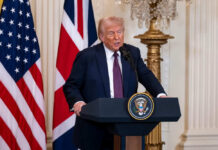
On July 23, 2025, President Trump stepped into the White House briefing room and declared that America would lead the world in artificial intelligence, unquestioned and unchallenged. Within minutes, stocks for AI infrastructure, cloud computing, and semiconductor firms erupted. Trading algorithms, programmed to respond to news and data, struggled to keep up as human and machine investors alike scrambled to place bets. This was not just another policy announcement. Trump had triggered a market stampede, reaffirming his uncanny knack for bending Wall Street to his will, even as AI increasingly calls the shots.
Three executive orders inked that day went further than any before. The first, “Preventing Woke AI in the Federal Government,” mandates ideological neutrality in every software system Uncle Sam buys. The second fast-tracks federal procurement of “open-weight” AI, and the third slashes red tape for AI infrastructure projects. The effect? A new gold rush for federal contractors and tech giants, who now scramble to prove their products are neutral, whatever that means in practice. Investors, hypersensitive to Trump’s policy cues, poured capital into AI-adjacent sectors, while compliance officers and lawyers began poring over regulatory fine print for clues about the new rules of the game.
Historic Context: From Section 230 to Global AI Dominance
The roots of this seismic event trace back to years of escalating U.S.-China tech rivalry and mounting anxiety over “woke” or biased AI. Trump’s 2019 executive order on AI set the stage, but the 2025 rollout is a quantum leap, not a mere sequel. The new plan, developed after months of stakeholder input and public comment, marks the first time the U.S. government has demanded explicit ideological neutrality in government-purchased AI systems. It is an audacious attempt to shape not just the technology, but the social values embedded in it, a move that both thrills free speech advocates and alarms civil society groups worried about the erasure of diversity, equity, and inclusion.
Trump’s team cast the policy as the antidote to foreign influence and domestic ideological creep. The White House Office of Science and Technology Policy (OSTP), entrusted with drafting and implementing the plan, finds itself at the center of this high-stakes contest, balancing national security, economic competitiveness, and the challenge of defining “neutrality” in code. Tech CEOs and industry lobbyists jockey for advantage as new procurement rules and open-source mandates threaten to reorder the competitive landscape. Meanwhile, U.S. allies and rivals watch closely, wondering whether to follow America’s lead or chart a different course.
Immediate Impact: AI Markets Surge, Uncertainty Grows
Within hours of Trump’s announcement, the market delivered its verdict: AI sector stocks soared, infrastructure indices jumped, and trading volumes shattered seasonal records. Analysts described the reaction as a “Trump premium”, the market’s way of pricing in a new era of deregulation and federal largesse. Yet beneath the euphoria, volatility spiked as investors struggled to parse the policy’s long-term implications. Export controls, procurement standards, and the elusive promise of “ideological neutrality” became the subject of feverish speculation and legal analysis.
The policy’s deregulatory thrust is no accident. Trump and senior advisers argued that only by slashing red tape and unleashing private sector innovation could America secure “global AI dominance.” Critics, including leading academics and policy experts, warn that the rush to deregulate could erode safeguards and exacerbate bias, especially as DEI principles are explicitly sidelined. The debate over what constitutes fair and ethical AI, already fractious, now takes center stage in Washington and Silicon Valley alike.
Long-Term Stakes: Leadership, Legitimacy, and Global Ripples
As federal agencies scramble to rewrite procurement guidelines and NIST’s AI Risk Management Framework, the private sector is already adapting. U.S. AI firms, emboldened by regulatory clarity and government support, may gain a competitive edge for now. But the risk of regulatory fragmentation, international pushback, and shifting global standards looms large. The new American model, deregulated, open-weight, and officially “neutral”, could set a template for others, or provoke rival approaches among leading economies.
Trump’s ability to move markets, shape narratives, and set sectoral trajectories remains undiminished, even as algorithms and data increasingly power global finance. This latest episode is a testament to the enduring interplay between political leadership and technological change. Whether the “AI Action Plan” cements America’s dominance or sows new controversy will depend on how its bold promises are translated into code, contracts, and international norms. For now, one truth stands out: in the AI era, Trump still knows how to make the markets jump.
Copyright 2025, DailyChive.com