(DailyChive.com) – When the President of the United States orders a federal law enforcement surge in the nation’s capital, it signals a turning point that could reshape the delicate balance of power, public safety, and local autonomy in Washington, D.C., but what happens next is anything but predictable.
Story Snapshot
- President Trump deploys federal law enforcement across D.C. after a violent assault reignites crime fears
- The “Making DC Safe and Beautiful Task Force” launches a high-profile, multi-agency crackdown in key city areas
- Federal intervention sparks immediate debate over local control, civil liberties, and public perception
- Crime rates are falling, yet the political stakes and public anxieties remain high
Federal Surge in the Capital: The Who, What, and Why
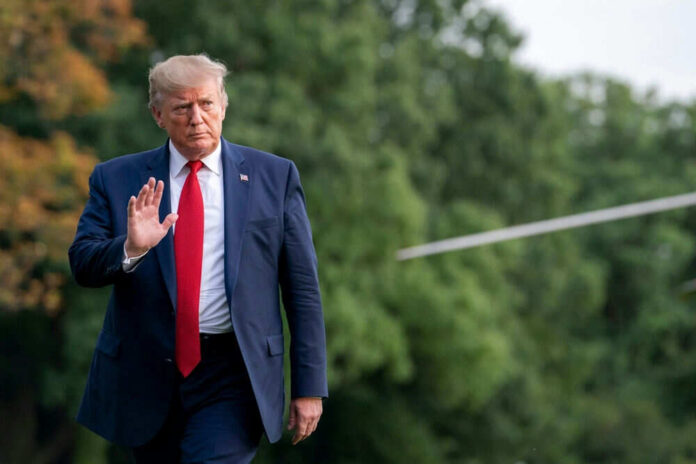
President Donald Trump’s directive to deploy a wave of federal agents onto D.C. streets follows a violent attack on a former DOGE employee, an incident that became a catalyst for national attention. The executive order, signed in March 2025, established the “Making DC Safe and Beautiful Task Force,” which now coordinates FBI, DEA, Homeland Security, and other agencies in a visible show of force throughout high-traffic and tourist-heavy corridors. The surge’s explicit goal: restore order and public confidence, with operations set for an initial week but open-ended by design. The move arrives as D.C.’s crime rate, while still high, is actually on a downward trend, prompting questions about the true drivers behind federal intervention and its likely outcomes.
Federal agents began midnight patrols on August 8, 2025, just a day after President Trump threatened to federalize the city’s police if local leaders could not guarantee public safety. This escalation, framed by the White House as a necessary response to “lawlessness,” marks a rare, direct presidential intervention in local policing. For residents and visitors, the change is immediate: more uniforms, more checkpoints, and an unmistakable federal presence in D.C.’s most visible spaces.
Crime Trends and Public Perception: The Numbers and the Narrative
Washington, D.C. has long struggled with violent crime rates outpacing the national average. In 2023, the city’s homicide rate reached 40.9 per 100,000 residents, one of the highest among major U.S. cities. While 2024 saw a 35% drop in violent crime, and MPD data confirms a 26% year-over-year decline as of August 2025, fear and frustration still dominate the public mood. High-profile assaults, like the attack on “Big Balls,” overshadow statistical progress, fueling calls for drastic action. Experts and local officials point out the disconnect: violent crime is falling, yet the rhetoric around D.C.’s “crime wave” grows louder, amplified by political interests and media cycles.
Mayor Muriel Bowser acknowledges the improvements but concedes that public trust is fragile. Federal and local officials now collaborate, sometimes uneasily, to patrol neighborhoods and key landmarks. Meanwhile, the city’s unique status, with limited home rule and ever-present federal oversight, ensures that every surge, arrest, or protest reverberates on a national stage. The stakes are not just about safety, but about the very nature of self-governance in America’s capital.
Local Control, Federal Power, and the Politics of Safety
The decision to deploy federal law enforcement in D.C. immediately reignited the long-running debate over who should control the city’s streets. President Trump, eager to fulfill campaign promises on law and order, asserts that decisive federal action is essential to protect citizens and visitors alike. His administration’s message, “There will be no safe harbor for violent criminals in D.C.”, lands with force, especially among supporters who see the surge as overdue.
Opposition emerges just as quickly. Mayor Bowser, Delegate Eleanor Holmes Norton, and other local leaders voice concerns about federal overreach, the risk of civil liberties violations, and the undermining of D.C.’s push for greater autonomy or even statehood. Residents and business owners, particularly those in high-crime neighborhoods or reliant on tourism, find themselves caught between the promise of increased safety and the threat of disruption or profiling. The operation’s multi-agency character, spanning the FBI, DEA, Homeland Security, and Capitol Police, raises the specter of jurisdictional friction and inconsistent enforcement, even as arrest rates tick upward in the most visible parts of the city.
Expert Perspectives: Law, Order, and Unanswered Questions
Policy analysts and criminal justice experts warn that short-term surges rarely solve the underlying causes of crime. The Heritage Foundation notes that D.C.’s systemic challenges, ranging from prosecutorial practices to social services, require more than a week of high-visibility patrols. The Council on Criminal Justice points to a national trend: violent crime is down from pandemic-era peaks but remains stubbornly above pre-2020 levels. Both organizations agree that without comprehensive reform, any gains from the current crackdown will be fleeting.
Supporters of the federal surge argue that robust law enforcement is the surest way to restore order and confidence. Critics counter that such interventions, especially when politically motivated, risk eroding trust, deepening local-federal tensions, and disproportionately affecting minority and youth communities. The data, falling crime rates, persistent public anxiety, and political crossfire, suggests that the real story of D.C.’s safety is far from settled. As the operation unfolds and the city watches for results, the question lingers: will this moment mark a new era of public safety, or another episode in the capital’s long struggle over power, perception, and control?
Copyright 2025, DailyChive.com