
(DailyChive.com) – Trump’s latest Strait of Hormuz warning shows how a few cheap Iranian mines can still rattle global energy markets—and expose hard choices Washington can’t keep postponing.
Quick Take
- President Trump said U.S. forces destroyed Iranian mine-laying boats and warned Tehran to remove any deployed mines in the Strait of Hormuz.
- Reports conflict on how many Iranian boats were hit (10 vs. 28), and public evidence confirming mine locations remains limited.
- The U.S. Navy has relied heavily on unmanned mine-hunting systems and specialized clearance efforts as shipping disruptions pressure oil prices.
- Several outlets highlighted a capability gap after four Avenger-class minesweepers were decommissioned and removed from Bahrain before the crisis intensified.
Trump’s message: remove the mines—or risk more strikes
President Donald Trump used social media to describe U.S. action against Iranian mine-laying activity in the Strait of Hormuz, a narrow chokepoint that carries a major share of global oil shipments. Trump said U.S. forces destroyed Iranian mine-laying boats—some accounts describe them as “inactive”—and he warned that any further attempts to deploy mines would face swift military consequences. Public reporting differs on the number of boats destroyed.
That distinction matters because it separates confirmed actions from dramatic framing. Multiple reports emphasize that Trump’s posture centers on deterrence—making clear the U.S. will not tolerate mine warfare that threatens commercial shipping. At the same time, the uncertainty around mine confirmation and boat counts underscores how hard it is for the public to verify tactical claims in real time, even as energy markets react immediately to perceived risk in Hormuz.
Mine-clearing is slow, technical, and unforgiving
Mine warfare looks low-tech, but clearing mines is painstaking and dangerous. Reporting describes the Navy using unmanned underwater vehicles and drone-based systems to search for and neutralize suspected mines, reducing risk to sailors while still keeping the route usable. Some reports say U.S. vessels crossed the strait after clearance efforts began, signaling partial progress. Even with advanced tools, mine hunting is methodical—one reason a few deployed mines can trigger outsized disruption.
Another operational constraint also surfaced: the Navy has acknowledged limits on providing escorts for commercial traffic in the area, a reality that forces shippers and insurers to price in uncertainty. When governments can’t guarantee full-time protection for every tanker, private actors react by slowing transit, rerouting, or pausing shipments. For Americans, that translates quickly into higher fuel costs—an issue voters feel directly and associate with the broader question of whether Washington can keep essential trade routes open.
The minesweeper gap revives an old debate about readiness
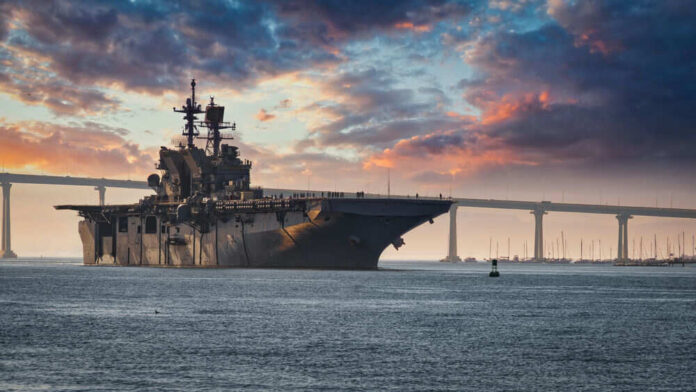
A separate thread running through coverage is readiness. Reports noted the U.S. decommissioned and removed four Avenger-class minesweepers from Bahrain before the situation escalated, leaving fewer dedicated platforms close to the problem. The Navy’s transition toward newer concepts, including littoral combat ships and unmanned systems, may be the long-term plan, but transitions can create short-term gaps. Hormuz is exactly the kind of environment where such gaps become visible fast.
For a country that depends on stable energy and global shipping, capability gaps are not abstract. Conservatives who have long argued for seriousness about defense priorities will see a familiar pattern: Washington can fund plenty of bureaucracy yet still end up scrambling for specialized tools when crisis hits. Liberals skeptical of military escalation may focus on avoiding wider war, but mine threats show how adversaries can pressure the economy without winning conventional battles.
Why this matters at home: energy prices, credibility, and government trust
Hormuz disruptions can move oil prices even when no shots are fired, because the chokepoint concentrates risk. Coverage ties the recent tension to halted or disrupted shipping and the resulting pressure on fuel costs. Politically, that pressure lands in a country already wary of inflation and frustrated with institutions that seem reactive instead of prepared. When official narratives rely on partial information—conflicting boat counts, uncertain mine confirmation—public trust weakens further, regardless of party.
Trump’s approach pairs forceful deterrence with high-visibility messaging, while the Navy’s reality is a slow clearance campaign using drones and specialized assets. The key question is whether the U.S. can keep the strait reliably open without drifting into an escalatory cycle. The public can reasonably demand clarity on what is verified, what is still being assessed, and whether procurement decisions left preventable vulnerabilities in a predictable theater of conflict.
Sources:
Iran Strait of Hormuz minesweepers
Trump says Iranian mine-laying boats destroyed
U.S. Navy says escorts not possible
Trump says US destroyed 10 Iranian mine-laying vessels, warns more to follow
Copyright 2026, DailyChive.com