
(DailyChive.com) – The FDA is now promising 60-day reviews for psychedelic drug studies—an unusually fast timeline triggered directly by President Trump’s executive order.
Quick Take
- President Trump’s April 18 executive order pushed the FDA to accelerate reviews of certain psychedelic-based therapies for serious mental health conditions.
- On April 24, the FDA issued “national priority vouchers” to three unnamed companies studying psilocybin and methylone, requiring review within 60 days.
- The agency says it is prioritizing serotonin-2A agonists while preparing final guidance on trial design and patient monitoring.
- Supporters see a faster path to treatment for PTSD, depression, and addiction, while critics point to the FDA’s 2024 MDMA setback as a warning against rushing.
Trump’s Order Forces a Faster Federal Answer to a Mental-Health Crisis
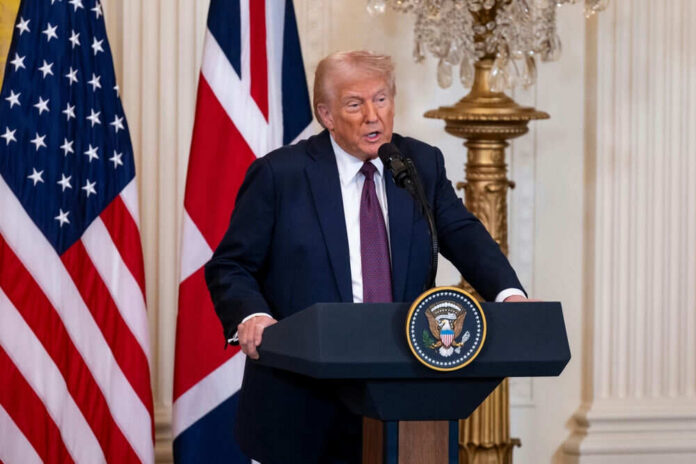
On April 18, President Donald Trump signed an executive order directing the FDA to expedite the review of psychedelic therapies aimed at conditions such as PTSD, depression, and addiction. The order lands in a political moment where many voters—right and left—believe Washington moves quickly for insiders but slowly for ordinary families. The administration’s argument is straightforward: for Americans stuck with treatment-resistant illness, delay itself becomes a form of harm.
On April 24, the FDA responded with a new accelerated pathway centered on “national priority vouchers,” issued to three unnamed companies. The vouchers require the FDA to complete review within 60 days, a pace that stands out in a system known for long timelines and heavy paperwork. The companies are studying psilocybin for major depressive disorder and treatment-resistant depression, and methylone for PTSD, according to published reports.
What the FDA Actually Announced—and What It Did Not
The FDA framed the action as prioritization of serotonin-2A agonists, a class that includes psilocybin and methylone, and said final guidance on study design and patient monitoring is expected “imminently.” The agency also cleared an early-phase study of noribogaine hydrochloride. Importantly, none of these steps equals approval for routine medical use; they are procedural accelerants designed to move research and review faster while the agency still claims to maintain scientific rigor.
The details that remain unclear are not minor. The FDA has not publicly identified the three voucher recipients, and the reports leave uncertainty about the exact target indications across outlets, including references to depression, PTSD, and alcohol use disorder. That kind of opacity fuels bipartisan suspicion about who benefits first when government creates a fast lane. Until company names, protocols, and monitoring rules are visible, the public will largely be asked to trust institutions that many Americans already doubt.
Why Psychedelics Are Still Legally Complicated in the U.S.
Psychedelics such as psilocybin and methylone carry the baggage of decades of federal drug policy. After early research in the 1950s and 1960s, the Controlled Substances Act of 1970 categorized many of these drugs as Schedule I, defined as having no accepted medical use and high abuse potential. That status does not make research impossible, but it makes it harder, slower, and more politically fraught—especially when the goal is mainstream treatment.
Evidence, Caution, and the Shadow of the MDMA Rejection
Support for psychedelic therapies has grown partly because controlled studies have reported meaningful results for certain patients. Coverage referenced a 2022 Johns Hopkins study suggesting psilocybin-assisted therapy produced antidepressant effects lasting up to a year in some major depressive disorder patients. At the same time, the FDA’s recent history includes a major warning sign: in 2024, agency advisers rejected MDMA for PTSD, citing doubts about safety and efficacy, which stalled a high-profile approval effort.
That tension—urgency versus evidence—will shape how voters interpret the FDA’s new pace. Conservatives typically want government to do less, but they also want it to do its core job competently, especially when veterans and families face real suffering. Liberals often champion expanded healthcare access, yet many are wary of Trump-driven directives affecting agencies meant to act independently. The common ground is that rushed or sloppy work erodes trust, while transparent, accountable speed can rebuild it.
What to Watch Next: Guidance, Transparency, and Real-World Guardrails
The most important near-term development is the FDA’s promised guidance on trial design and patient monitoring, because psychedelic therapies can pose unique risks if administered outside controlled settings. Reports also flagged concerns about methylone, including addiction potential and heart strain, which makes guardrails central to public acceptance. If the FDA publishes clear protocols and releases more information about who received vouchers and why, the fast-track push could look like reform rather than favoritism.
For now, the story is less about a miracle cure and more about how power is being used. Trump’s order effectively forced a bureaucracy to move, and the FDA is testing a mechanism that has typically been associated with other priority areas. If the process stays transparent and evidence-driven, patients could see options sooner. If it becomes political theater or a black box for connected interests, it will confirm the bipartisan belief that government serves itself first.
Sources:
https://abcnews.com/Health/fda-issues-vouchers-3-companies-fast-track-review/story?id=132341935
Copyright 2026, DailyChive.com