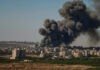

(DailyChive.com) – President Trump’s second-term promise to keep America out of new wars lies shattered in the rubble of Tehran, as Operation Epic Fury drags into its fifth week with over 2,000 dead and no exit strategy in sight.
Story Snapshot
- U.S. and Israeli forces launched Operation Epic Fury on February 28, 2026, killing Iran’s Supreme Leader and targeting nuclear sites in an unprecedented regime-change campaign.
- Over 900 airstrikes in the first week crippled Iranian defenses, but Iran retaliated with hundreds of missiles hitting Tel Aviv, U.S. bases in Bahrain, and Gulf allies.
- Five weeks into the conflict, more than 2,000 are dead across Iran, Lebanon, and Israel, with Trump urging Iranians to overthrow their government.
- The war contradicts Trump’s 2024 campaign pledge to avoid Middle East entanglements, fueling MAGA divisions over endless regime-change operations and billions in military spending.
Trump Orders Largest Military Operation Since Iraq Invasion
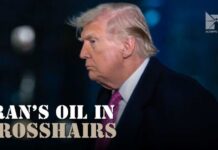
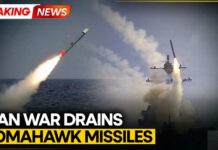
President Donald Trump authorized Operation Epic Fury from Air Force One on February 27, 2026, launching the largest U.S. military buildup in the Middle East since the 2003 Iraq invasion. CENTCOM announced the strikes at 06:35 UTC on February 28, deploying B-2 bombers, Tomahawk missiles, and HIMARS systems against Iranian military infrastructure. Israeli Defense Forces simultaneously executed decapitation strikes with over 200 aircraft, killing Supreme Leader Ali Khamenei in what analysts called the largest Israeli sortie in history. Trump tasked CENTCOM to dismantle Iran’s security apparatus entirely, framing the operation as essential to preventing nuclear acquisition and neutralizing the Axis of Resistance.
Iran Strikes Back With Missile Barrage Across Region
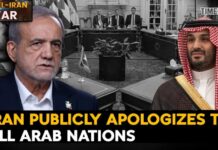
Iran responded within hours, launching approximately 170 ballistic missiles at Israeli cities, U.S. military installations in Bahrain, and Gulf state targets starting at 09:05 UTC on February 28. One civilian died in Tel Aviv as residential areas absorbed hits, while hundreds of missiles and thousands of drones targeted coalition forces across the Middle East. By March 6, the Human Rights Activists News Agency documented 664 separate attacks resulting in 25 casualties, with Iranian Red Crescent reporting 555 deaths on day one alone. Satellite imagery confirmed damage to the Natanz nuclear facility, validating U.S. claims of successful strikes against uranium enrichment infrastructure. The Islamic Revolutionary Guard Corps coordinated asymmetric retaliation through proxy forces including Hezbollah, mirroring tactics from the 2025 Twelve-Day War.
Civilian Casualties Mount as Strikes Continue Through Ramadan
The conflict entered its fifth week with sustained U.S.-Israeli strikes on Tehran’s Mehrabad airport, IRGC command centers, and the Basij headquarters in Kermanshah and western Iran. Over 2,000 individuals have died across Iran, Lebanon, and Israel, including 170 killed at a school in Minab and multiple casualties in Tel Aviv residential neighborhoods. The timing during Ramadan exacerbated humanitarian concerns, with hundreds of thousands of travelers stranded and critical infrastructure damaged. Trump publicly urged Iranians to rise against their government post-strikes, while Israel issued evacuation warnings to civilians near military targets. This approach to regime change mirrors past interventions that destabilized Iraq and Libya, raising questions about long-term consequences for regional stability and American security interests.
MAGA Base Fractures Over Broken Campaign Promises
Trump’s 2024 campaign centered on ending America’s endless wars and prioritizing domestic concerns over foreign entanglements, a message that resonated with frustrated conservatives tired of globalist military adventures. Operation Epic Fury directly contradicts those commitments, plunging U.S. forces into another Middle Eastern conflict with unclear objectives beyond regime change. The Institute for the Study of War characterizes the strikes as a regime-toppling campaign targeting nuclear, missile, and naval threats, yet no timeline exists for withdrawal or mission completion. Energy markets face disruption with implications for the Strait of Hormuz and global oil routes, potentially driving fuel costs higher for American families already struggling with inflation from previous fiscal mismanagement. The operation’s scope threatens to repeat the nation-building disasters of Iraq and Afghanistan, consuming resources while yielding questionable strategic gains.
Conservative voters who supported Trump’s America First agenda now face a familiar pattern: campaign promises of restraint followed by military escalation serving interests beyond Main Street Americans. The administration’s insistence on dismantling Iran’s government raises constitutional concerns about congressional war powers, as no formal declaration authorized this offensive operation. With casualties mounting and Iranian proxies empowered across the region, the conflict risks metastasizing into a broader war that drains American blood and treasure for generations. Trump supporters who questioned unconstitutional COVID mandates and championed limited government now confront an executive branch launching regime-change wars without clear legislative authority or defined victory conditions, undermining the very principles of constitutional restraint they fought to defend.
Sources:
Timeline of the 2026 Iran war – Wikipedia
Copyright 2026, DailyChive.com