

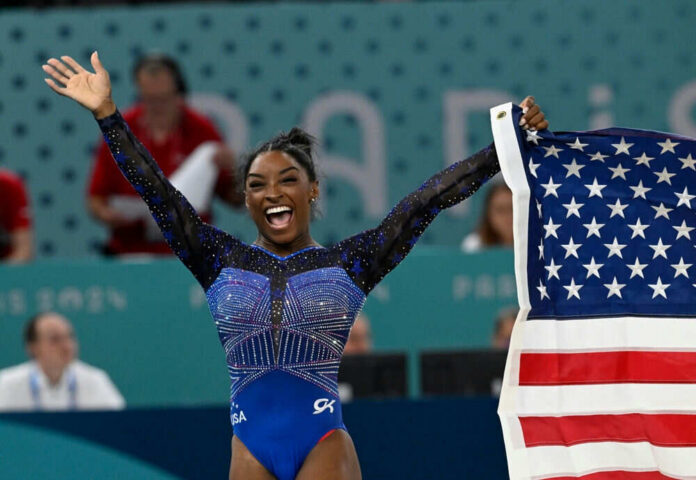
(DailyChive.com) – Simone Biles’ personal attack on Riley Gaines lit a fuse in the women’s sports debate—and the backlash shows Americans are done being told to ignore fairness questions.
Story Snapshot
- Biles criticized Gaines on X, calling her “truly sick” and a “sore loser” for opposing transgender participation in women’s sports.
- The dispute began after Gaines criticized a Minnesota high school league post celebrating a girls’ state championship team.
- Social media blowback hit Biles quickly; reports say she did not keep engaging publicly afterward.
- Olympic gymnast MyKayla Skinner Harmer backed Gaines, arguing women’s sports should protect fair competition and avoid public shaming.
How a High School Post Turned Into a National Flashpoint
Riley Gaines’ latest post targeted the Minnesota State High School League after it highlighted a girls’ state championship team, a context Gaines framed as part of the larger fight over transgender athletes in female categories. Simone Biles responded on X with sharp personal language, accusing Gaines of being “truly sick” and a “straight up sore loser,” and telling her to “bully someone your own size,” adding that this “ironically would be a male.” The exchange drew immediate national attention.
The argument lands in a political moment where sports rules have become proxy battles for broader cultural power—especially around Title IX’s original promise of equal athletic opportunity for women. Conservatives see the issue as straightforward: sex-based categories exist because biology matters in safety and fair competition. Many liberals prioritize inclusion and view restrictions as discrimination. The public reaction to the Biles-Gaines clash suggests that, regardless of party, voters are increasingly allergic to being lectured by elites.
Why Gaines Keeps Pointing Back to the Lia Thomas Controversy
Gaines’ prominence in this debate traces to the 2022 NCAA swimming championships, where she tied for fifth place with Lia Thomas, a transgender woman. Gaines argues that the moment exposed a structural unfairness in women’s sports and pushed her into advocacy. Biles referenced that history in her criticism, casting Gaines’ activism as resentment over “losing a race.” That framing intensified the dispute because it recasts a policy argument as personal bitterness rather than a rules question.
That distinction matters because the core public-policy dispute is not about whether athletes should be treated with dignity; it is about how competitive categories are defined and enforced. Biles suggested creating separate categories as an alternative to “bullying” the trans community. But the public record in the provided reporting does not show a concrete proposal, governing-body plan, or timeline attached to that idea. With no clear path, the conversation defaulted back to social-media conflict and name-calling.
MyKayla Skinner Harmer Steps In—And Puts the Focus Back on Fairness
MyKayla Skinner Harmer, an Olympic silver medalist and former teammate of Biles, publicly sided with Gaines and criticized how the exchange was handled. In an interview, Harmer said it was “deeply troubling” to see Biles label another female athlete a “sore loser,” and she argued that “true competition should elevate us — not diminish others.” Harmer also said she received positive feedback from fans, even while acknowledging some negative reaction.
Harmer’s involvement adds a second layer: the dispute is no longer only about trans participation, but also about how celebrity athletes use public platforms. When a cultural icon attacks a less-powerful figure online, it reinforces a wider concern shared across the political spectrum—that status and influence increasingly substitute for argument and evidence. Conservatives, in particular, interpret this pattern as part of an institutional drift away from traditional protections for women’s spaces and toward ideological conformity.
What the Backlash Signals for the Bigger Title IX Fight
Reporting described “fierce backlash” toward Biles following her posts, and she did not continue engaging publicly in the immediate aftermath. One outlet also mentioned that Biles reportedly apologized, but that point was not uniformly confirmed across the provided sources, leaving the status of any apology uncertain. What is clearer is the direction of the public pressure: many Americans want leaders—sports bodies, schools, and federal officials—to answer basic fairness questions plainly, not with personal insults.
The broader political significance is that this debate keeps colliding with public trust in institutions. People on the right see women’s sports as another example of government and cultural leaders redefining reality to satisfy activist demands. People on the left worry about discrimination and unequal treatment. Both sides, however, increasingly agree on one thing: decision-makers keep dodging accountability while ordinary families deal with the consequences—whether that’s a daughter losing a roster spot or communities being forced into divisive fights with no transparent rulebook.
Sources:
https://cbn.com/news/us/olympian-hits-back-after-simone-biles-riley-gaines-spat-takes-clear-stance-womens-sports.Copyright 2026, DailyChive.com